Karaliaus Vainikas
1958
Historical and community context
Where this record belongs
Diaspora freedom
Introduction
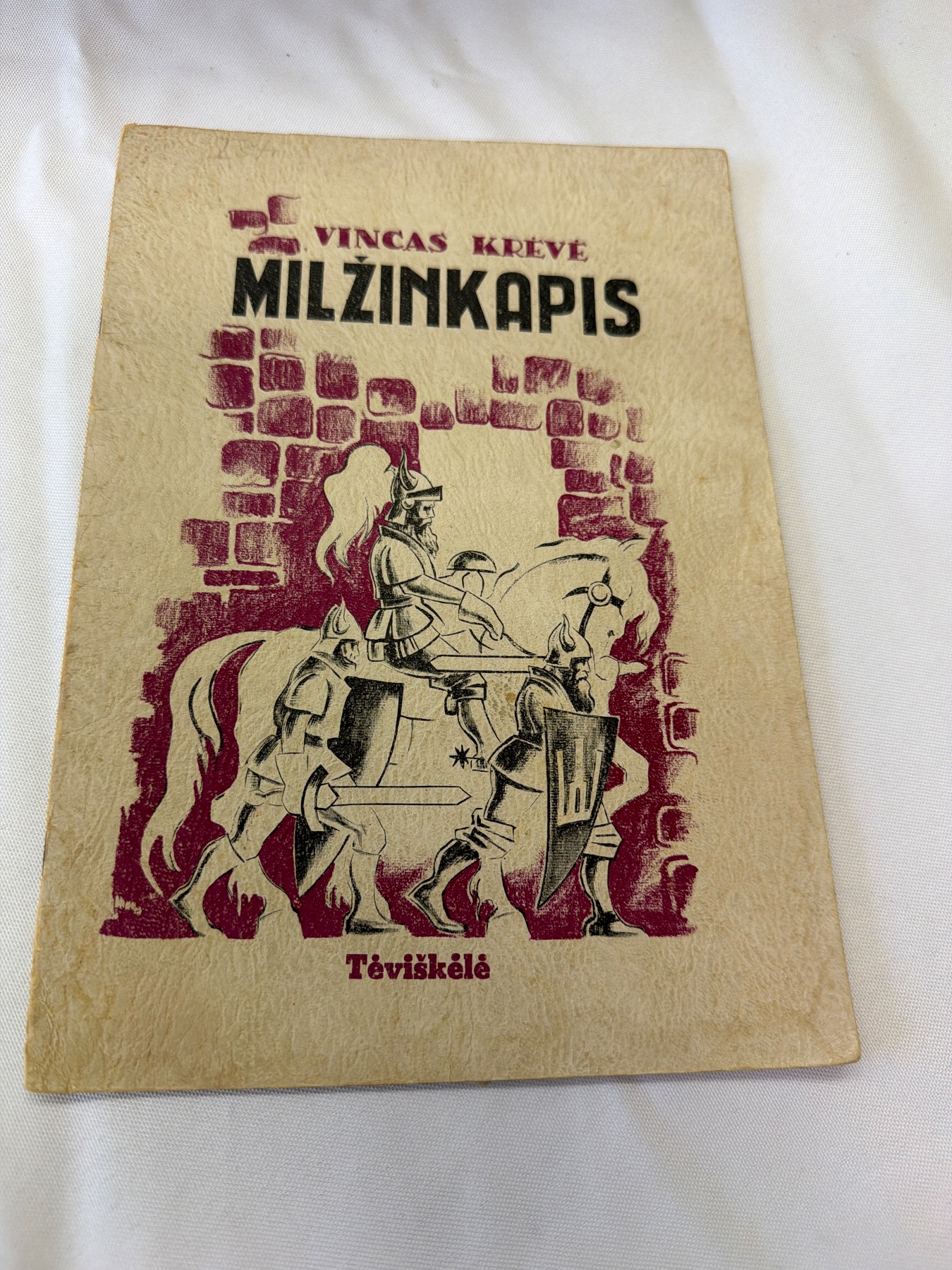
Karaliaus Vainikas is a 1958 diaspora anthology of Lithuanian legends and historical tales compiled for young readers by publisher Gabija in the United States, drawing on canonical Lithuanian literary figures including Vincas Krėvė, Vaižgantas, Šatrijos Ragana, and Antanas Vaičiulaitis. With a print run of only 1,000 copies and aimed explicitly at youth identity formation, it represents a deliberate institutional act of cultural transmission during the early Cold War diaspora period. The handwritten ownership inscription 'Aldona Milmantienė' anchors this particular copy in the lived experience of a named diaspora woman, adding provenance depth rare in surviving copies.
Context and significance
Significance
Karaliaus Vainikas exemplifies the Lithuanian diaspora's sophisticated institutional response to cultural rupture: rather than producing new literature in exile, the Gabija publishing house curated an anthology of canonical Lithuanian writers' legend-based works and repackaged them explicitly for the next generation. The editor's preface — signed only 'J. S.' — is a remarkable document of diaspora pedagogical philosophy, framing heroic legends as the primary vehicle for transmitting values of patriotism, familial loyalty, and noble sacrifice to youth who had never set foot in Lithuania. This curatorial strategy — selecting from Krėvė, Vaižgantas, Šatrijos Ragana, Vaičiulaitis — reflects a consensus about which literary voices constituted the Lithuanian canon worth preserving across the Atlantic.
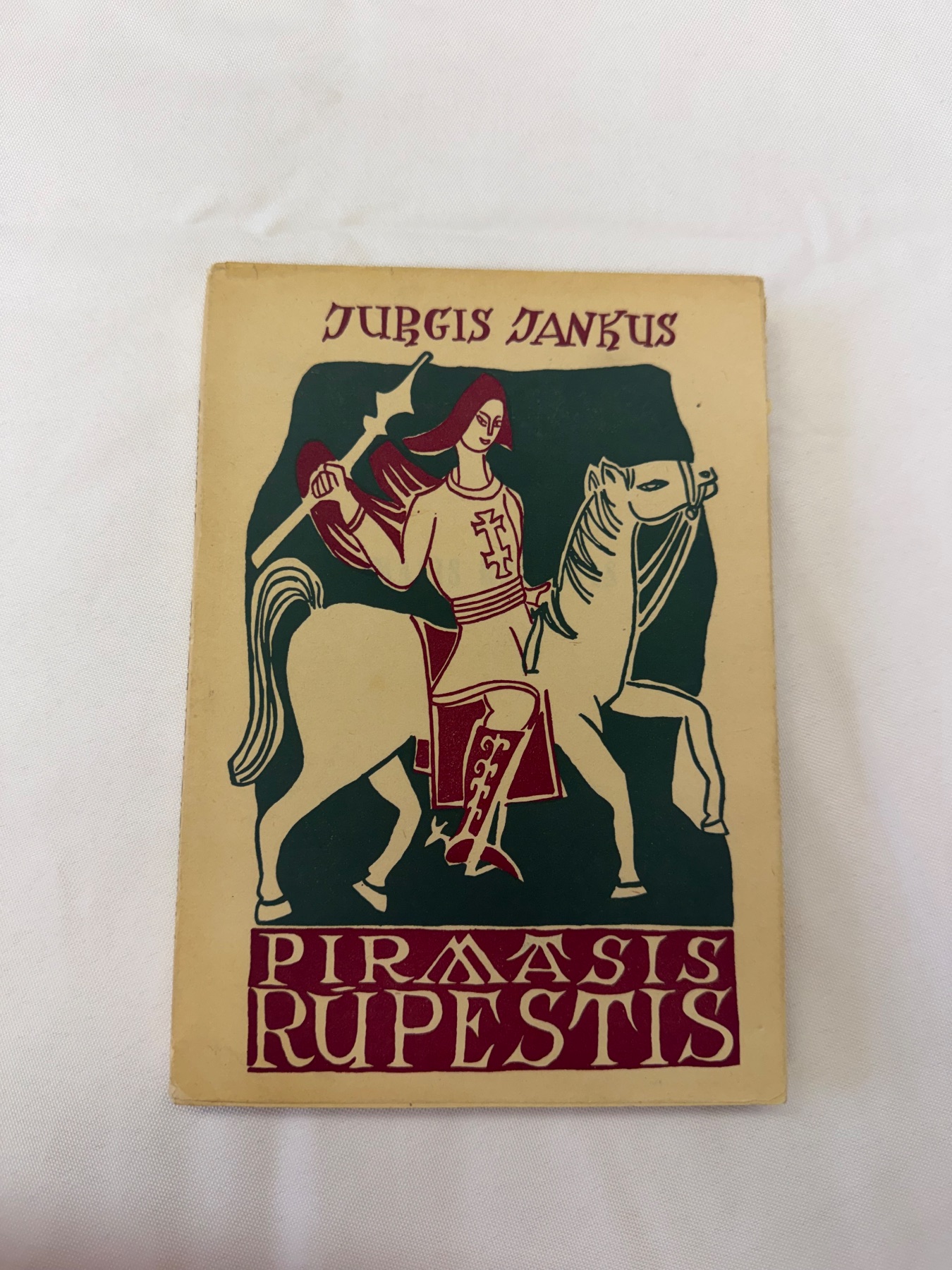
The anthology also reveals the institutional infrastructure that sustained diaspora literary culture: Gabija operated as a diaspora press capable of producing hardbound, illustrated, professionally designed books with a print run of 1,000 — modest by mainstream standards but substantial for a stateless exile community of perhaps 300,000 worldwide in 1958. The two-color cover illustration (line drawing with terracotta wash) demonstrates investment in aesthetic quality, signaling that this was not a bare-survival publication but an act of cultural assertion. The selection of legends centered on Lithuanian historical figures (Vytautas, Neris, Neringa) served the dual purpose of literary education and national mythology transmission.
The ownership inscription 'Aldona Milmantienė' — a feminine Lithuanian surname in the genitive — places this copy in the hands of a diaspora woman, likely a mother, teacher, or community member who circulated it within her network. Such provenance marks are invaluable for reconstructing how diaspora literary culture actually propagated: not through institutions alone, but through individual women who were the primary transmitters of language and story to the next generation.
How this record carried memory
Identity preservation; Pedagogical framing; Continuity statement explicit
Record connections
People, places, and institutions linked in the catalog