
Gimtoji Kalba: Bendrinės Kalbos Laikraštis
Historical and community context
Where this record belongs
Diaspora freedom
Introduction
Gimtoji Kalba (Mother Tongue) is the premier diaspora periodical dedicated to the cultivation and standardization of the Lithuanian language, serving as the official organ of the Lithuanian Language Society and published by the JAV LB Cultural Fund. This 1968 double issue (no. 39-40) represents the mature phase of diaspora linguistic scholarship, featuring rigorous normative articles on Lithuanian usage, critical analysis of Soviet-era language policy, and a retrospective anniversary essay on the publication itself. As a normative language journal distributed free to all Lithuanian heritage schools in America, it occupies an unparalleled position at the intersection of academic linguistics, diaspora pedagogy, and cultural preservation.
Context and significance
Significance
Gimtoji Kalba represents the apex of diaspora linguistic institution-building: a peer-reviewed, multi-contributor periodical dedicated entirely to the cultivation of standard Lithuanian, distributed free of charge to every Lithuanian heritage school in North America. Its existence in 1968 — two decades after the DP camps — demonstrates that the Lithuanian diaspora had successfully replicated not merely community organizations and schools, but a functioning scholarly infrastructure complete with a language-normation journal, a pedagogical institute, a cultural fund, and a textbook publication apparatus (evidenced by the back-page catalog listing 30 JAV LB Kultūros Fondas publications including grammars, readers, dance repertoires, and historical works). This institutional density is extraordinary and rivals what many small nation-states maintain for their national languages.
The content of this issue reveals the diaspora's acute awareness of the twin threats to Lithuanian: Soviet linguistic deformation inside occupied Lithuania, and English lexical and syntactic interference in the diaspora. The article 'Lietuvių kalba tarybiniais metais' engages directly with a 1967 Soviet publication, critiquing its ideological framing while mining it for data about language shift toward Russian — demonstrating that diaspora scholars maintained active surveillance of Soviet linguistic policy even under Cold War conditions. The article on foreign influence ('Svetima įtaka lietuvių kalboje') and the normative piece on tekti/reikėti show a journal committed to prescriptive language maintenance as a form of political resistance. Language purity was not pedantry; it was a sovereignty claim.
The handwritten ownership inscription 'L.B. Detroito Apr. Lituanistinė Mokykla' on the cover maps the actual distribution network of this journal: from the Chicago administrative hub, through the Lithuanian American Community's cultural apparatus, to individual heritage schools like Žiburio in Detroit. This copy is thus not merely a linguistic artifact but a node in a documented institutional network, and its presence in the Žiburio collection confirms the school's active participation in the diaspora scholarly community, receiving normative guidance material directly from the national language organization.
How this record carried memory
Identity preservation; Pedagogical framing; Continuity statement explicit — the journal explicitly frames standard Lithuanian language maintenance as the primary mechanism of cultural survival, with articles critiquing Soviet language deformation and English interference; the editorial retrospective explicitly advocates redirecting the journal toward youth and heritage schools
Record connections
People, places, and institutions linked in the catalog
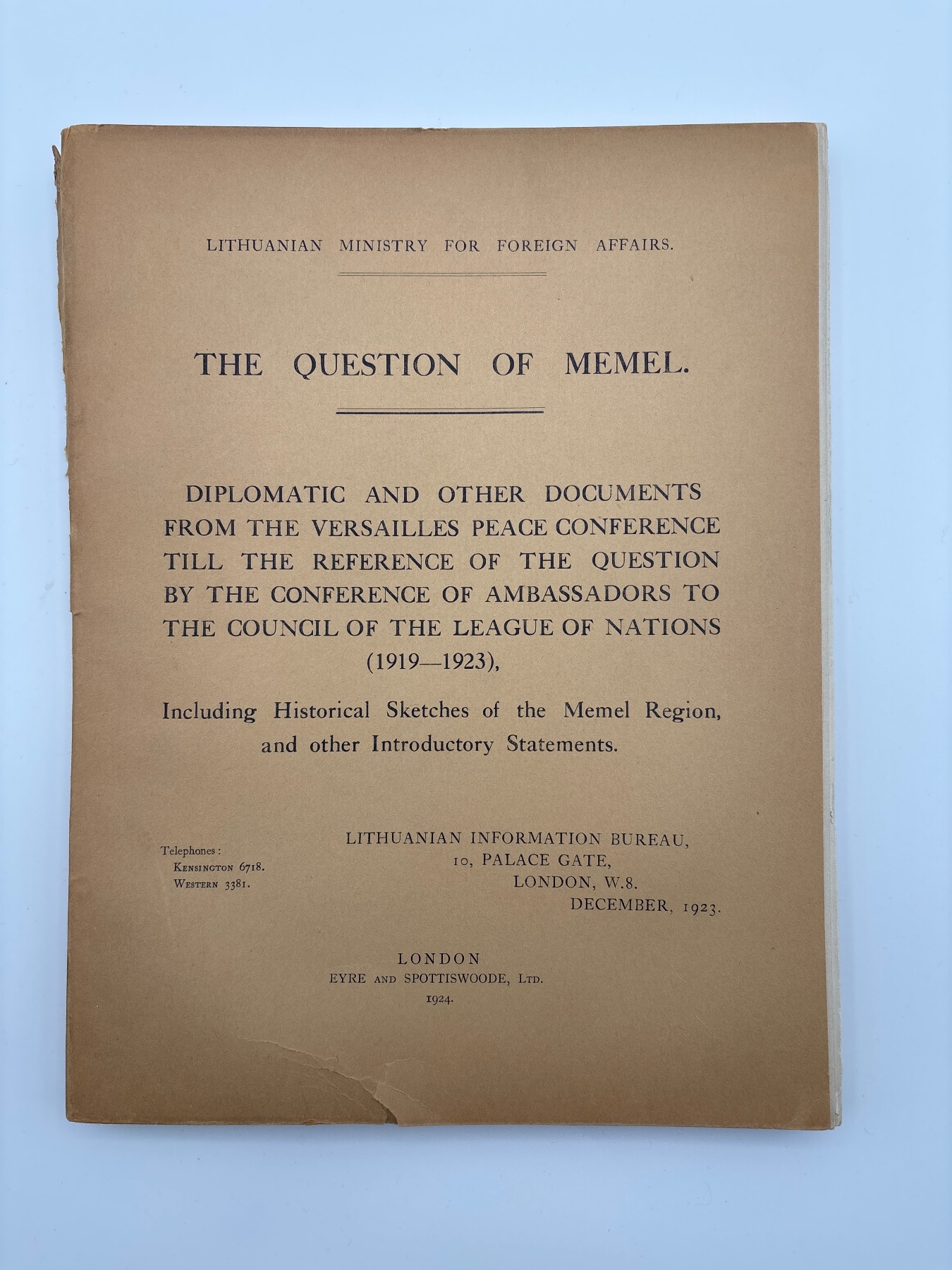
The Question of Memel: Diplomatic and Other Documents from the Versailles Peace Conference till the Reference of the Question by the Conference of Ambassadors to the Council of the League of Nations (1919-1923), Including Historical Sketches of the Memel Region, and other Introductory Statements
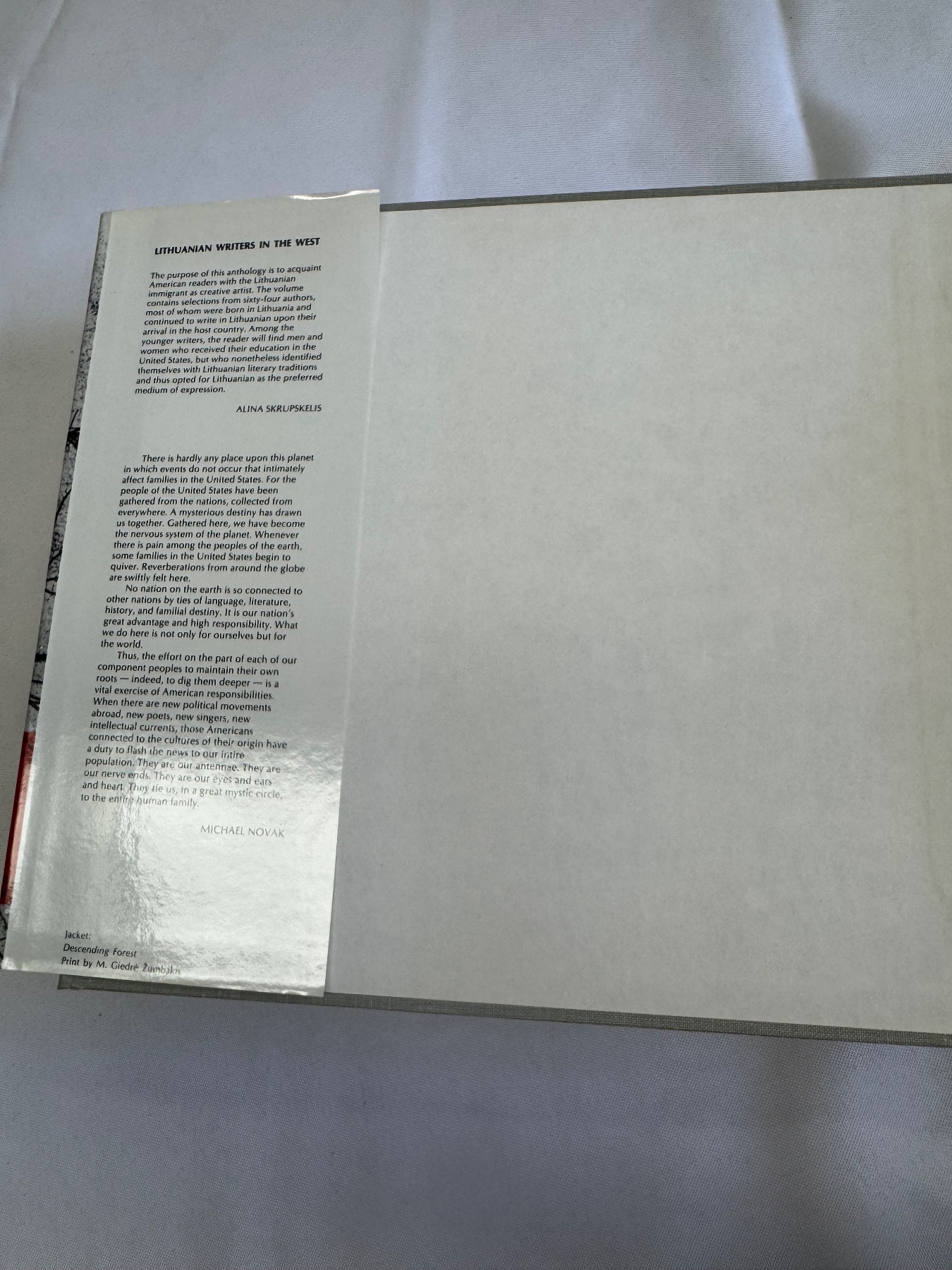
Lithuanian Writers in the West: An Anthology
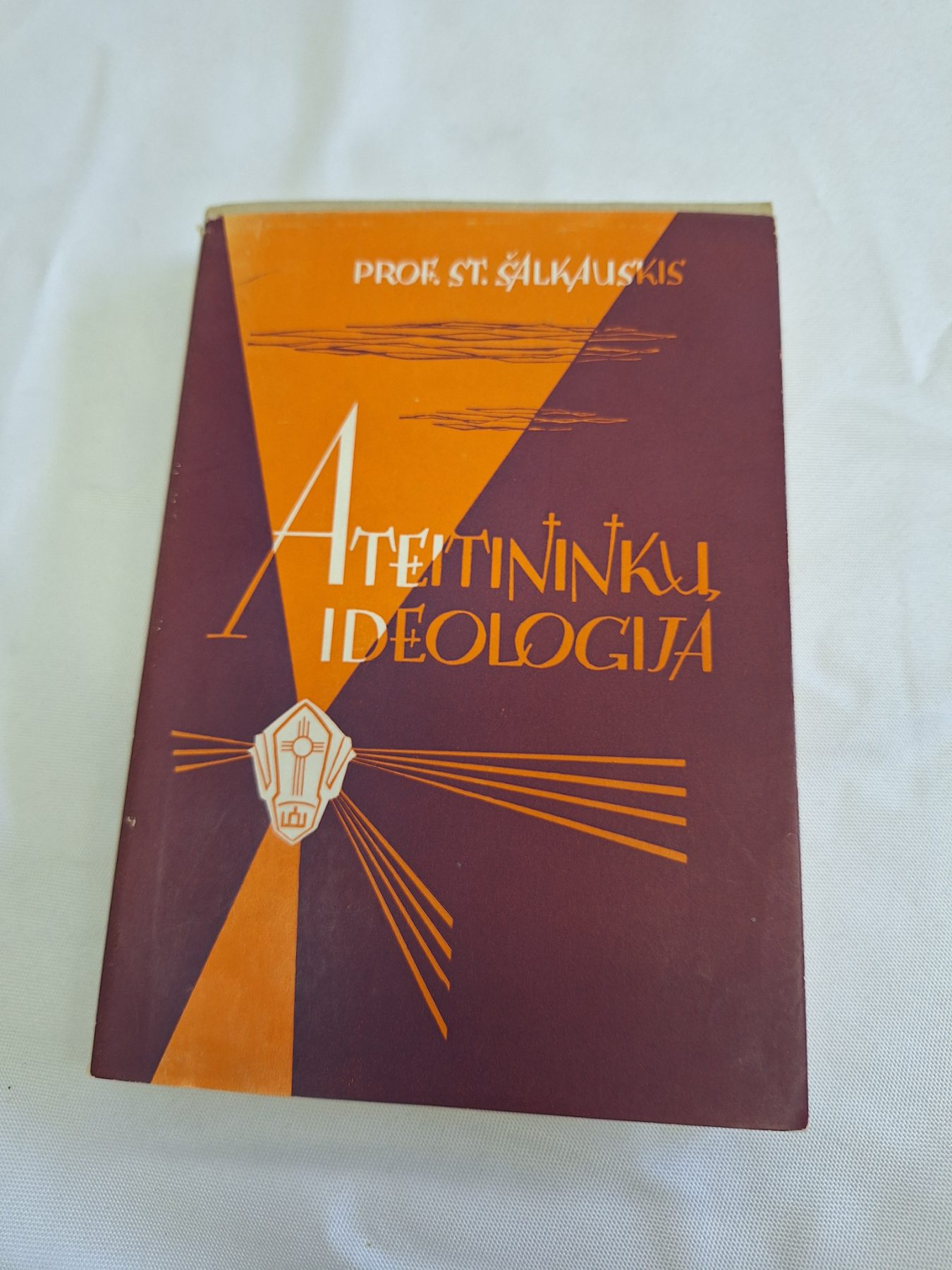
Ateitininkų Ideologija