
Senasis Vilniaus Universitetas
1955
Historical and community context
Where this record belongs
Diaspora freedom
Introduction
This is a scholarly history of the Old Vilnius University by Mykolas Biržiška — signatory of the Lithuanian Declaration of Independence, rector of Vilnius University, and one of the most important Lithuanian intellectuals of the 20th century — published in London by the Nida Book Club shortly after Biržiška's death in 1955. The book reclaims Vilnius University as a fundamentally Lithuanian institution against Polish and Soviet historical narratives, making it one of the most politically charged and intellectually significant diaspora scholarly publications. The volume includes a 'Vardų ir Veikalų Atranka' (index of names and works), photographic plates, a corrigenda slip, and a moving diaspora fundraising appeal inserted loose — a rare composite artifact documenting both Lithuanian scholarly culture and diaspora community infrastructure simultaneously.
Context and significance
Significance
This volume exemplifies the highest tier of diaspora intellectual production: a full-length scholarly monograph by a founding-generation national figure, published by an organized diaspora press infrastructure in London, circulated to Lithuanian communities worldwide as both a scholarly resource and a political instrument. The Nidas Knygų Klubas, operating from London in the 1950s, functioned as a transnational Lithuanian academic publisher without a state — commissioning, printing, and distributing serious scholarship to a scattered exile community. The fundraising broadside inserted into this copy reveals the human cost of this cultural survival: Biržiška himself, the author, was left destitute in old age, and the Lithuanian community organized a transnational relief effort through the same channels that distributed his books.
The book's central argument — that Vilnius University was fundamentally a Lithuanian institution whose Lithuanian character was systematically obscured by Polish and Russian historiography — carries enormous political weight in the diaspora context. Published while Vilnius was under Soviet occupation and Lithuania's independence was unrecognized, this scholarly reclamation of Vilnius served as a form of legal and cultural evidence: Lithuania's capital had always been Lithuanian, its university had always produced Lithuanian scholars, and therefore the Soviet occupation was an aberration against history. The detailed index of names (Vardų ir Veikalų Atranka) and bibliography function as archival testimony.
The layered materiality of this specific copy — ownership inscription, library sticker, yellow corrigenda slip, and loose fundraising broadside — transforms it from a book into a document of diaspora community life. Each layer was added by different hands at different moments: the publisher inserted the corrigenda, a community committee inserted the fundraising appeal, a reader inscribed ownership, a librarian added the catalog sticker. Together they record the social biography of a diaspora artifact moving through community hands over decades.
How this record carried memory
Identity preservation; Continuity statement explicit; Ideology stripped/softened — the original 1940/1942 Vilnius publication was backdated specifically to evade Nazi censorship, and the diaspora reprint explicitly continues this act of scholarly resistance; the book asserts Lithuanian ownership of Vilnius intellectual heritage against competing Polish and Soviet narratives
Record connections
People, places, and institutions linked in the catalog
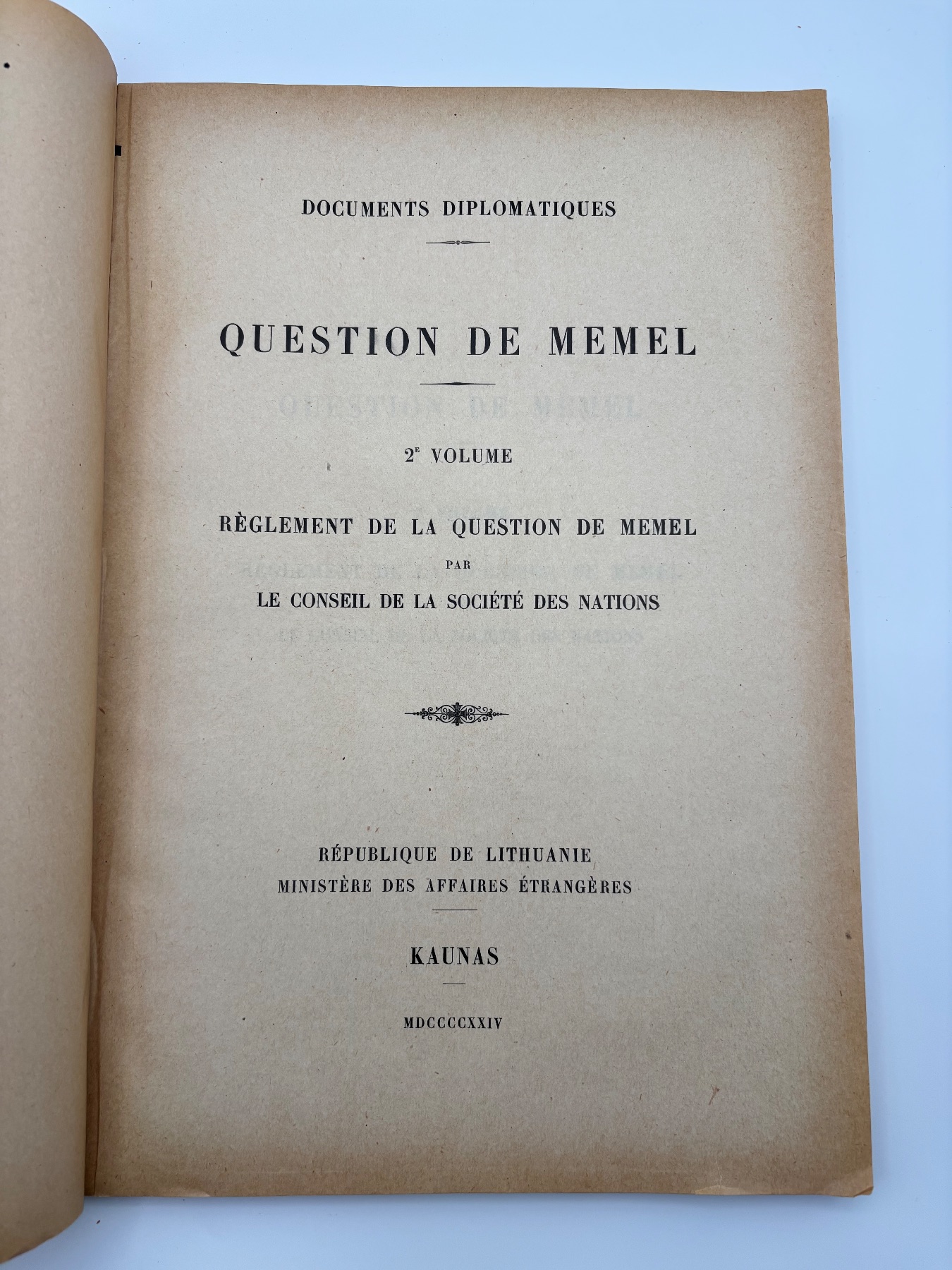
Question de Memel — 2e Volume: Règlement de la Question de Memel par le Conseil de la Société des Nations
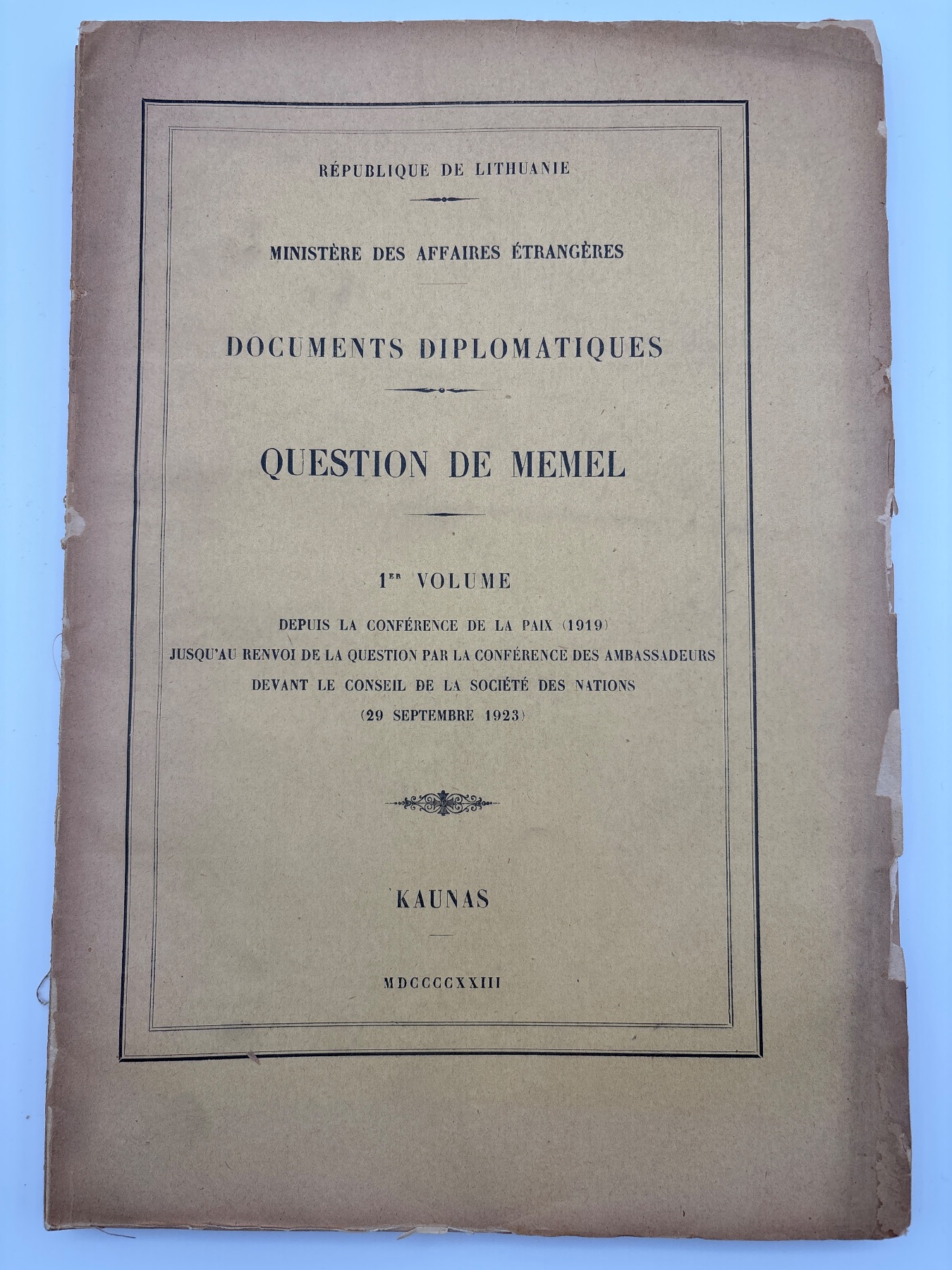
Documents Diplomatiques — Question de Memel, 1er Volume
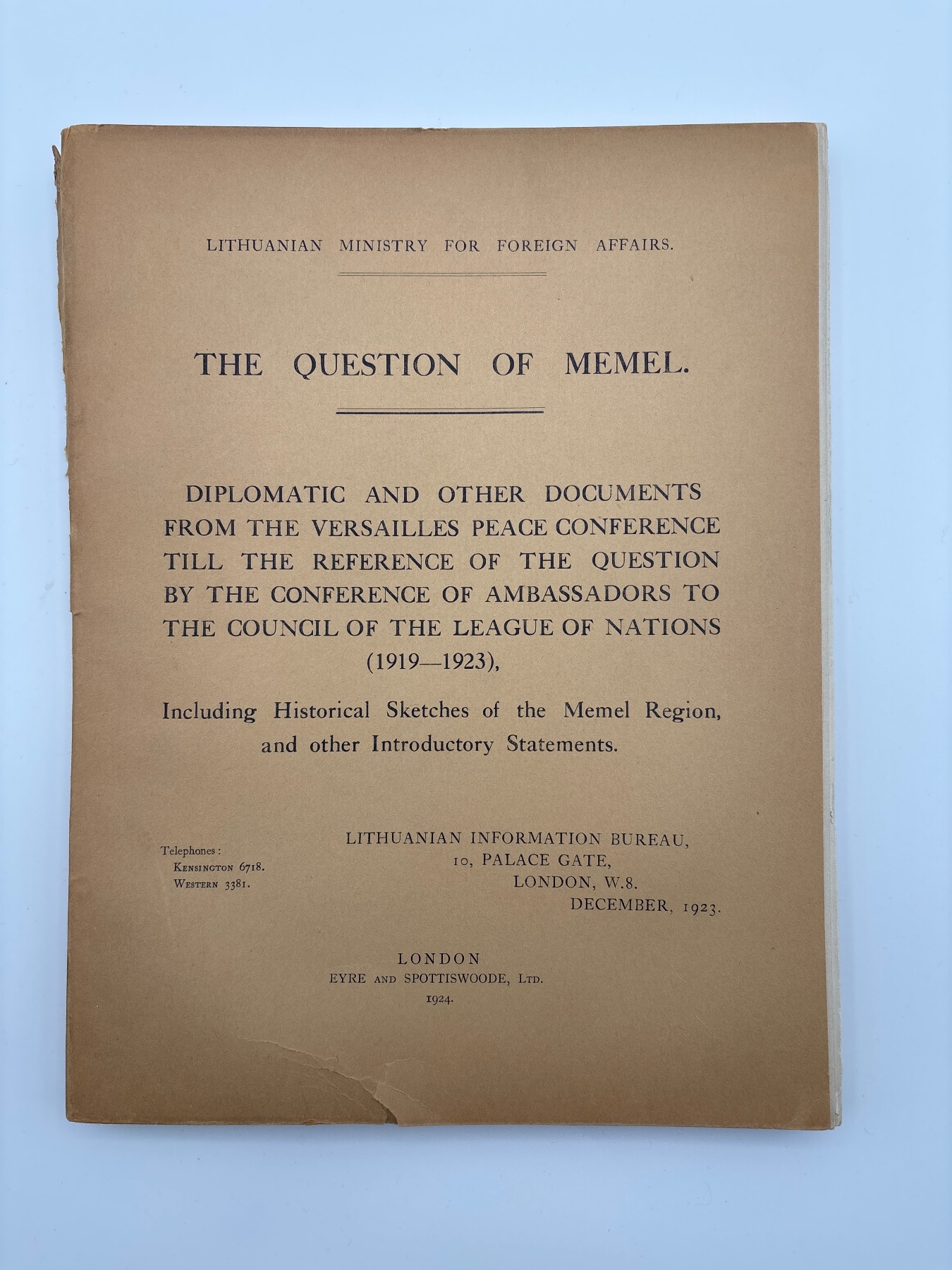
The Question of Memel: Diplomatic and Other Documents from the Versailles Peace Conference till the Reference of the Question by the Conference of Ambassadors to the Council of the League of Nations (1919-1923), Including Historical Sketches of the Memel Region, and other Introductory Statements