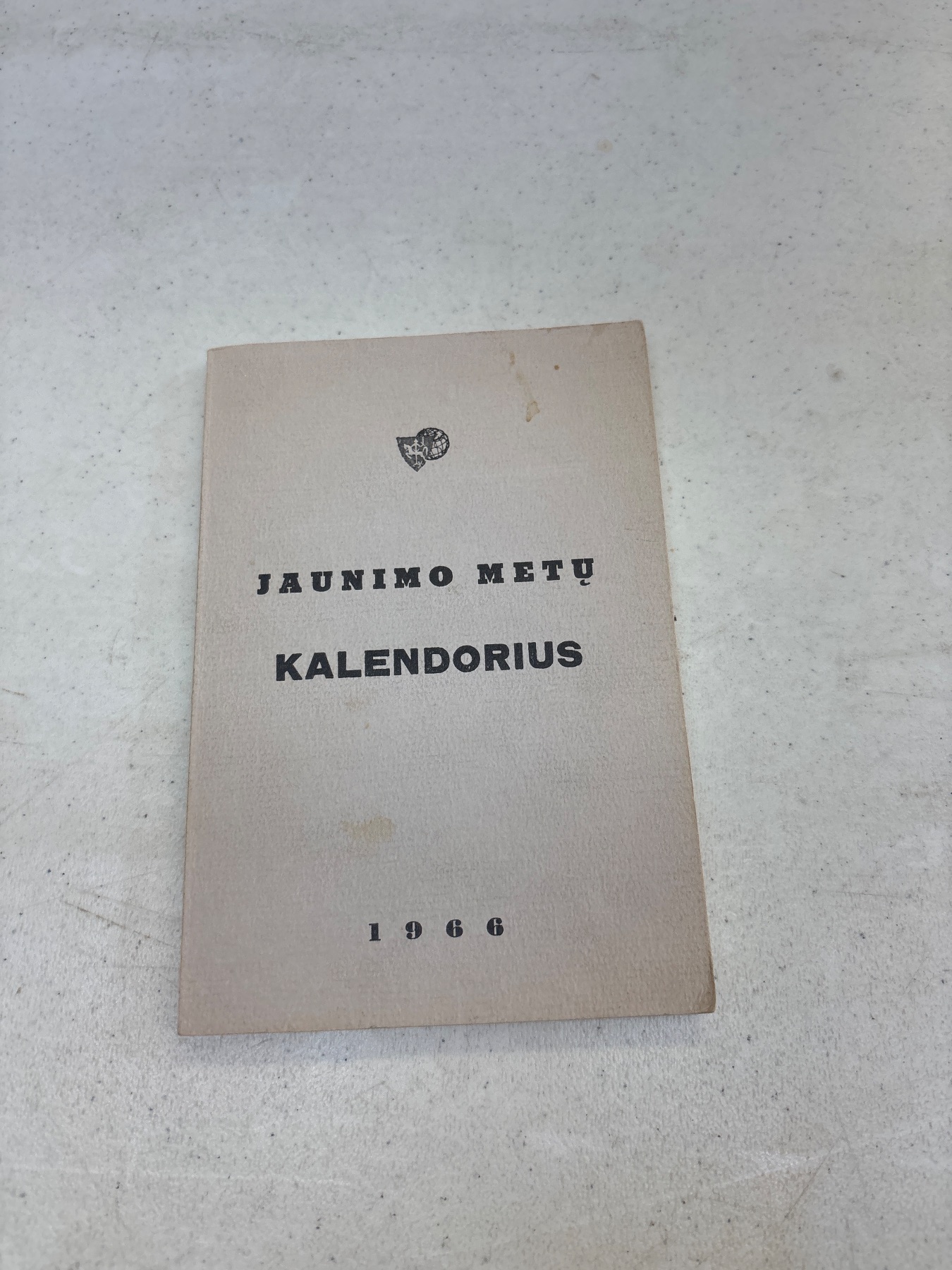
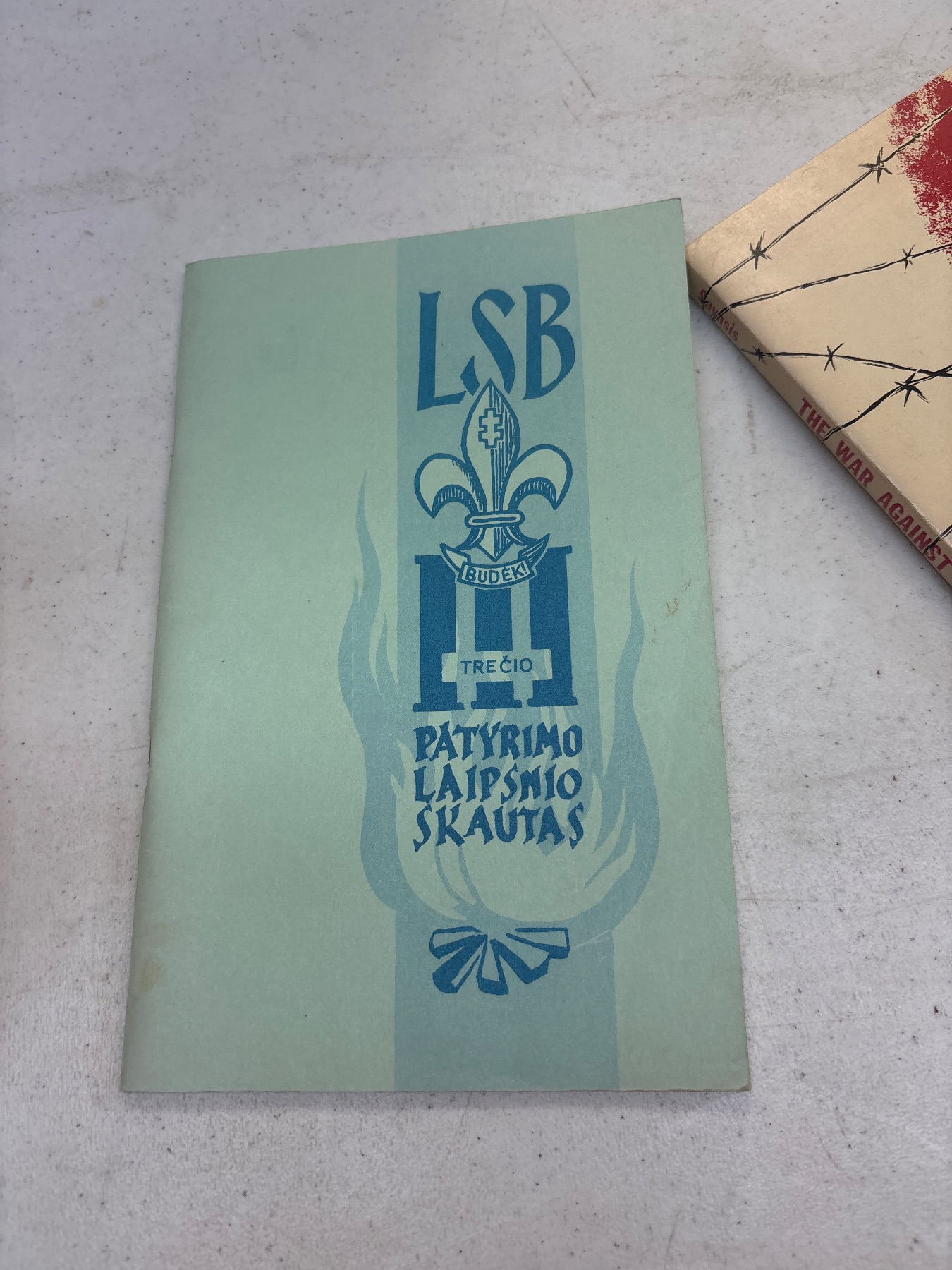
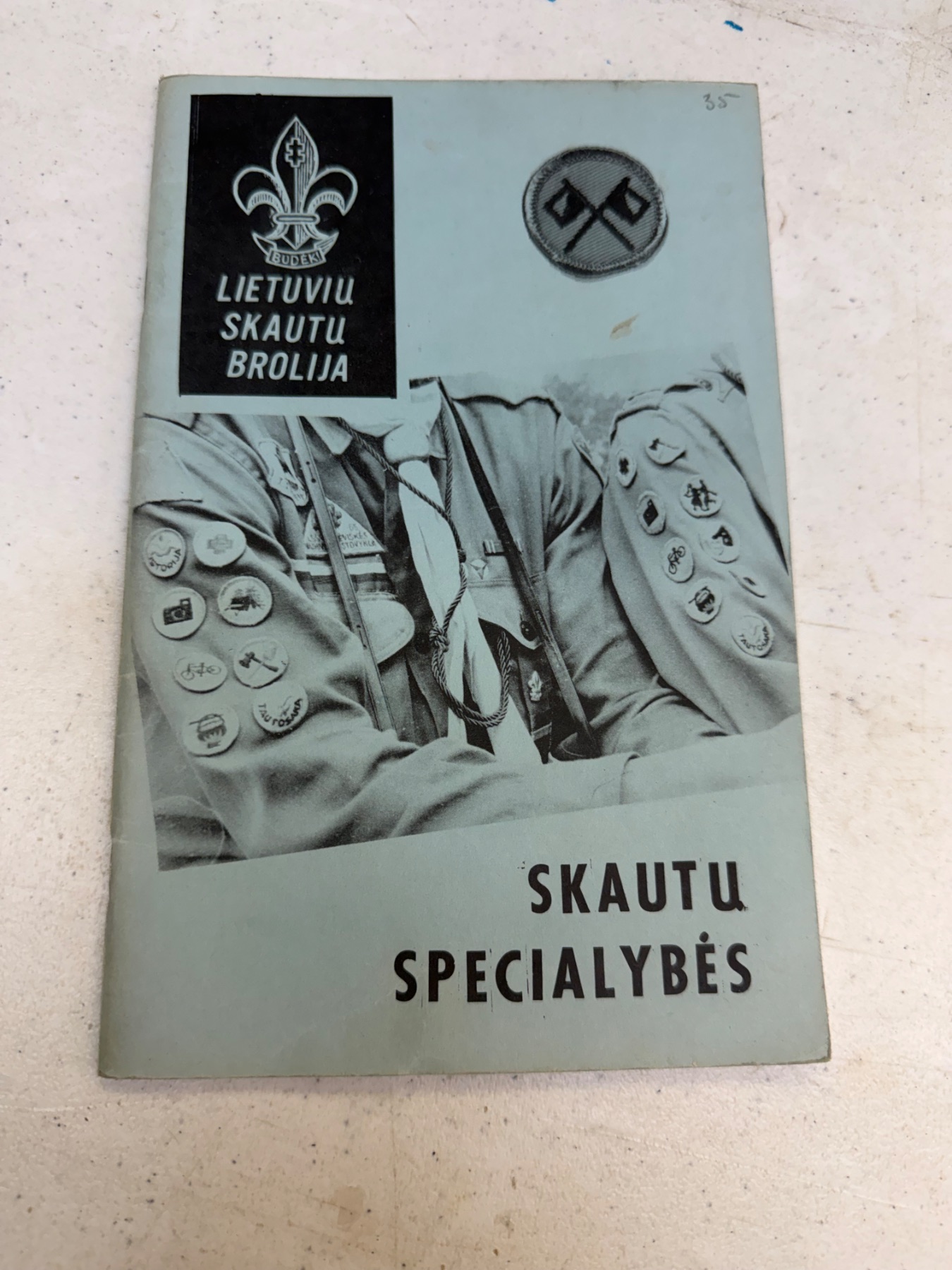
Budēk! Skautų Kalendorius 1952 M.
Historical and community context
Where this record belongs
Diaspora freedom
Introduction
This 1952 Lithuanian scout pocket calendar — 'Budēk!' (Be Alert!) — is a remarkable artifact of diaspora institutional resilience, produced jointly by Detroit's 'Gabija' girl scout troop and 'Baltija' scout unit just four years after the first postwar Lithuanian refugees arrived in America. Compact enough to fit in a shirt pocket yet packed with 23 sections spanning scouting laws, Lithuanian and American national anthems with musical notation, Lithuanian history, geography, folk songs, first aid, and a community address directory, it embodies the total cultural ecosystem that diaspora scouts were expected to inhabit simultaneously. The editor's candid foreword acknowledging organizational difficulties in publishing even this 'humble' calendar makes it a rare transparent record of the institutional growing pains of the early Lithuanian diaspora in America.
Context and significance
Significance
This calendar is a microcosm of early Lithuanian diaspora institution-building strategy: within a single 96-page pocket booklet, the 'Gabija' and 'Baltija' scout units encoded the full spectrum of what it meant to be Lithuanian in America in 1952 — national anthem, history, geography, folk songs, religious reflection, first aid, scouting laws, and a directory of diaspora organizations and newspapers. The fact that two scout units, not a national organization, produced this publication reveals how decentralized and community-driven the early diaspora cultural infrastructure was; Detroit's Lithuanian community was recreating the functions of a national youth ministry from scratch, financed locally and printed by the Cleveland-based 'Dirva' press that served as a de facto national Lithuanian publishing house for the diaspora.
The editorial foreword is a remarkable primary source document: it explicitly names Soviet occupation as the cause of dispersal, frames scouting as an act of resistance and cultural continuity, and candidly apologizes for the calendar's imperfections due to 'organizational difficulties in the new circumstances' — giving historians a rare window into the institutional anxiety and determination of the early refugee generation. The acknowledgment that even the organization's own national leadership failed to produce a calendar, leaving it to local units, underscores how fragile the institutional superstructure was while the grassroots community proved more resilient.
Linguistically, the decision to include both the American and Lithuanian national anthems with full musical notation — the American anthem labeled in Lithuanian ('Jungtinių Amerikos Valstybių Himnas') — demonstrates the dual-identity navigation that defined early diaspora life: scouts were being trained simultaneously as Americans and as Lithuanians-in-exile, with the implicit expectation that Lithuania would one day be free and they would need to know both. The consultation of Prof. dr. Pranas Skardžius for name verification signals that the community understood linguistic purity as a form of national dignity, even in a pocket calendar.
How this record carried memory
Identity preservation; Pedagogical framing; Continuity statement explicit; Religion as language vessel
Record connections
People, places, and institutions linked in the catalog