
Jaunimo Metų Kalendorius 1966
Historical and community context
Where this record belongs
Diaspora freedom
Introduction
This 1966 PLB-issued youth almanac is the official calendar companion to the World Lithuanian Youth Year and Congress, combining national hymns, name-day tables, diaspora organizational directories, and programmatic declarations into a single pocket reference. It represents the PLB's deliberate effort to give second-generation diaspora youth a portable, comprehensive civic-cultural toolkit at a pivotal mobilization moment. As a dated, purpose-built artifact of the 1966 Jaunimo Metai initiative, it documents the institutional infrastructure, rhetoric, and self-organization of the Lithuanian diaspora at its most active Cold War peak.
Context and significance
Significance
This almanac is a crystalline artifact of diaspora institutional maturity. By 1966 the PLB had evolved from a survival-oriented DP-camp structure into a sophisticated transnational organization capable of coordinating a global 'Youth Year' with its own declaration, program, congress, and purpose-built calendar publication. The Jaunimo Metų Kalendorius embodies the PLB's theory of cultural reproduction: that the second generation could be anchored to Lithuanian identity not through coercion but through the provision of attractive, functional, information-dense resources that made Lithuanian-ness useful (name-day tables, organizational directories, radio schedules) as well as emotionally resonant (hymns, poetry, historical essays).
The table of contents reveals a carefully engineered identity toolkit. The sequencing is deliberate: open with the national anthem and the Mažosios Lietuvos Himnas (evoking the occupied Klaipėda region), move through sacred song, calendar utility, historical narrative, and community infrastructure, and close with the Youth Year declaration and congress information. This structure enacts the argument that being Lithuanian diaspora youth means simultaneously inhabiting historical memory, religious heritage, civic engagement, and transnational community — all accessible in one pocket booklet.
How this record carried memory
Identity preservation; Continuity statement explicit; Pedagogical framing; Language as community bond (explicit section 'Kalba — stipriausias tautinės bendruomenės ryšys')
Record connections
People, places, and institutions linked in the catalog
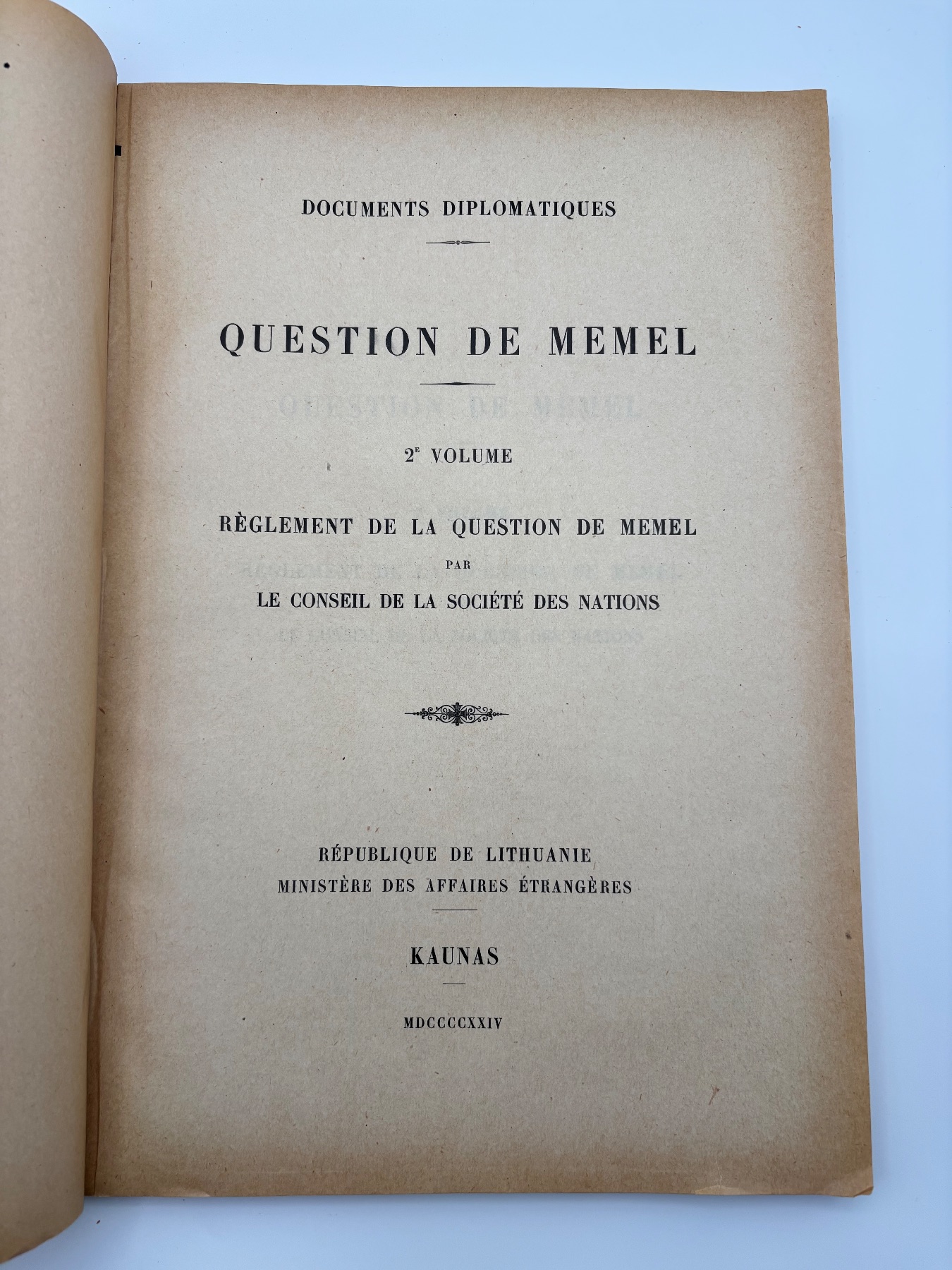
Question de Memel — 2e Volume: Règlement de la Question de Memel par le Conseil de la Société des Nations
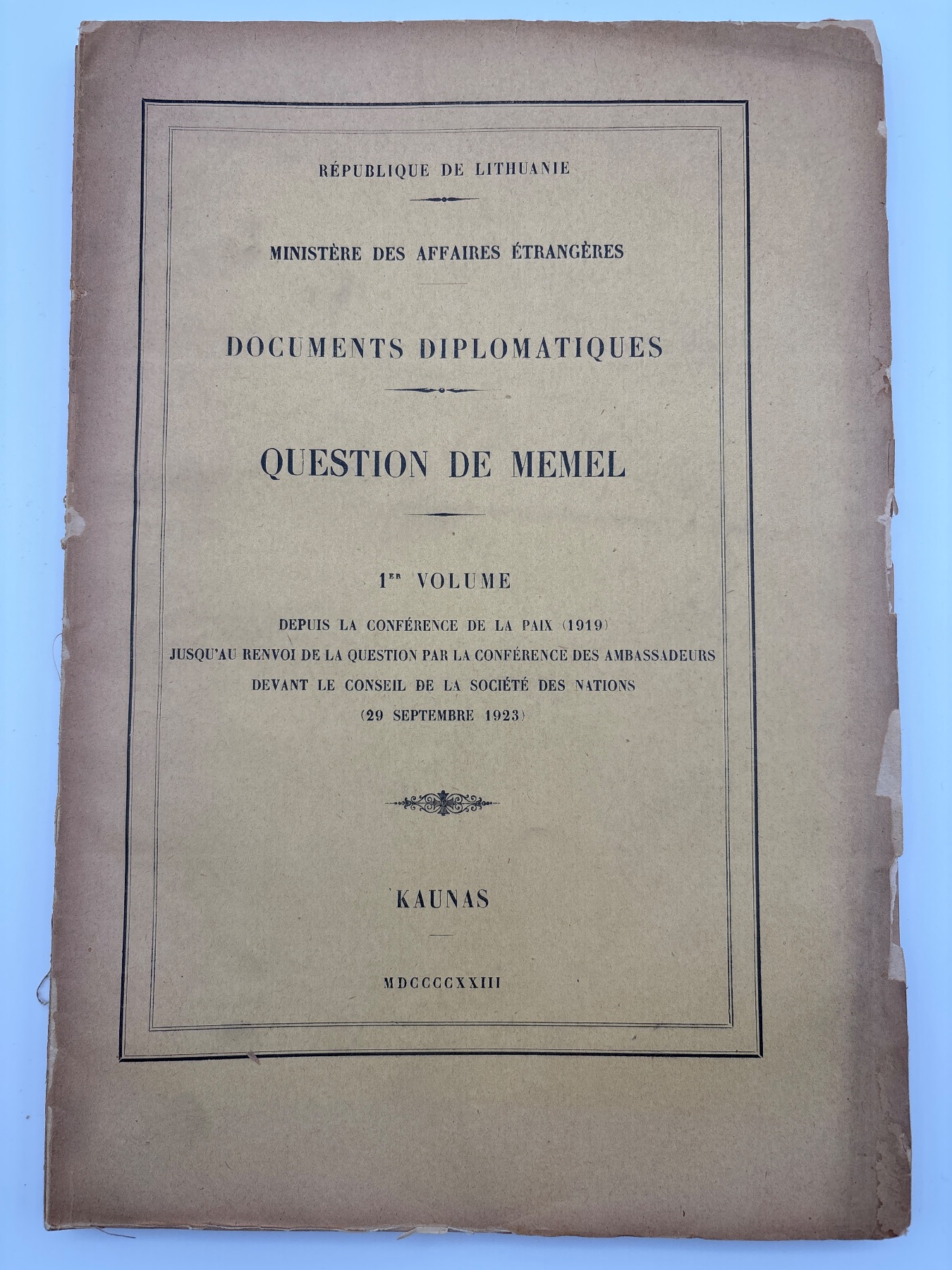
Documents Diplomatiques — Question de Memel, 1er Volume
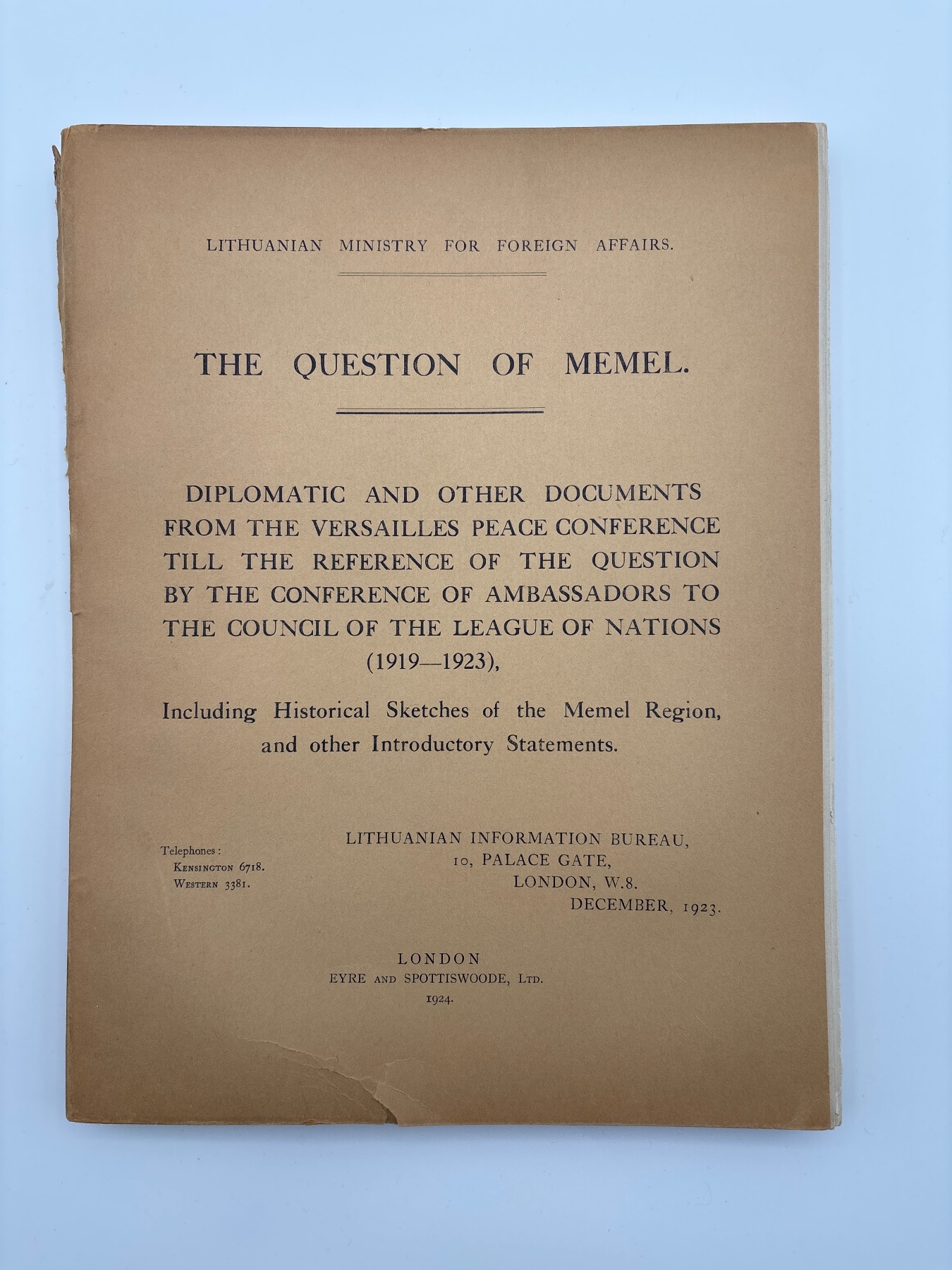
The Question of Memel: Diplomatic and Other Documents from the Versailles Peace Conference till the Reference of the Question by the Conference of Ambassadors to the Council of the League of Nations (1919-1923), Including Historical Sketches of the Memel Region, and other Introductory Statements