
Lietuvių Išeivija Amerikoje (1868–1961)
1961
Historical and community context
Where this record belongs
Diaspora freedom
Introduction
A comprehensive survey of Lithuanian immigrant life in America spanning nearly a century (1868–1961), compiled by S. Michelsonas and published by the long-running Lithuanian-American newspaper Keleivis. This volume documents the organizational, religious, press, cultural, and community infrastructure of the Lithuanian diaspora across dozens of U.S. cities and extends coverage to Canada and South America, making it an indispensable reference for Lithuanian-American history. Its encyclopedic scope—covering early colonies, community organizations, press, and regional centers—renders it one of the most ambitious single-volume surveys of the Lithuanian diaspora ever produced.
Context and significance
Significance
This publication stands as a monument to the self-documenting impulse of the Lithuanian-American diaspora at its organizational peak. Published in 1961—nearly a century after the first Lithuanian immigrants arrived in America—it reflects a community that had developed sophisticated institutional infrastructure: newspapers, fraternal organizations, churches, schools, scouts, and professional associations spanning dozens of cities. The very act of compiling and publishing such a reference work signals a mature diaspora identity: one confident enough to historicize itself, to look back across generations and claim a coherent narrative of cultural survival and civic achievement.
The structure of the book itself mirrors the structure of Lithuanian-American life: organized around geographic clusters (Boston, Chicago, Detroit, Philadelphia, New York, Lawrence, Pittsburgh, Los Angeles, Worcester, and more), it reveals how Lithuanian identity was maintained through local institutional networks rather than any centralized authority. The inclusion of Canada and South America signals an awareness of Lithuanian diaspora as a transnational phenomenon, not merely an American one. The publisher Keleivis had been a connective tissue of this community for decades, and this volume represents its most ambitious editorial undertaking.
How this record carried memory
Identity preservation, Continuity statement explicit, Pedagogical framing
Record connections
People, places, and institutions linked in the catalog
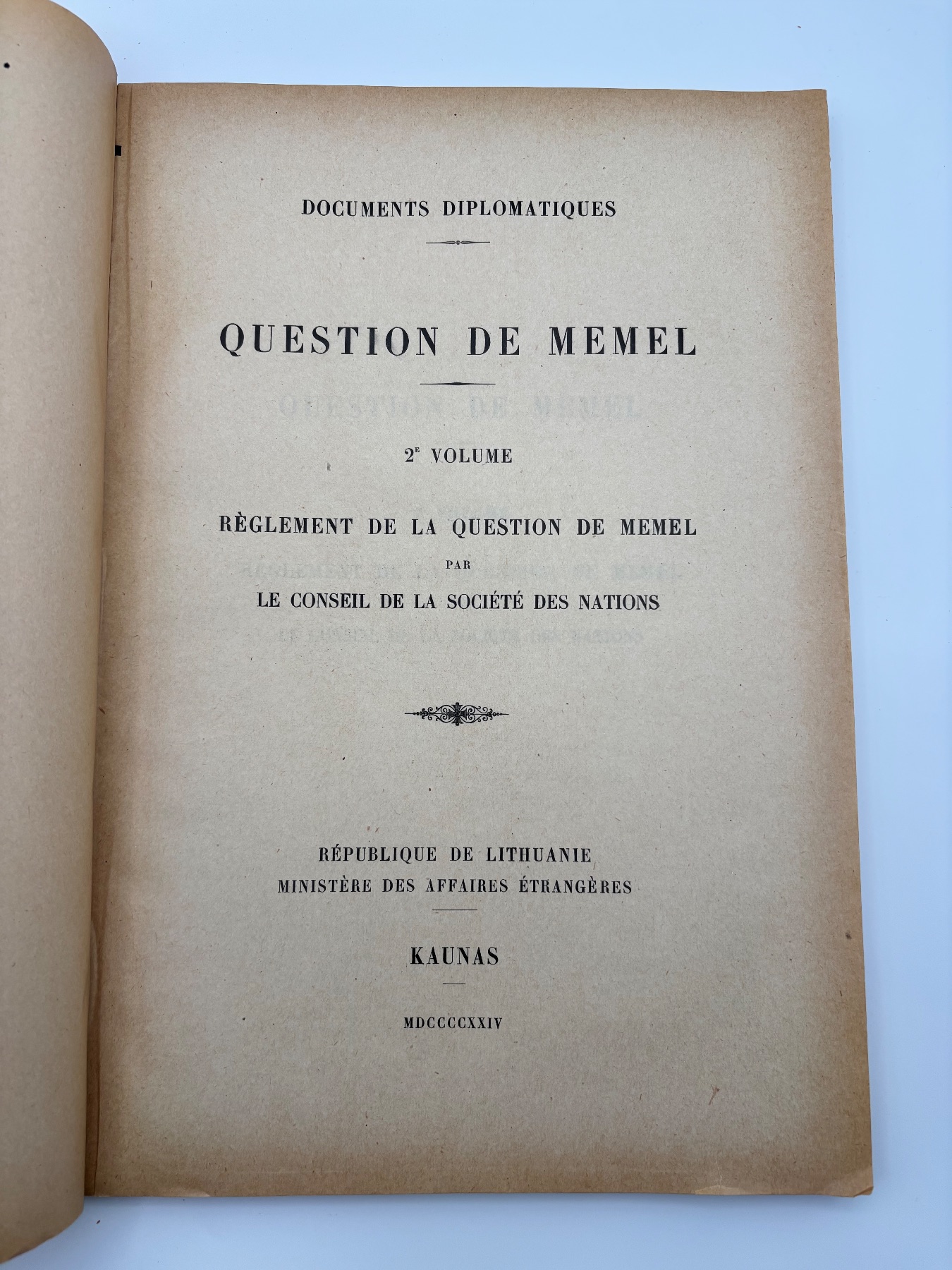
Question de Memel — 2e Volume: Règlement de la Question de Memel par le Conseil de la Société des Nations
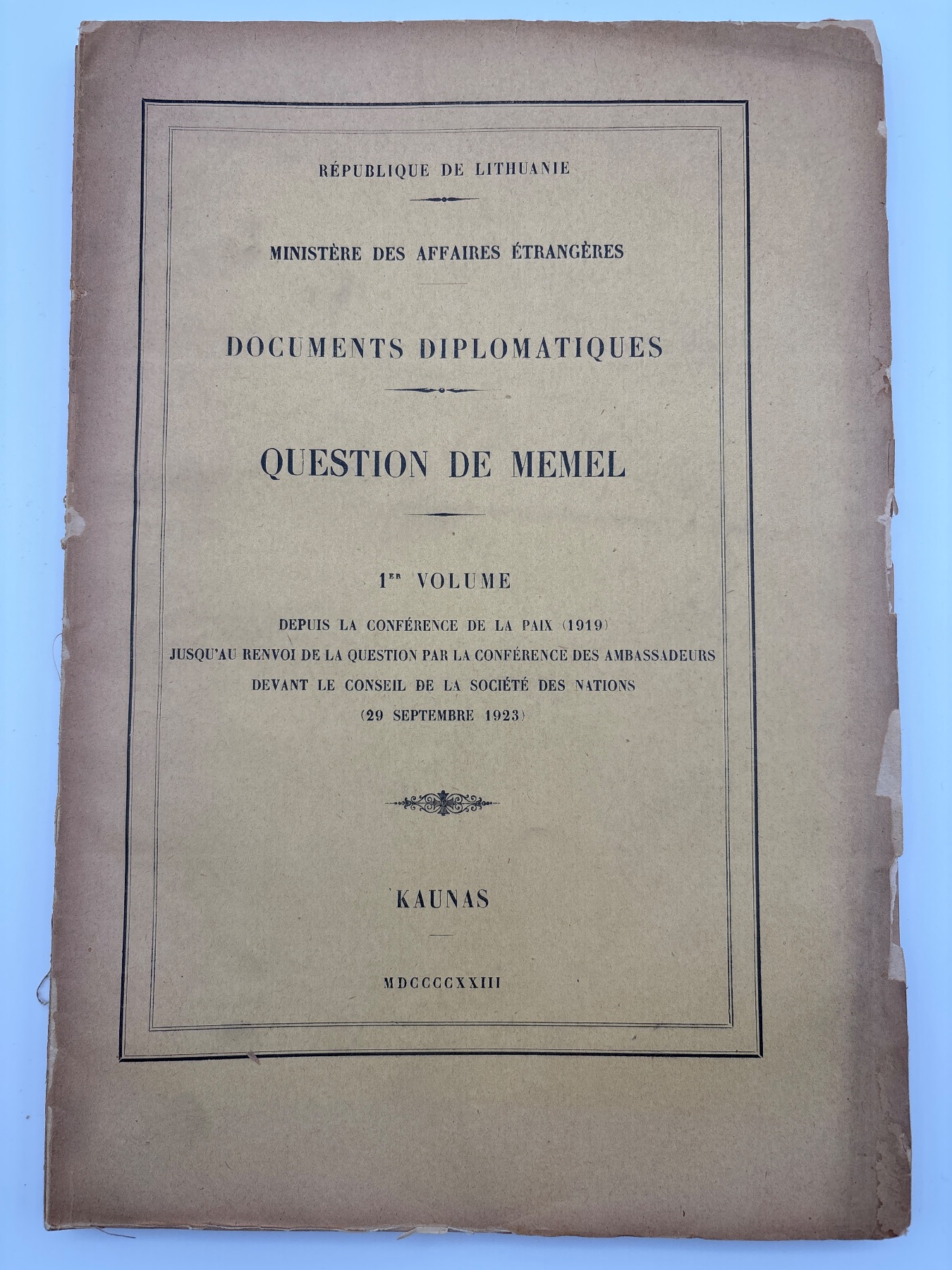
Documents Diplomatiques — Question de Memel, 1er Volume
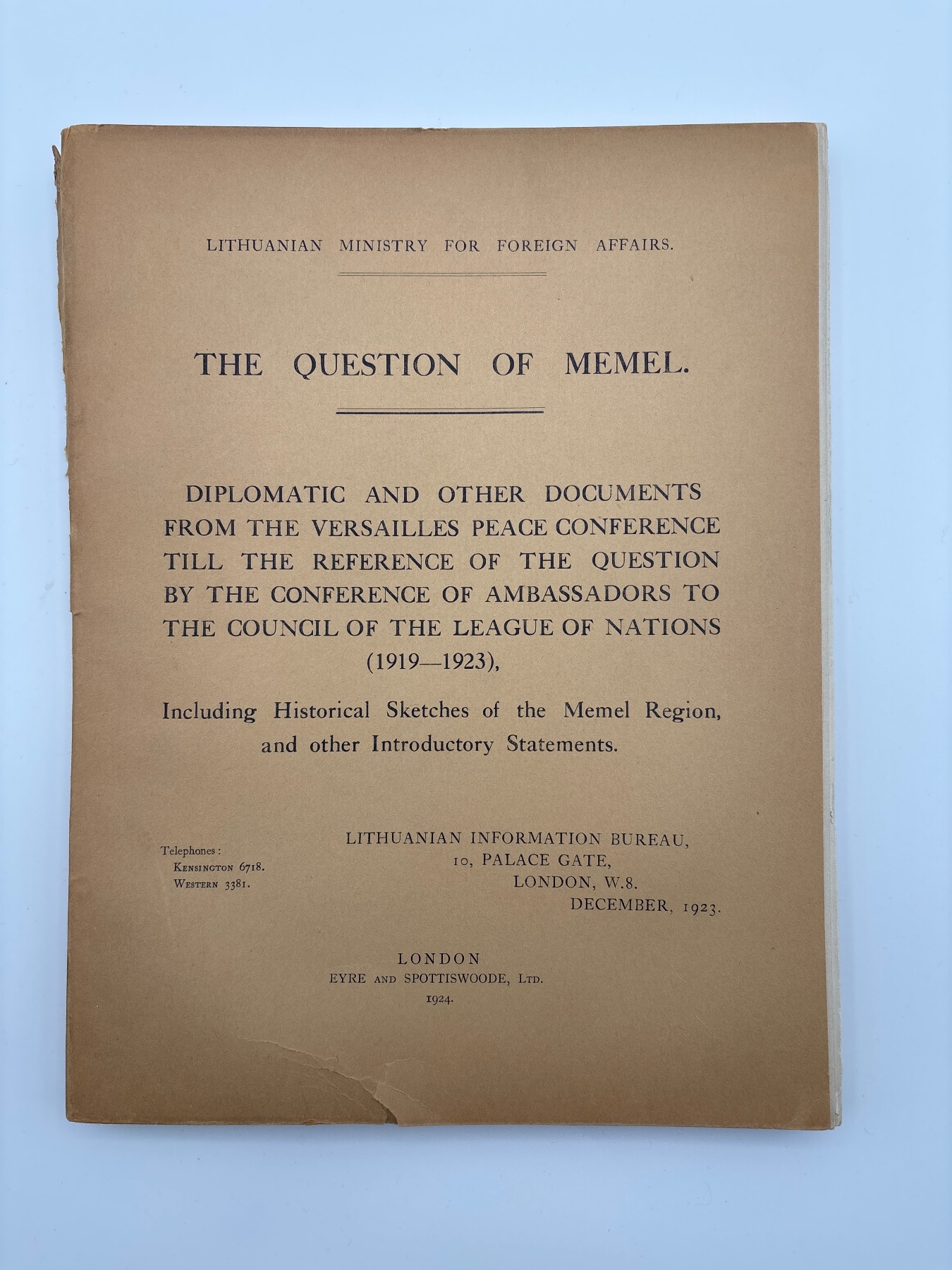
The Question of Memel: Diplomatic and Other Documents from the Versailles Peace Conference till the Reference of the Question by the Conference of Ambassadors to the Council of the League of Nations (1919-1923), Including Historical Sketches of the Memel Region, and other Introductory Statements