
Nepriklausomai Lietuvai
Antanas Gintneris, Alfonsas Valatkaitis (Redakcinės komisijos nariai); Petras Petrušaitis (Redaktorius); Redakcinės komisijos nariai: Antanas Gintneris, Alfonsas Valatkaitis; Redaktorius: Petras Petrušaitis
1965
Historical and community context
Where this record belongs
Diaspora freedom
Introduction
This is the official commemorative history of the Lithuanian Riflemen's Union (Šaulių Sąjunga) published in exile in Chicago in 1965, representing one of the most significant Lithuanian paramilitary-civic organizations of the interwar independence period. Richly illustrated with period photographs and including facsimile reproductions of handwritten documents by major Lithuanian cultural figures such as Vincas Krėvė, it constitutes both a primary historical record and a monument of diaspora identity preservation. The inclusion of detailed subscriber and patron lists spanning Chicago, Detroit, Montreal, Toronto, and other diaspora cities provides an unparalleled snapshot of the geographic and social structure of the mid-1960s Lithuanian-American community.
Context and significance
Significance
This publication stands as a definitive monument to the Lithuanian Riflemen's Union in exile, demonstrating the remarkable capacity of diaspora organizations to reconstitute the institutional infrastructure of a suppressed state across an ocean and two decades of displacement. The Šaulių Sąjunga was not merely a paramilitary organization but served as a carrier institution for Lithuanian civic identity, national consciousness, and community cohesion — functions it explicitly continued in exile through publications like this one. The patron and subscriber lists alone reveal a geographically dispersed but densely networked community stretching from Chicago and Detroit to Montreal, Toronto, and smaller Midwest cities, suggesting a level of organizational coherence and financial mobilization that few diaspora communities of comparable size achieved.
The inclusion of a facsimile handwritten manuscript by Vincas Krėvė — one of the most celebrated figures of Lithuanian literature and a former Acting Prime Minister — elevates this from institutional history to a document of national cultural memory. Krėvė's handwriting appears in a context documenting the Klaipėda uprising (1923), one of the defining moments of interwar Lithuanian statecraft, connecting high literary culture to political and military history in ways that illuminate the distinctive character of Lithuanian national identity formation. This type of document — where literary giants were also political actors and military supporters — is characteristic of small-nation nationalism and provides rich context for understanding Lithuanian cultural self-understanding.
As a diaspora publication, this book represents the apex of what scholars call 'exile institutionalism' — the deliberate reconstruction of national institutions in foreign soil as both political statement and cultural lifeline. Published in 1965, at the height of the Cold War and twenty-five years into Soviet occupation of Lithuania, this volume was simultaneously a work of historical preservation, a political act of resistance, and a community-building instrument. The detailed photographic record of women's šauliai units, regional brigades, and ceremonial events captures a social world that was physically destroyed by 1940 but preserved in diaspora memory with extraordinary precision.
How this record carried memory
Continuity statement explicit, Identity preservation, Institutional continuity framing
Record connections
People, places, and institutions linked in the catalog
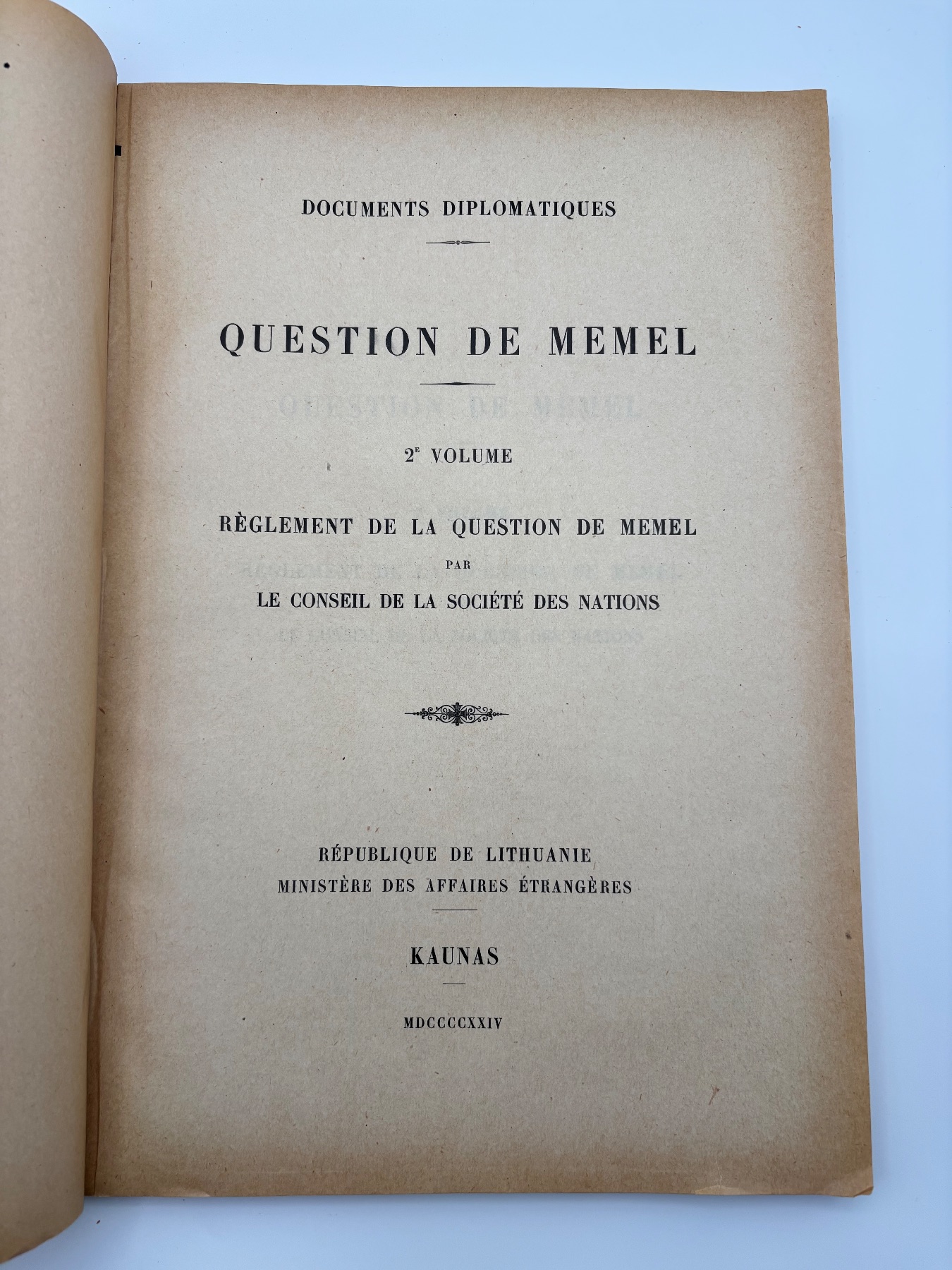
Question de Memel — 2e Volume: Règlement de la Question de Memel par le Conseil de la Société des Nations
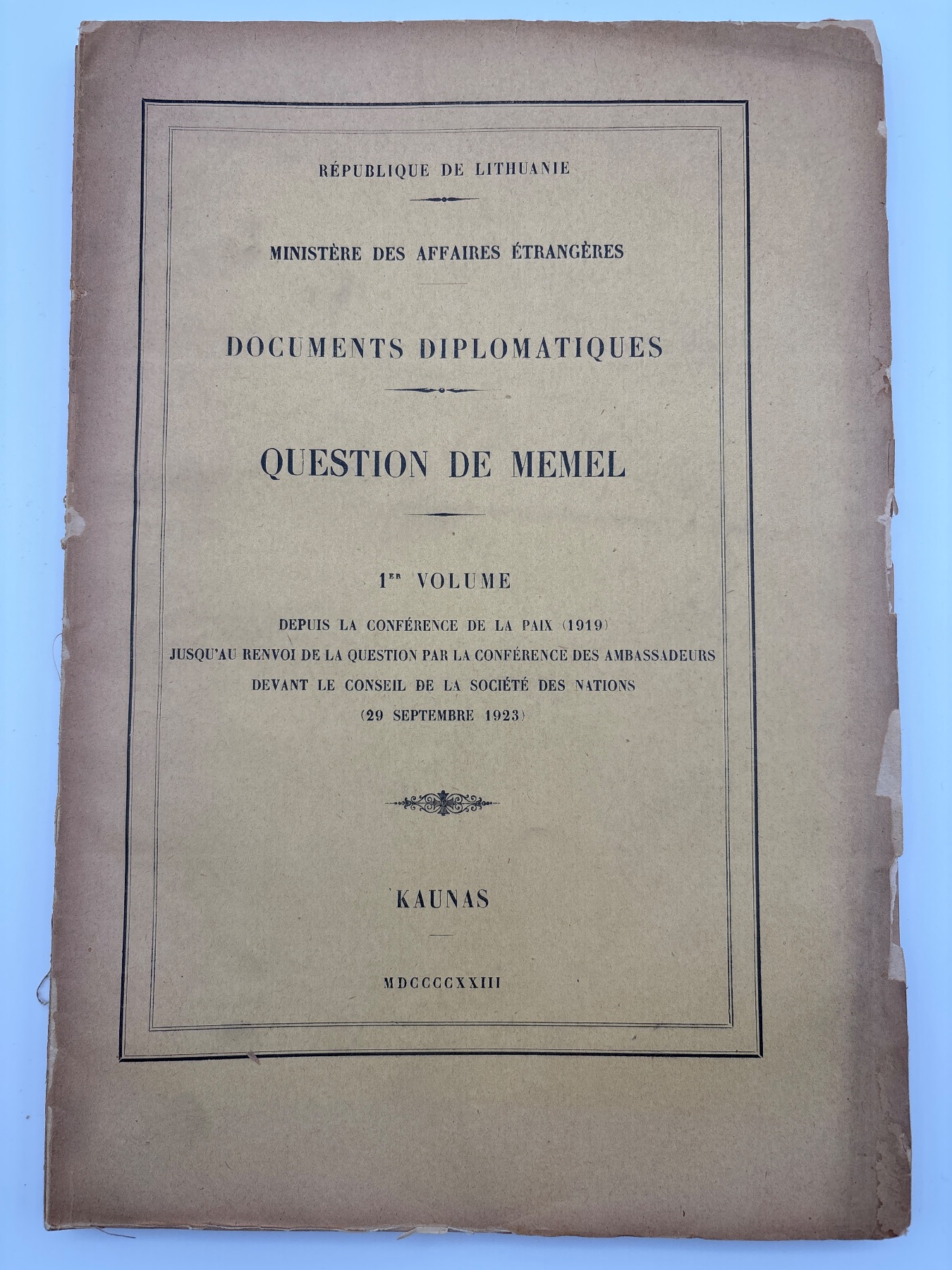
Documents Diplomatiques — Question de Memel, 1er Volume
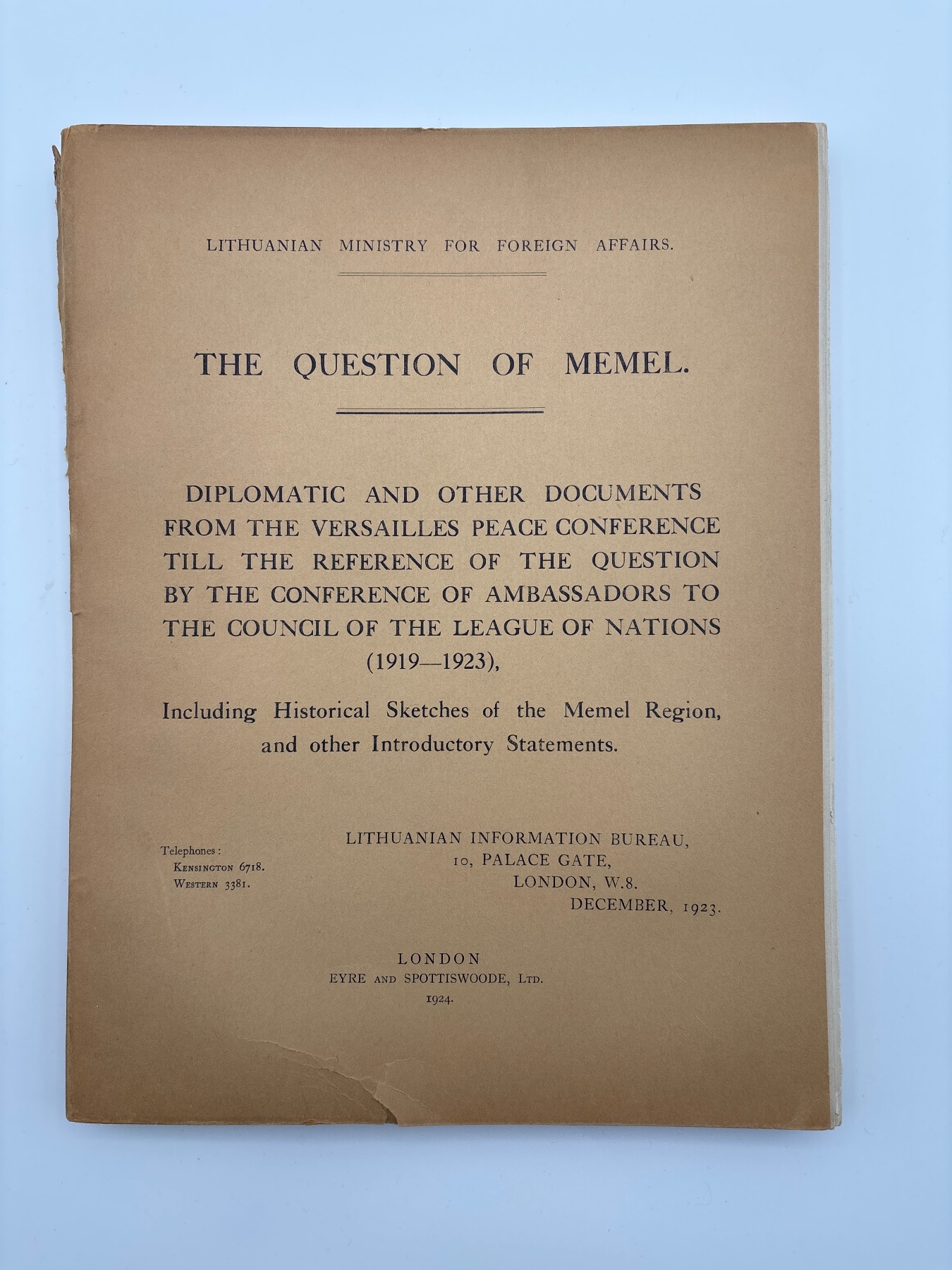
The Question of Memel: Diplomatic and Other Documents from the Versailles Peace Conference till the Reference of the Question by the Conference of Ambassadors to the Council of the League of Nations (1919-1923), Including Historical Sketches of the Memel Region, and other Introductory Statements