
P.O.W. (Polska Organizacja Wojskowa) Lietuvoje
1936
Historical and community context
Where this record belongs
Independent Lithuania
Introduction
This 1936 Kaunas pamphlet by J. Rainys presents the Lithuanian state's case against the Polish Military Organization (P.O.W. — Polska Organizacja Wojskowa) based on documents presented at an Army Tribunal trial in December 1920. It constitutes a rare primary-source political-security text from Interwar Lithuania that documents Polish intelligence operations, subversive networks, and the Lithuanian government's counter-intelligence perspective at the height of the Vilnius dispute. As a publication of Spaudos Fondas — the Lithuanian Press Fund, a state-linked publisher — it carries institutional authority and represents official Lithuanian nationalist discourse on Polish expansionism.
Context and significance
Significance
This pamphlet is a remarkable artifact of interwar Lithuanian institutional infrastructure at its most defensive and self-assertive. Published by Spaudos Fondas — a press institution closely aligned with the Lithuanian nationalist state project — it represents the official Lithuanian narrative on Polish subversion at precisely the moment when the Vilnius question and Klaipėda crisis dominated public discourse. The text's reliance on Army Tribunal documents signals an attempt to ground nationalist political argument in juridical legitimacy, reflecting the interwar Lithuanian state's effort to project modernity and rule-of-law values while conducting a propaganda campaign. The inclusion of a 'Post Scriptum' in which the Poles themselves allegedly confirm P.O.W. liquidation in Lithuania is a rhetorical strategy that reveals how deeply the Lithuanian press-state nexus worked to shape public consciousness around existential territorial threats.
As a cultural survival text, the pamphlet operates on multiple levels: it asserts Lithuanian sovereignty over contested territories through historical and legal argument, it mobilizes anti-Polish sentiment as a cohesive national identity mechanism, and it frames Lithuanian independence as perpetually under siege — a narrative that would prove tragically prescient given the 1940 Soviet occupation. The detailed enumeration of Polish organizations (P.O.W., O.S.N., Organizacja Strzelców Nadniemeńskich, Kauno Apygardos XIII obvodas) and named agents (Leon Wasilewski, Dunin-Wasowicz, Valerija Slaveka) provides an extraordinary snapshot of how Lithuanian security discourse constructed the Polish 'other' as an existential threat.
For diaspora communities after 1944, texts like this one formed part of the intellectual-historical bedrock from which émigrés understood Lithuanian statehood, Polish relations, and the meaning of independence. The Spaudos Fondas imprint and Varpas printing house connection anchor this work firmly in the Kaunas cultural-institutional world that diaspora intellectuals mourned and mythologized. Understanding this pamphlet helps explain the intensity of Lithuanian-Polish historical grievances that persisted in diaspora communities for decades after the war.
How this record carried memory
Identity preservation, Continuity statement explicit
Record connections
People, places, and institutions linked in the catalog
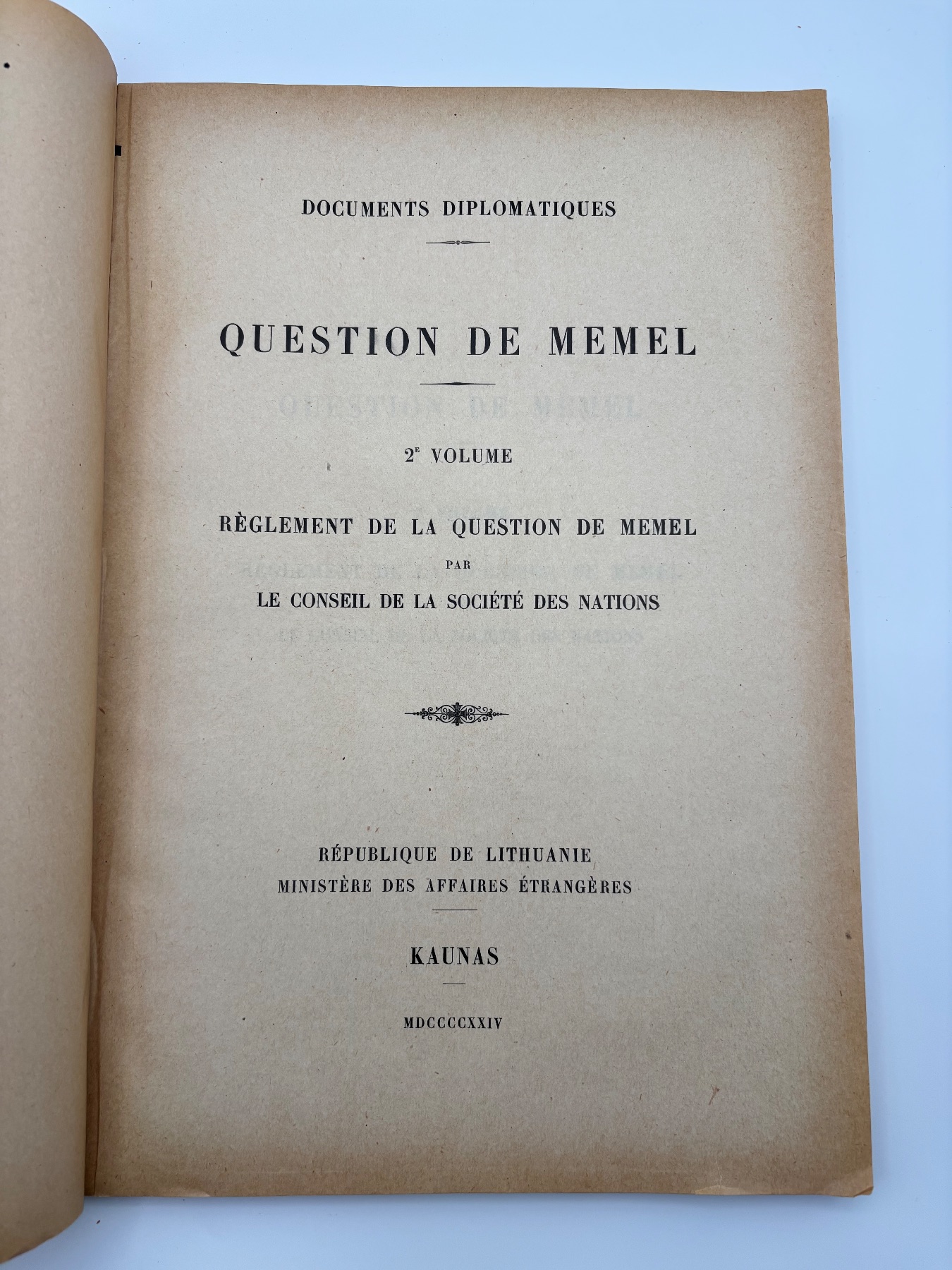
Question de Memel — 2e Volume: Règlement de la Question de Memel par le Conseil de la Société des Nations
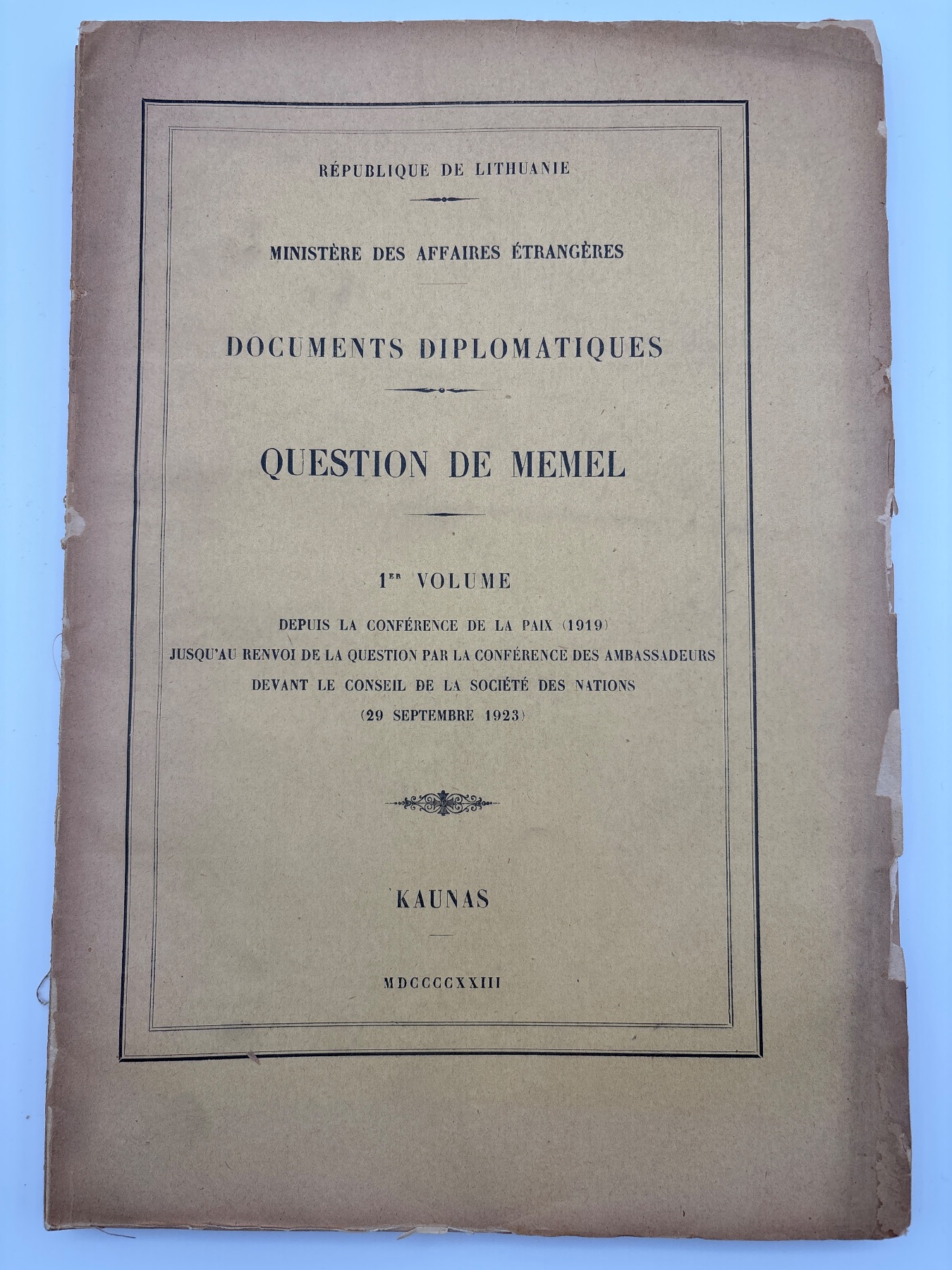
Documents Diplomatiques — Question de Memel, 1er Volume
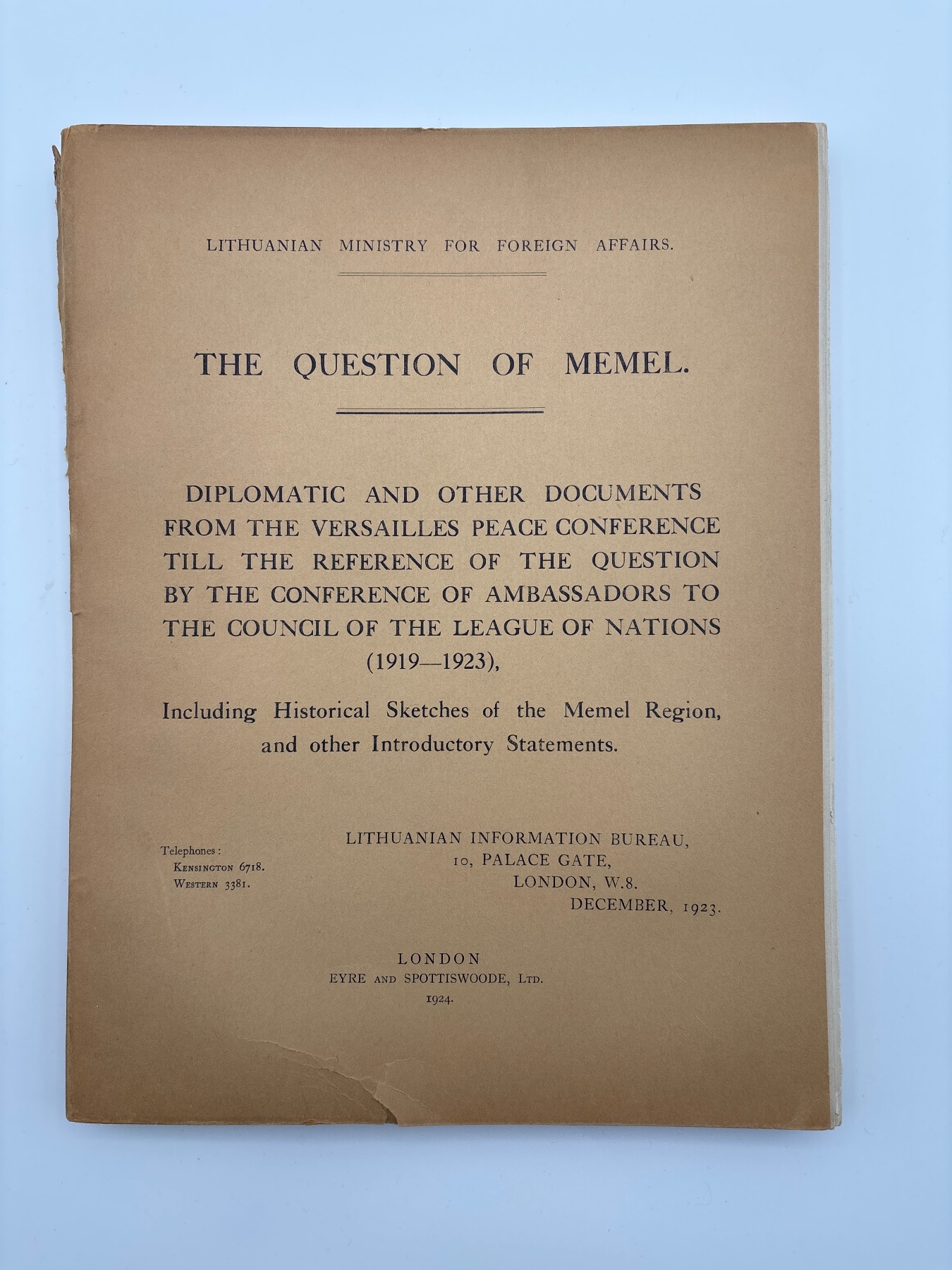
The Question of Memel: Diplomatic and Other Documents from the Versailles Peace Conference till the Reference of the Question by the Conference of Ambassadors to the Council of the League of Nations (1919-1923), Including Historical Sketches of the Memel Region, and other Introductory Statements