
Vadovas po Vilnių
Historical and community context
Where this record belongs
Soviet censorship
Context and significance
Significance
This guidebook represents a fascinating case study in Soviet cultural politics applied to Lithuanian urban space. The renaming of streets — Stalin Prospekt, Dzerzhinsky Street, Komsomol Street — inscribed Soviet ideological geography onto a city with deep Lithuanian, Polish, and Jewish historical strata, and the guidebook's job was to naturalize this new spatial order for Lithuanian-speaking readers. That the authors wrote in Lithuanian rather than Russian is itself significant: the Soviet regime recognized that Lithuanian-language publication was necessary to reach and ideologically form the Lithuanian-speaking population, inadvertently investing in the very linguistic infrastructure that would later sustain national resistance.
The book also reveals the tension inherent in Soviet heritage management: to celebrate Vilnius, the authors had to describe its pre-Soviet Gothic churches, Baroque architecture, and medieval street patterns — the very material culture of Catholic Lithuanian and Polish civilization that Soviet ideology nominally opposed. Sections on St. Anne's Church, Bernardine Church, and the old town architectural ensemble preserve detailed architectural and historical description that transcends its Soviet framing. This tension between ideological control and the irrepressible depth of the city's pre-Soviet heritage gives the text a layered quality unusual in Soviet propaganda.
For diaspora communities, this book has a particular resonance: Vilnius was the contested capital claimed by both Lithuanian nationalists and Polish nationalists, and the city's Lithuanian-language documentation — even under Soviet auspices — was a form of cultural assertion. Diaspora scholars and descendants would find in this guidebook both a source of grief (Soviet occupation named on every page) and a repository of detailed knowledge about a city many had been exiled from, preserving the geography of a homeland transformed.
Record connections
People, places, and institutions linked in the catalog
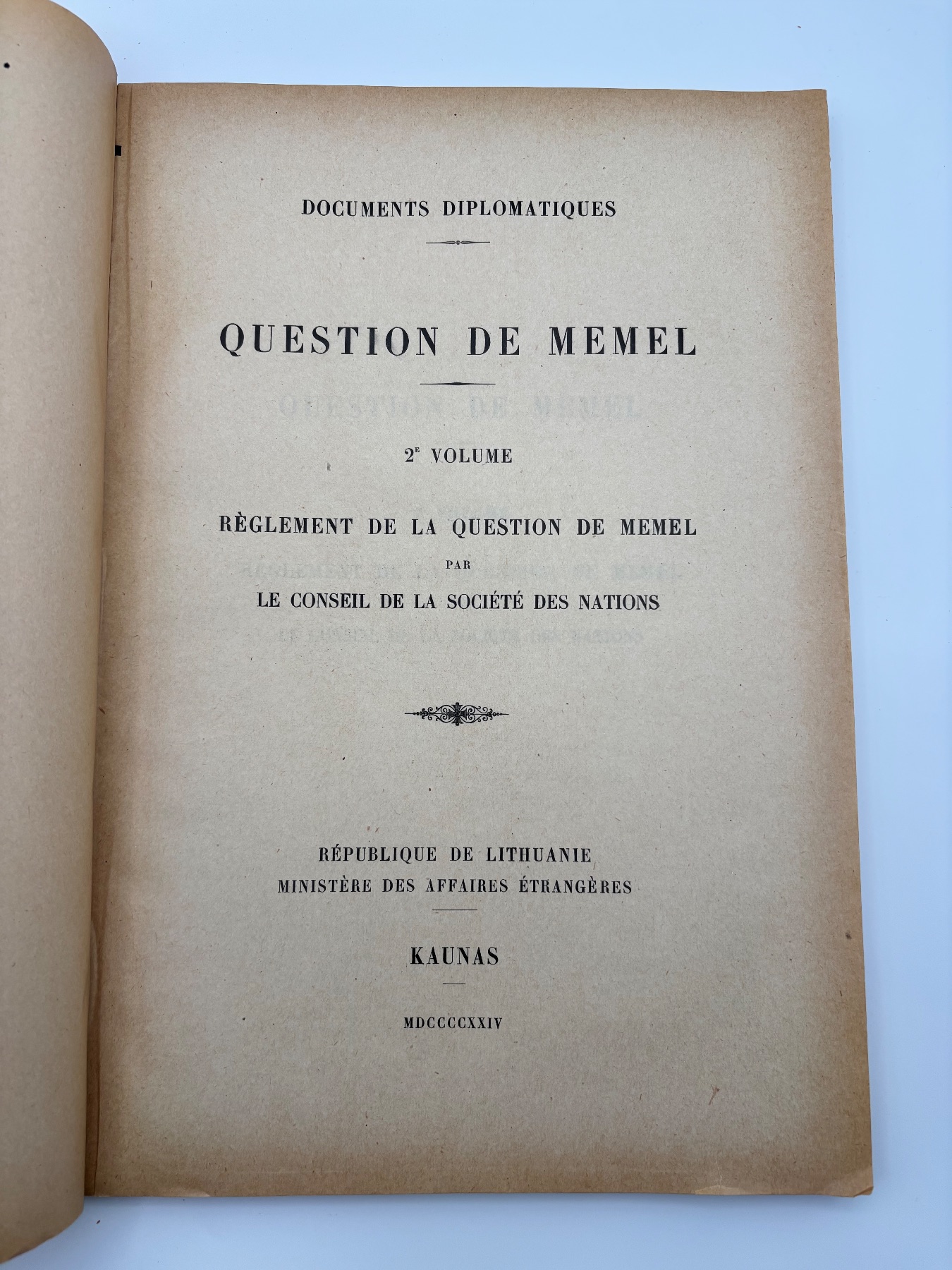
Question de Memel — 2e Volume: Règlement de la Question de Memel par le Conseil de la Société des Nations
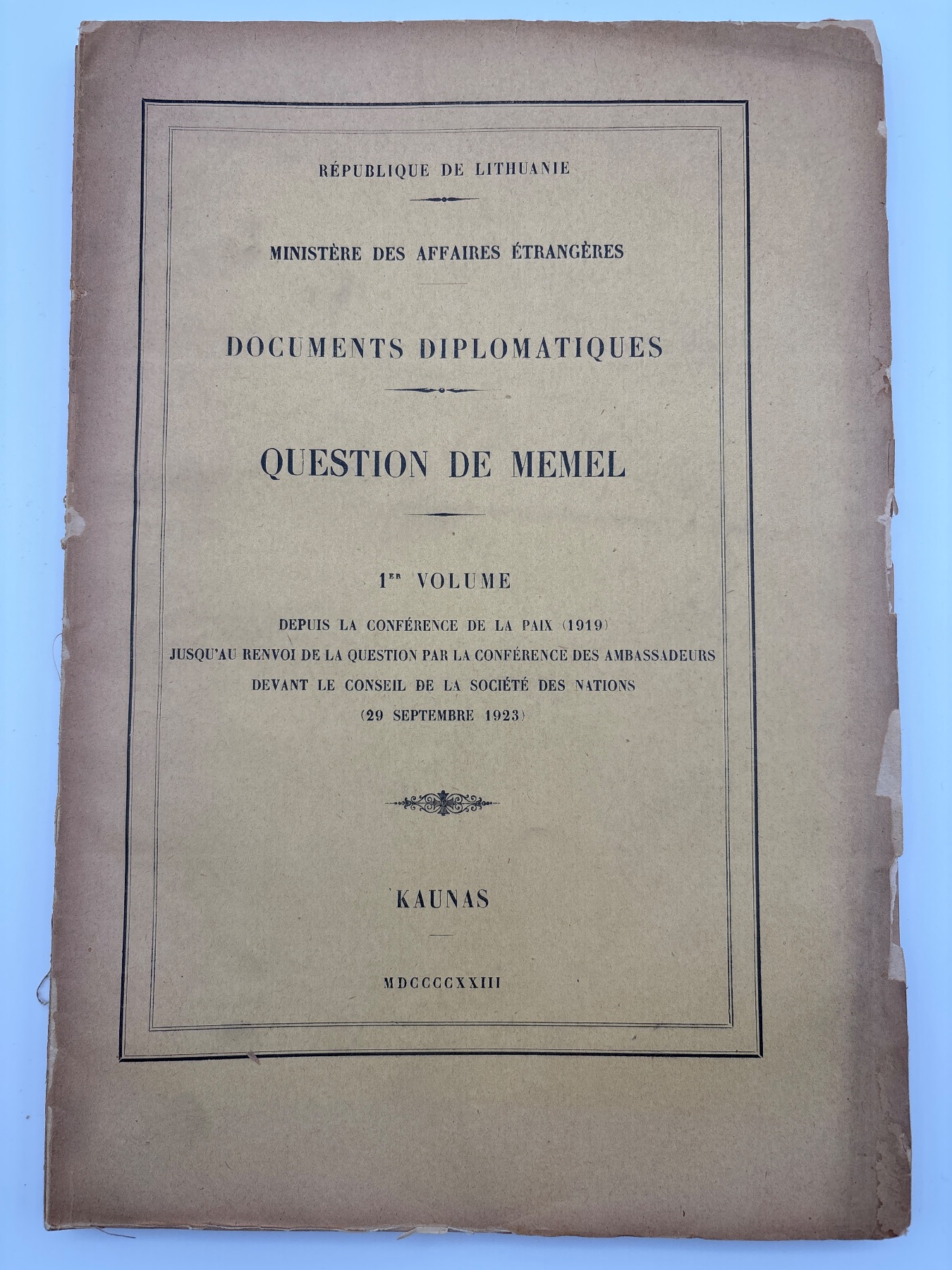
Documents Diplomatiques — Question de Memel, 1er Volume
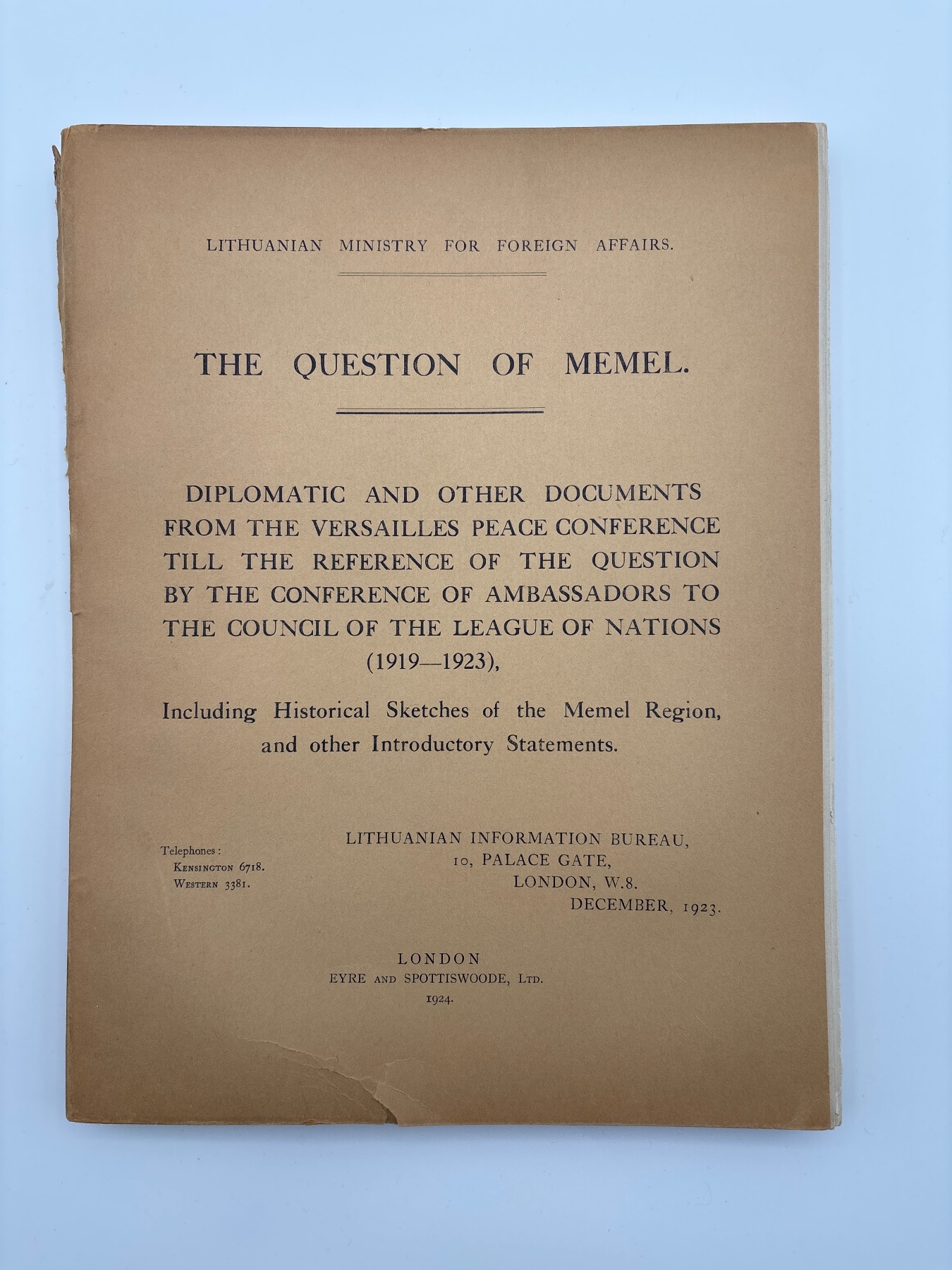
The Question of Memel: Diplomatic and Other Documents from the Versailles Peace Conference till the Reference of the Question by the Conference of Ambassadors to the Council of the League of Nations (1919-1923), Including Historical Sketches of the Memel Region, and other Introductory Statements