
Algimantas II (Istorinė Apysaka, Antra Dalis)
1948
Historical and community context
Where this record belongs
Allied authorization (DP) — explicitly printed under US Army Hq. APO 757 authorization, Nördlingen, Bavaria, 1948
Introduction
This is the fourth edition of the second volume of Algimantas, the first Lithuanian historical novel, written by Vincas Pietaris and republished in a German DP camp in 1948 by Lithuanian displaced persons maintaining their literary culture under US Army authorization. Its survival across four editions — from pre-war Lithuania through the chaos of displacement — makes it a landmark of Lithuanian literary and cultural continuity. The colophon alone ('Authorized by US Army Hq. APO 757') is a singular document of the conditions under which Lithuanian diaspora literature was born.
Context and significance
Significance
The 1948 Nördlingen publication of Algimantas II is a microcosm of Lithuanian diaspora institutional infrastructure at its most acute moment of formation. Within three years of displacement, Lithuanian exiles had reconstituted a functioning literary publishing apparatus — a named press (Suduvos knygų leidykla), an educational review commission with numbered protocols, and a distribution network capable of placing books into school libraries — all while operating under US Army occupation authority in Bavaria. The colophon 'Authorized by US Army Hq. APO 757' is not merely a legal formality; it documents the precise political and logistical conditions under which Lithuanian cultural production was possible in 1948, and the determination of a community to produce it regardless.
The choice to republish Algimantas as a fourth edition in this context is itself a profound cultural statement. Pietaris's novel — set in medieval Sūduva and depicting Lithuanian resistance to external threats — carried obvious allegorical resonance for a community that had just survived Soviet and Nazi occupation and now faced statelessness. The internal critical apparatus visible on page 305 (comparing Pietaris to Sienkiewicz, analyzing his democratic characterization of medieval society) demonstrates that DP-era Lithuanian publishing was not merely preservationist but actively scholarly and self-aware. The community was not just reprinting its literature; it was interpreting it, contextualizing it, and transmitting it with intellectual seriousness.
How this record carried memory
Identity preservation; Continuity statement explicit — the fourth edition republication of the canonical first Lithuanian novel in a DP camp is an unambiguous act of cultural survival and national identity maintenance; the school library approval stamp signals deliberate educational transmission to the next generation even in exile
Record connections
People, places, and institutions linked in the catalog
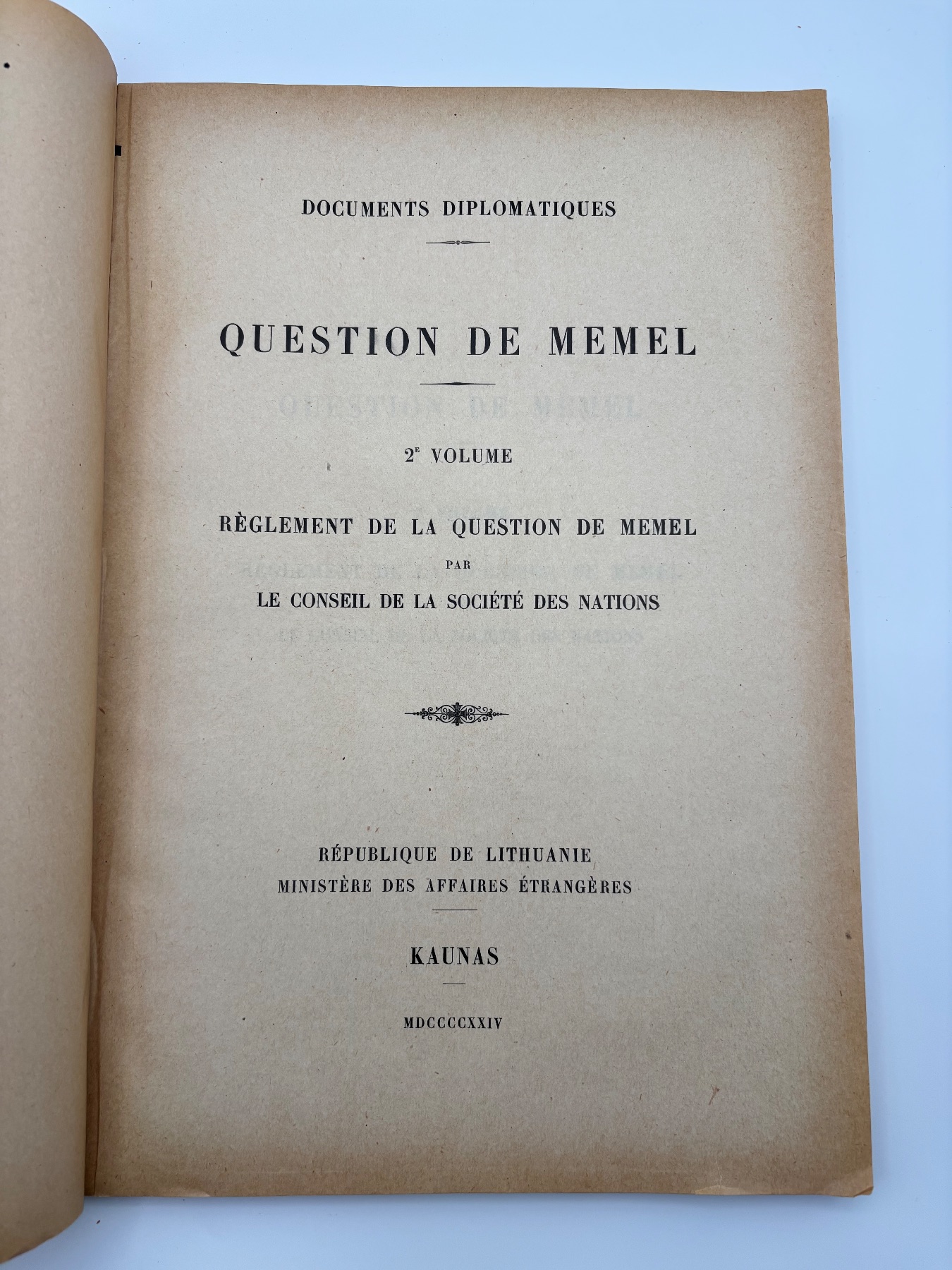
Question de Memel — 2e Volume: Règlement de la Question de Memel par le Conseil de la Société des Nations
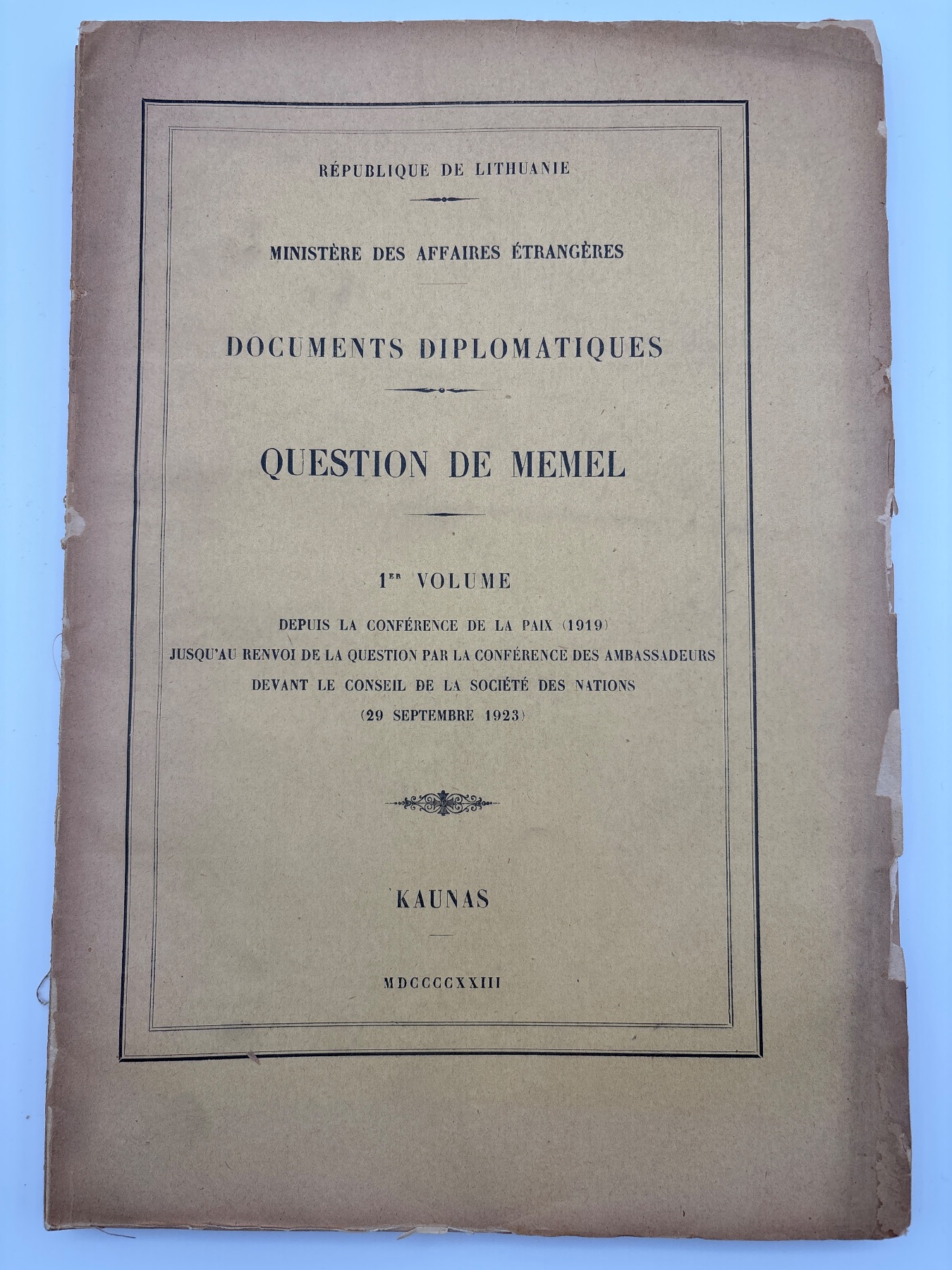
Documents Diplomatiques — Question de Memel, 1er Volume
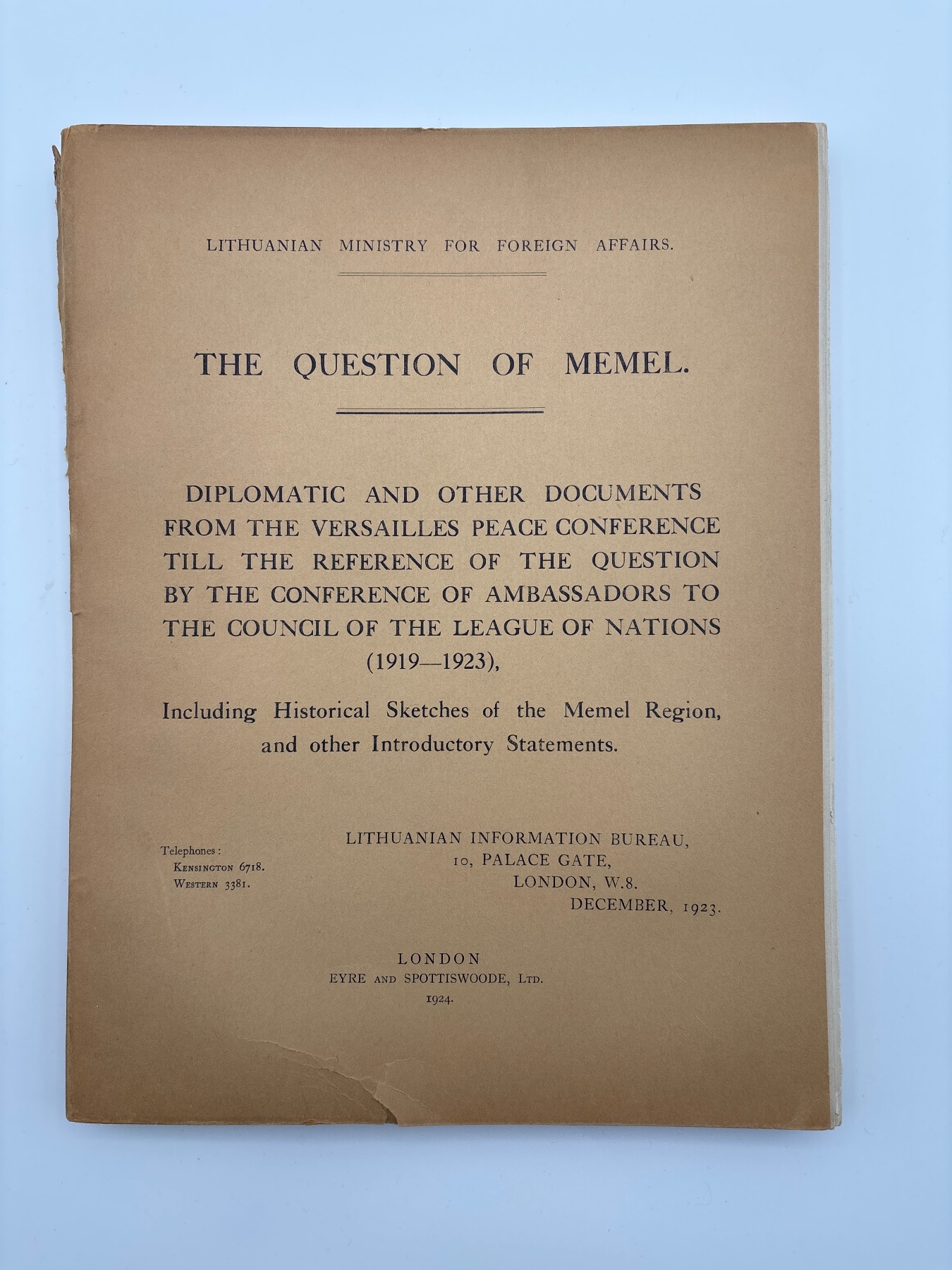
The Question of Memel: Diplomatic and Other Documents from the Versailles Peace Conference till the Reference of the Question by the Conference of Ambassadors to the Council of the League of Nations (1919-1923), Including Historical Sketches of the Memel Region, and other Introductory Statements