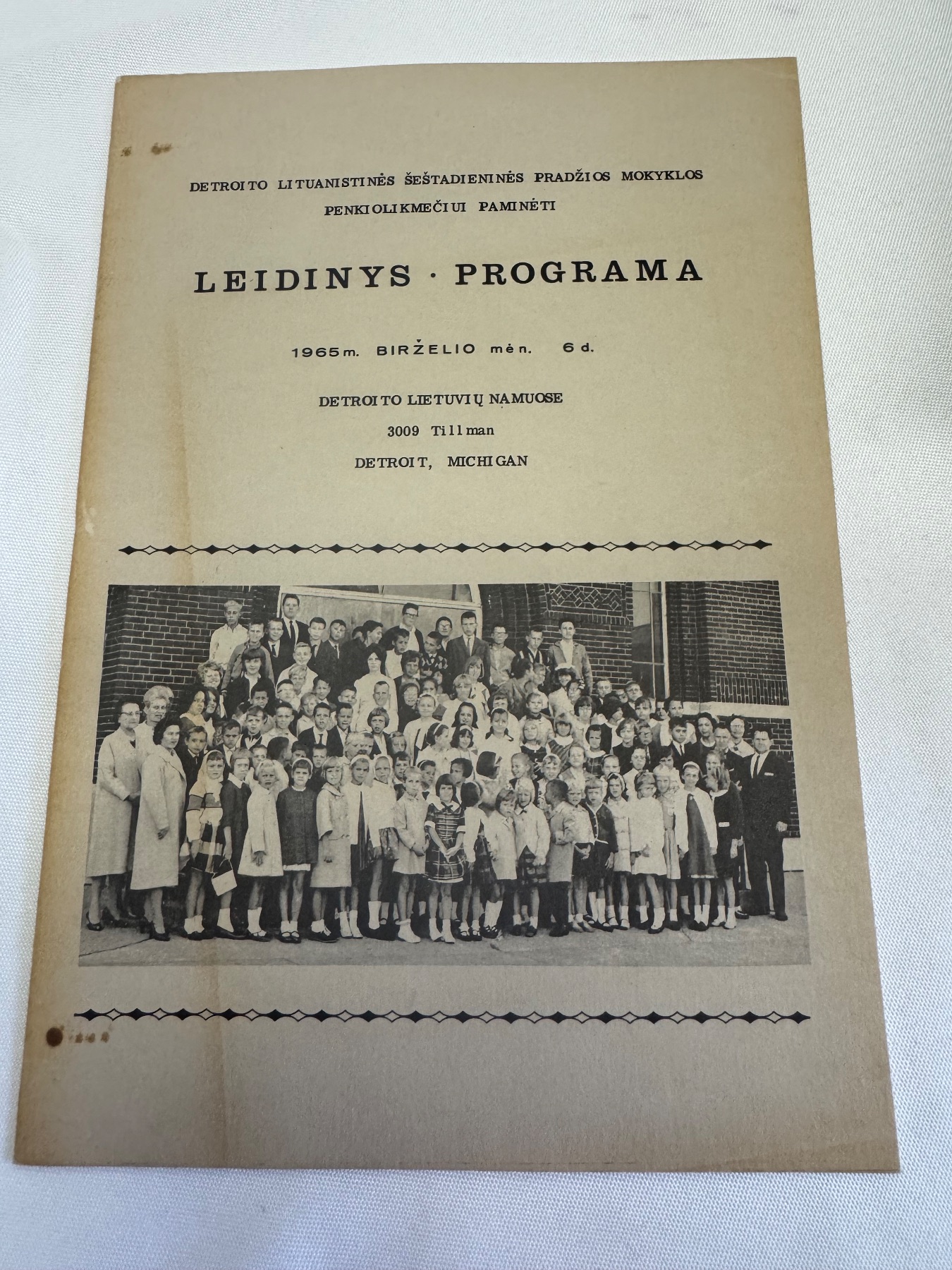
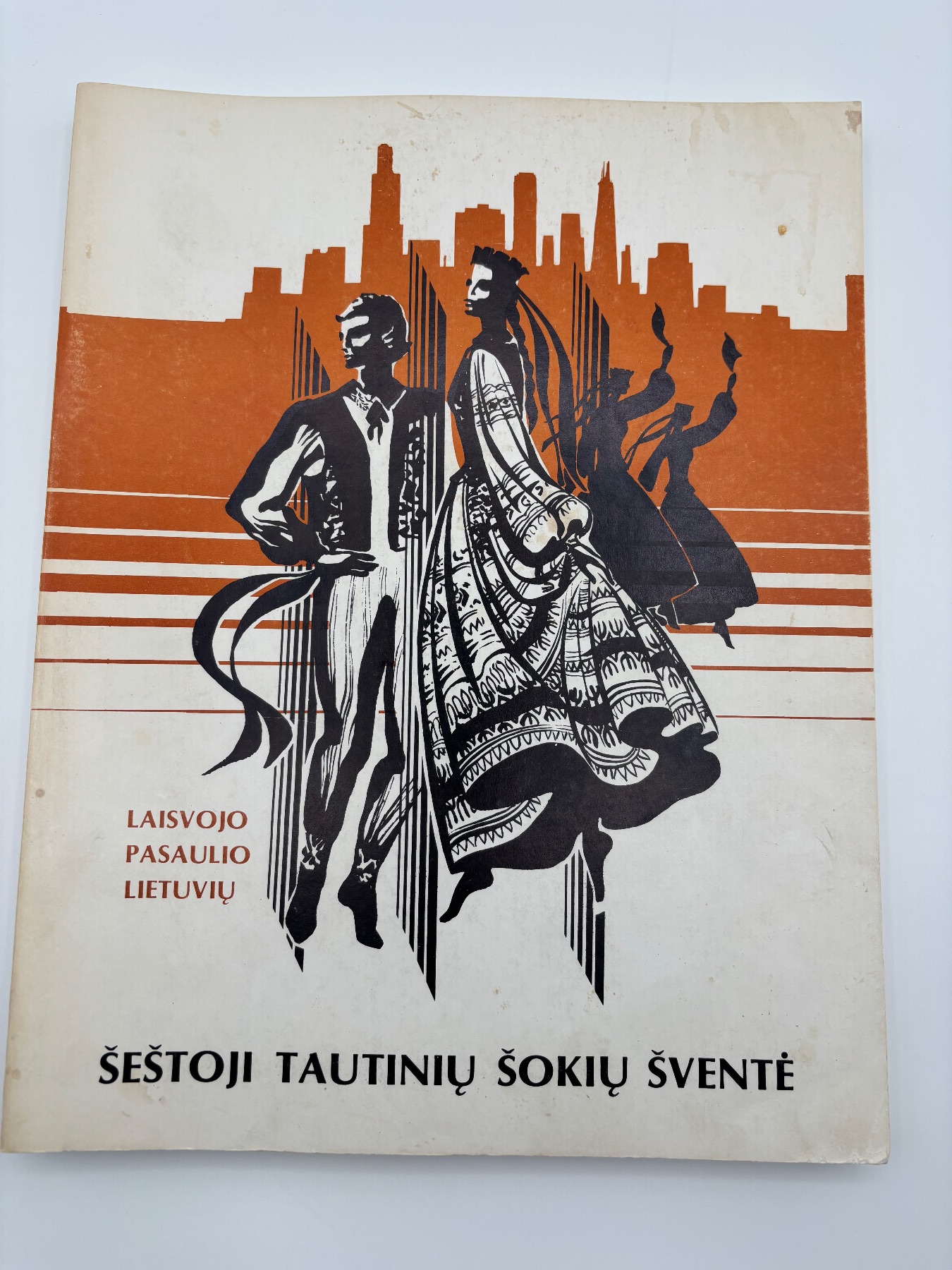
Detroito Vyskupijos Šv. Antano Parapijos Tarybos Posėdžių Protokolų Knyga
A. Barauskas; A. Mišiūnas; Birutė Barauskienė; R. Macionis
1970–1982
Historical and community context
Where this record belongs
Diaspora freedom
Introduction
This handwritten protocols book is the official minute-book of the Parish Council (Taryba) of St. Anthony's Lithuanian Catholic Parish in Detroit, spanning 1970–1982 — a critical period of mature diaspora institution-building. It captures Lithuanian-language governance of one of Detroit's most active Lithuanian Catholic communities, recording financial decisions, repair projects, committee structures, ecclesiastical relationships with the Diocese, and the rhythms of parish life in vivid, authentic administrative prose.
Context and significance
Significance
This protocols book illuminates the sophisticated institutional infrastructure that Lithuanian diaspora communities constructed in mid-century America. The text reveals a fully functioning parish council with a defined constitution (statute), standing committees (Liturgijos, Pagalbos/Service, Krikščioniško ugdymo, Finansų), elected officers, and formal relationships with the American Catholic diocesan hierarchy — all conducted entirely in Lithuanian. The governance language is self-consciously formal and Lithuanian, resisting assimilation at the institutional level even as American English vocabulary infiltrates for financial and logistical concepts.
The minutes document the lived material culture of diaspora survival: roof repairs, corridor renovations, garage construction, musical hiring (organist Stasys paid $100/month), benefit events netting $2,945, and tensions over parish women's participation in fundraising. These granular details reveal that the parish was not merely a spiritual institution but the primary social and economic organizing node of the Detroit Lithuanian community. The references to cooperation with the 'Detroito Lietuvių Organizacijų Centras' (Detroit Lithuanian Organizations Center) show that this parish was embedded in a wider ecosystem of diaspora organizations.
Linguistically and culturally, the volume demonstrates how Lithuanian identity was maintained not through nostalgia alone but through bureaucratic practice — through the discipline of conducting formal governance in Lithuanian, training successive secretaries in administrative prose, and recording community decisions in a language that Soviet-occupied Lithuania could not freely use for such purposes. This is Lithuanian as a living administrative language in exile, a phenomenon of profound significance for understanding how small nations preserve institutional capacity across generations of displacement.
How this record carried memory
Religion as language vessel, Continuity statement explicit, Identity preservation
Record connections
People, places, and institutions linked in the catalog