Penktoji Laisvojo Pasaulio Lietuvių Tautinių Šokių Šventė
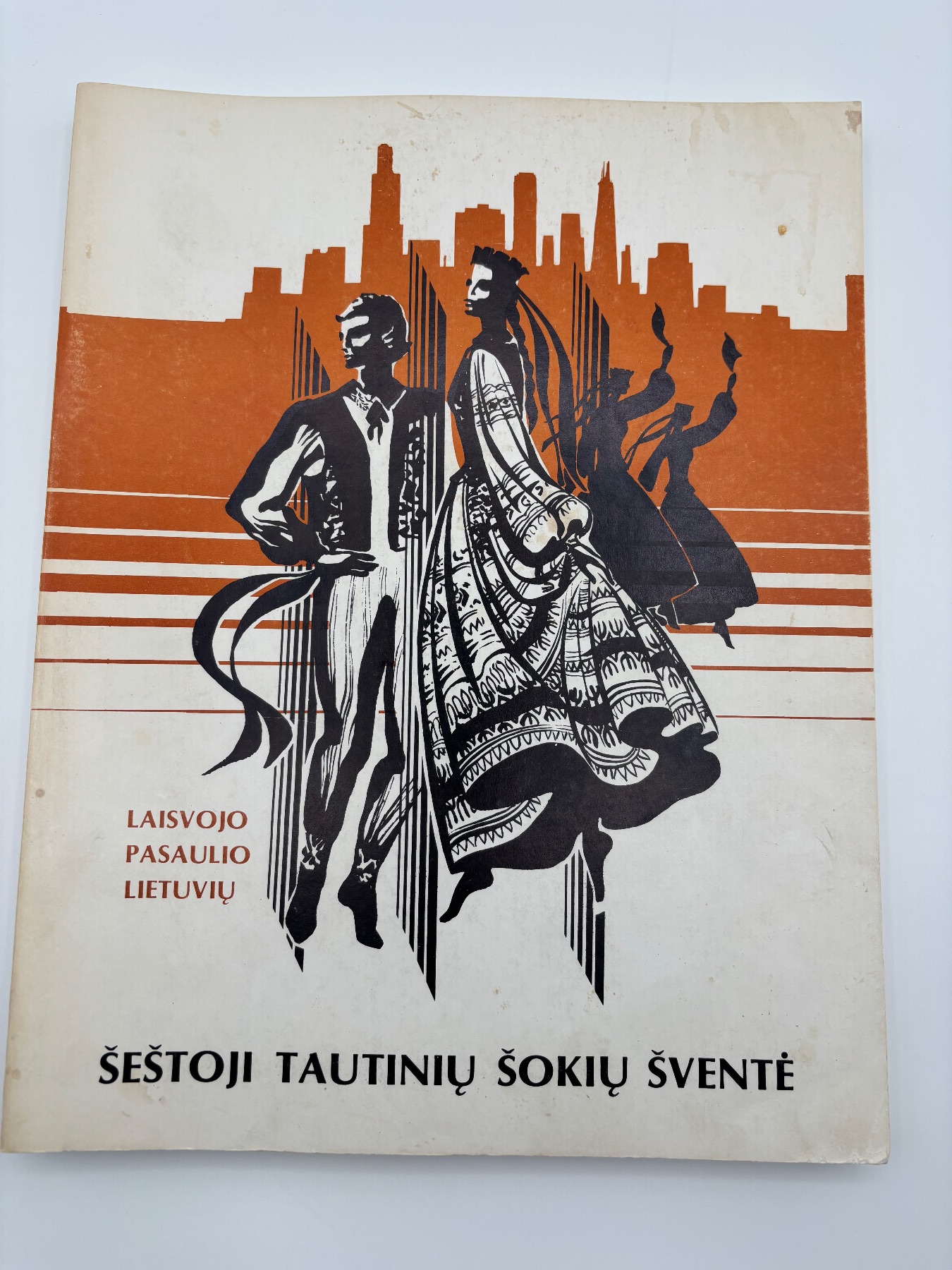
cover and illustrations by Ada Korsakaitė-Sutkuvienė; Danutė Bindokienė; Dekoracijos: Jurgis Daugvila; Iždinkė: Genė Rimkienė; Muzikalinis direktorius: Algis Modestas; Pirmininkas: Bronius Juodelis; Programos asistentas: Juozas Karasiejus; Programos asistentė: Vanda Stankienė; Programos direktorė: Galina Gobienė; Programos pranešėjos: Julija Cijūnelienė, Jolita Kriauceliūnaitė; Sekretorė: Aldona Rauchienė; Teisinis patarėjas: Povilas Žumbakis; Vicepirmininkė: Sofija Džiugienė
1976
Historical and community context
Where this record belongs
Diaspora freedom
Introduction
This official festival program for the Fifth Lithuanian Folk Dance Festival of the Free World (1976, Chicago) is a singular artifact of Cold War diaspora cultural mobilization, documenting the largest gathering of Lithuanian folk dancers outside Soviet-occupied Lithuania during the American Bicentennial year. It contains a congratulatory letter from President Gerald R. Ford as Honorary Patron and a message from the Lithuanian Consul General, revealing the extraordinary diplomatic and political visibility that Lithuanian diaspora cultural events commanded at the highest levels of American government. As a bilingual (Lithuanian/English) record of participating dance ensembles from the US, Canada, England, Brazil, and Venezuela, it maps the global geography of Lithuanian cultural survival in a single volume.
Context and significance
Significance
This festival program is a primary document of the mature Lithuanian diaspora's extraordinary capacity for self-organization across national borders and continents. The Fifth Folk Dance Festival of 1976 brought together dance ensembles from the United States, Canada, England, Brazil, and Venezuela — evidence that Lithuanian cultural institutions had not merely survived the post-war displacement but had replicated and institutionalized themselves globally within a single generation. The program's organizational committee page alone names over twenty individuals in named functional roles (chair, vice-chair, program director, secretary, treasurer, legal advisor, musical director, decorations, registration, transportation, information), revealing a level of institutional sophistication equivalent to any professional arts organization of the era.
The dual patronage structure — a letter from the sitting President of the United States and a message from the Lithuanian Consul General (representing the Lithuanian government-in-exile recognized by the US) — is a remarkable window into Cold War ethnic politics. The Bicentennial framing was deliberate: Lithuanian-Americans positioned their folk culture festival as a contribution to American democratic heritage, simultaneously asserting their American belonging and their distinctly Lithuanian identity. This dual-identity performance was a conscious survival strategy, leveraging American multicultural values to preserve what Soviet occupation was destroying in the homeland.
The program's bilingual structure (Lithuanian and English running in parallel) reflects the community's transitional moment: first-generation immigrants needed Lithuanian, while their American-born children needed English, and the festival itself needed to speak to American civic audiences, funders, and politicians. The mention of three Lithuanian-language radio programs (Margutis, Lietuvos Aidai, Sophia Barcus Radio) and a Lithuanian television presence documents a parallel diaspora media ecosystem that sustained language and cultural identity between such festival moments — an ecosystem almost entirely undocumented in mainstream American media history.
How this record carried memory
Identity preservation; Continuity statement explicit; Pedagogical framing; Faith framed as heritage
Record connections
People, places, and institutions linked in the catalog