
Prie Vilties Kryžiaus
1948
Historical and community context
Where this record belongs
Diaspora freedom
Introduction
Published in Chicago in 1948 by a Lithuanian priest-publisher, 'Prie Vilties Kryžiaus' (At the Cross of Hope) is a polemical anti-communist pamphlet by Dr. Juozas Prunskis, one of the most prolific Lithuanian diaspora writers and journalists. The work marshals testimony from Soviet defectors — including Krivickis, Barmin, and Kravčenko — to document Stalinist atrocities for a Lithuanian-American audience still reeling from the Soviet occupation of their homeland. It represents the earliest stratum of Chicago Lithuanian diaspora political publishing, produced just as the DP wave was cresting.
Context and significance
Significance
This pamphlet exemplifies the dual function of early Chicago Lithuanian diaspora publishing: it simultaneously serves as political advocacy (marshaling defector testimony against Soviet tyranny) and as community-cohering cultural production (affirming Lithuanian Catholic identity in the face of occupation). Published just three years after the second Soviet occupation of Lithuania and in the same year as the first major DP arrivals to the United States, it represents an attempt by diaspora intellectuals to educate both the Lithuanian exile community and sympathetic American audiences about the realities of Stalinist terror. Prunskis's use of figures like Kravčenko — whose 'I Chose Freedom' was an international sensation — situates Lithuanian suffering within a broader Cold War narrative legible to Western readers while anchoring the argument in Lithuanian Catholic moral values.
The publisher, Kun. P. M. Juras, represents a critical node in the early diaspora institutional infrastructure: priest-publishers who used their pastoral authority and community networks to finance, distribute, and legitimize political and religious texts. This model — in which the parish or individual clergyman acts as publisher — was characteristic of Lithuanian-American publishing before larger diaspora institutions (such as the Lithuanian American Council or Draugas press) assumed that role. The physical book itself, with its hammer-and-sickle-under-cross cover image, functioned as a visual manifesto circulated at parish halls, community meetings, and Lithuanian Saturday schools.
Linguistically, the text preserves the standard interwar Lithuanian orthographic and stylistic register that diaspora communities consciously maintained as a mark of cultural legitimacy and resistance to Sovietization. The mixture of Lithuanian prose with untranslated English book titles reflects the transitional bilingual reality of the 1948 Chicago community — educated adults who had arrived from Lithuania were consuming both Lithuanian and English-language anti-communist literature simultaneously, and Prunskis's citations serve as a bridge between those two reading worlds.
How this record carried memory
Identity preservation, Continuity statement explicit, Religion as language vessel
Record connections
People, places, and institutions linked in the catalog
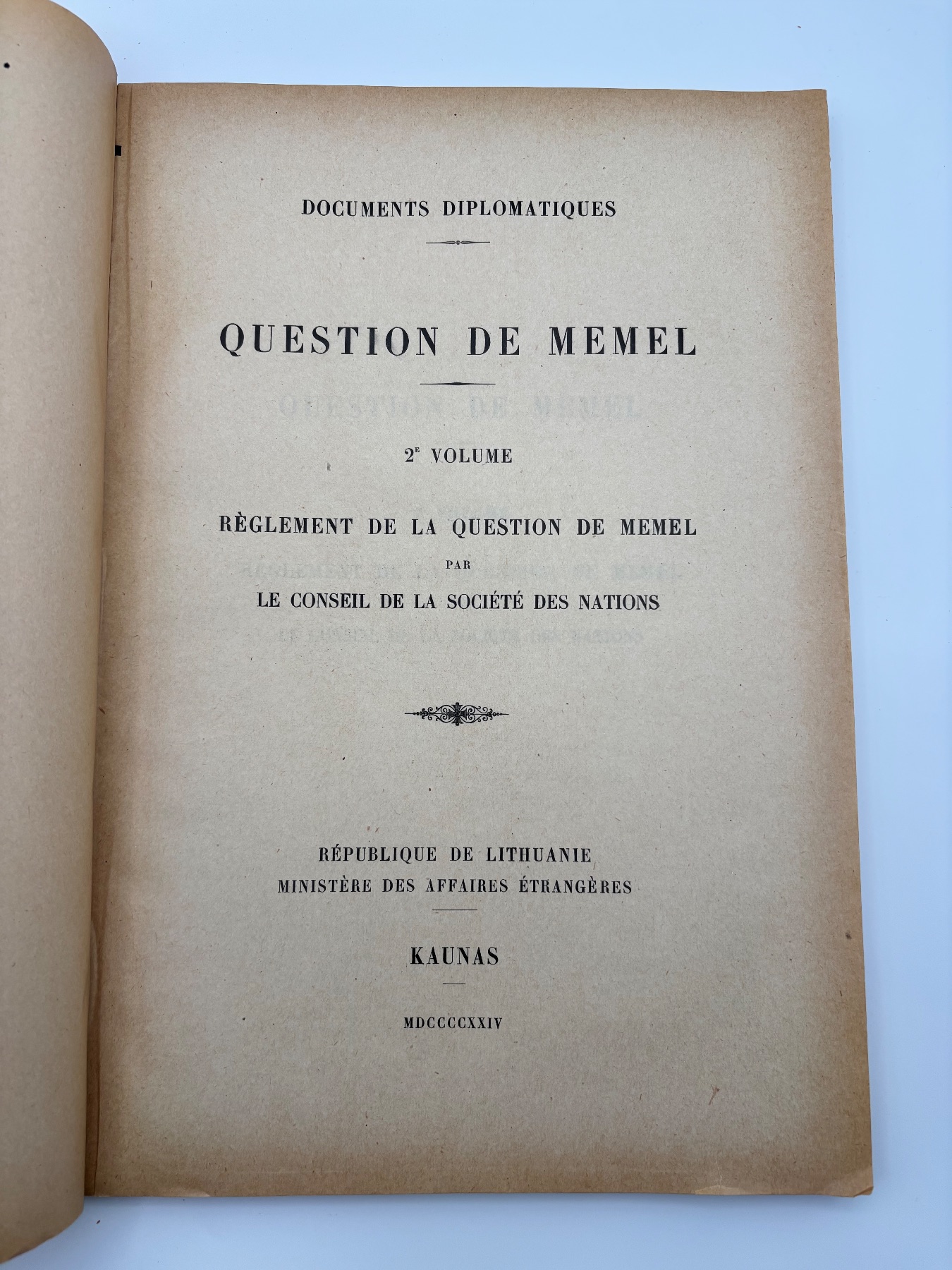
Question de Memel — 2e Volume: Règlement de la Question de Memel par le Conseil de la Société des Nations
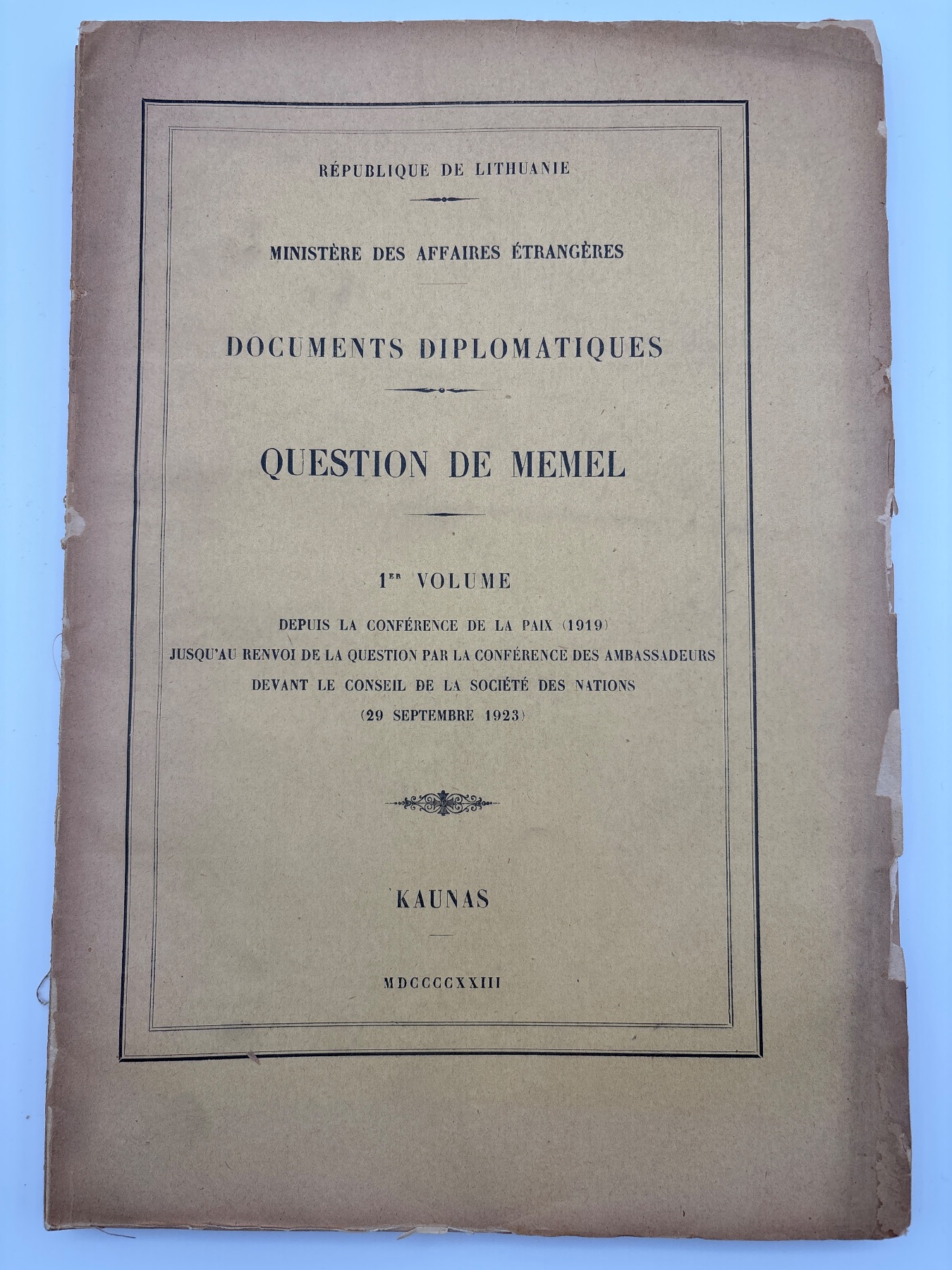
Documents Diplomatiques — Question de Memel, 1er Volume
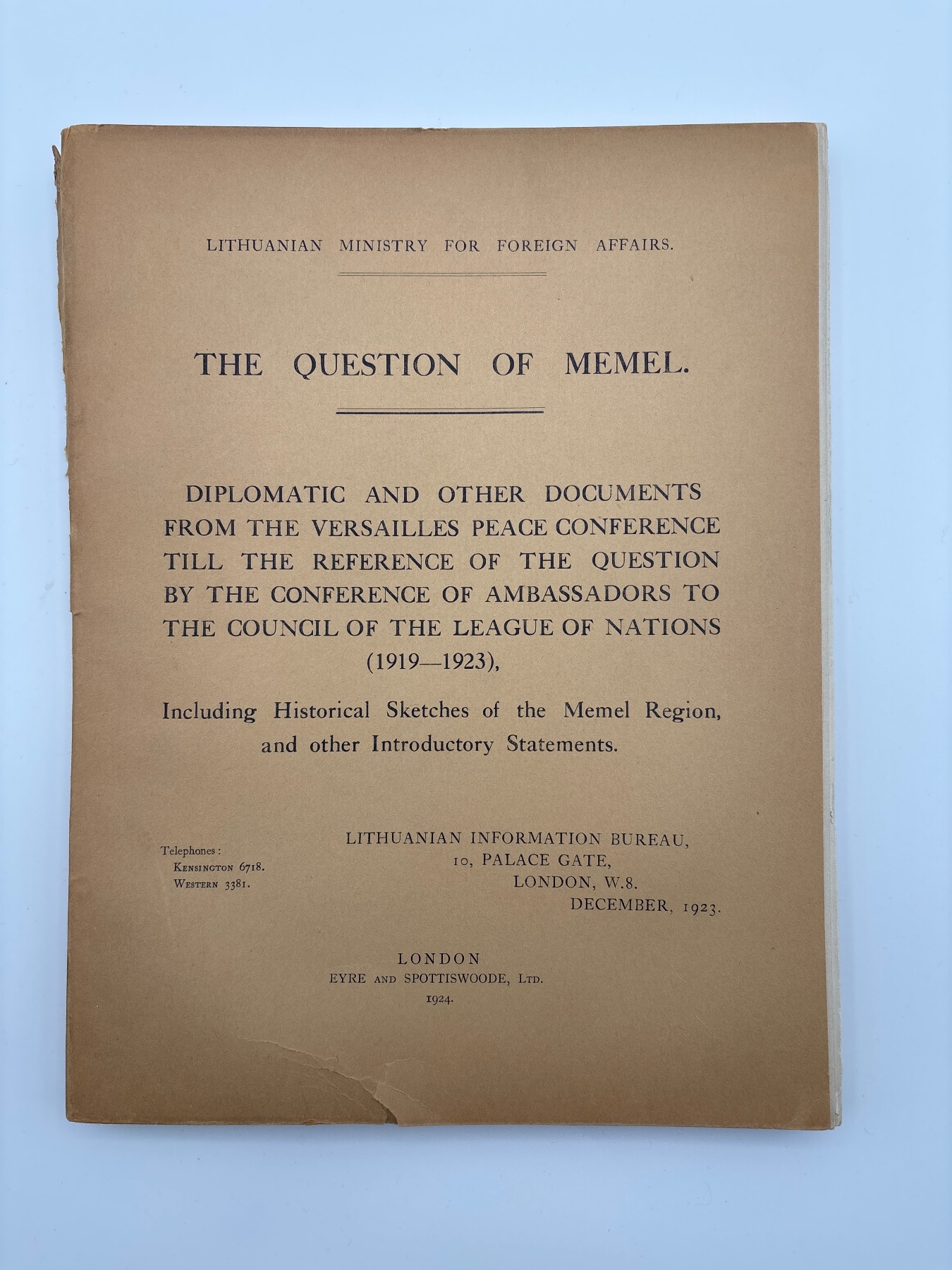
The Question of Memel: Diplomatic and Other Documents from the Versailles Peace Conference till the Reference of the Question by the Conference of Ambassadors to the Council of the League of Nations (1919-1923), Including Historical Sketches of the Memel Region, and other Introductory Statements