
Prie Vilties Kryžiaus
1948
Historical and community context
Where this record belongs
Diaspora freedom
Introduction
Published in Chicago in 1948 by a Lithuanian Catholic priest-publisher at the precise moment Lithuanian DPs were arriving in America, this is Dr. Juozas Prunskis's Lithuanian-language anthology of conversion testimonies from communism to Catholicism — featuring figures including Dorothy Day, Clare Boothe Luce, a Latvian minister, a Russian bishop, and Rome's chief rabbi. The cover's striking woodcut of a cross triumphant over the hammer and sickle makes the ideological argument visually before a word is read. As one of the earliest Lithuanian diaspora publications printed in Chicago, it represents the community's immediate effort to mobilize Catholic anti-communist identity as the foundation of Lithuanian cultural survival in America.
Context and significance
Significance
This publication represents a foundational document of Lithuanian-American Catholic anti-communist intellectual culture, produced at the precise historical hinge point of 1948 when Lithuanian displaced persons were arriving in the United States and needed ideological as well as spiritual grounding. Dr. Prunskis's choice to compile international conversion-from-communism testimonies — drawing on Dorothy Day, Clare Boothe Luce, a Latvian diplomat, a Russian Orthodox bishop, and Rome's chief rabbi Zolli — and to present them in Lithuanian demonstrates the sophistication of the early diaspora's intellectual project: they were not merely producing ethnic devotional material but positioning Lithuanian Catholics as participants in a global Cold War Catholic resistance narrative. The hammer-and-sickle-under-the-cross cover image is an artifact of diaspora visual rhetoric that deserves study in its own right.
The institutional infrastructure visible here is equally significant: a Lithuanian Catholic priest (Kun. P. M. Juras) functioning as a micro-publisher in Chicago in 1948 represents the first generation of diaspora self-publishing that would eventually coalesce into institutions like Draugas press. Prunskis himself would become one of the most prolific Lithuanian-American authors, and this early work shows his characteristic method — compilation, translation, synthesis — applied to the urgent task of inoculating a traumatized refugee community against communist ideology by demonstrating its spiritual bankruptcy through the testimonies of its former adherents. The bibliographic list ('Panaudotos knygos,' p. 140) signals that this is a properly sourced scholarly-popular hybrid, not mere propaganda.
For the diaspora school context in which this volume survived (Žiburio, Detroit), its value would have been as a supplementary text demonstrating that Lithuanian Catholic identity was not parochial but cosmopolitan — that the same cross that stood over Lithuania stood over all peoples resisting Soviet tyranny. The volume thus served both a pastoral function (strengthening faith against communist family members left behind) and a political one (legitimizing Lithuanian exile claims to an American Catholic audience already primed by the Cold War to receive such arguments).
How this record carried memory
Religion as language vessel, Faith framed as heritage, Identity preservation, Continuity statement explicit
Record connections
People, places, and institutions linked in the catalog
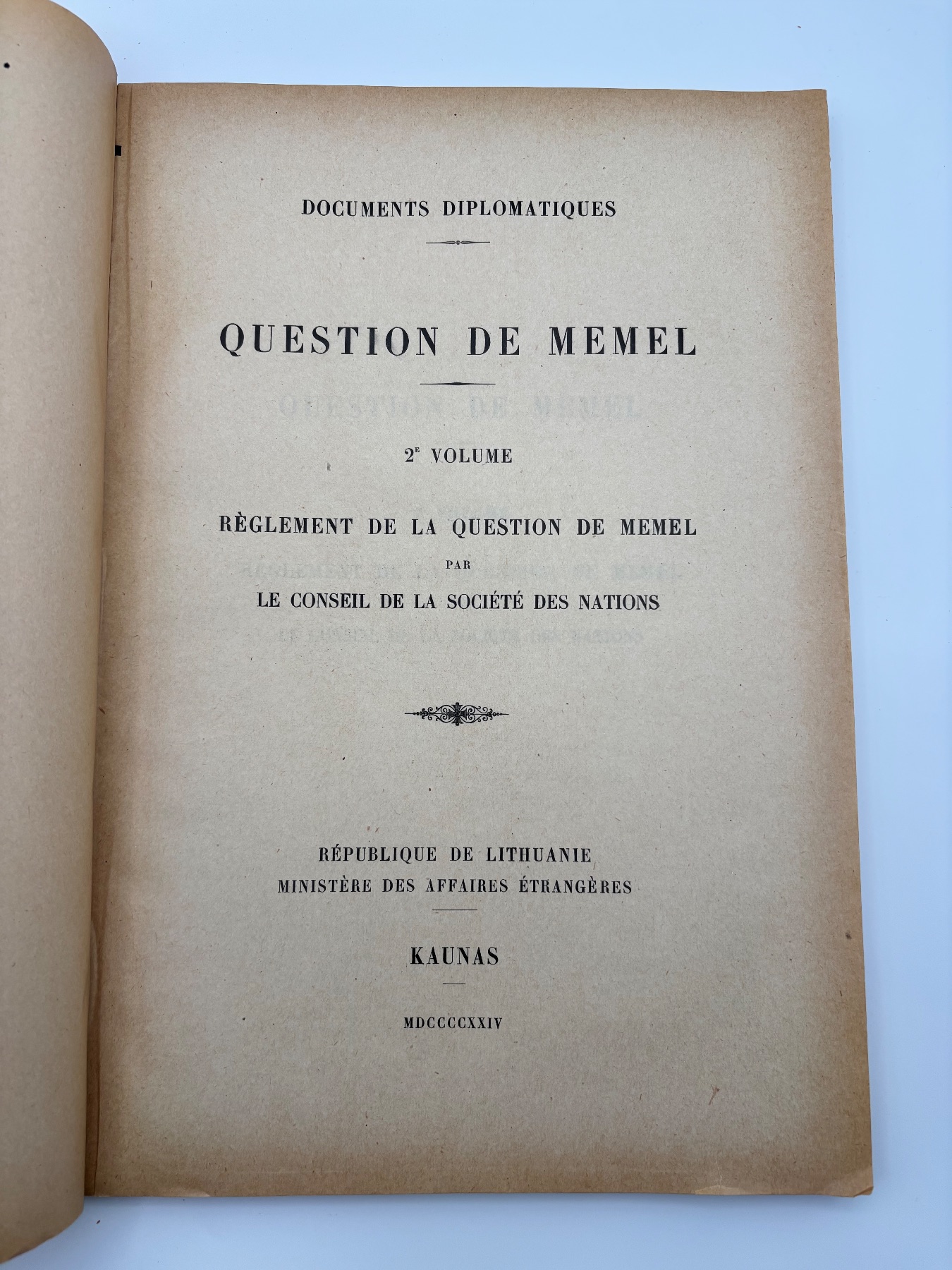
Question de Memel — 2e Volume: Règlement de la Question de Memel par le Conseil de la Société des Nations
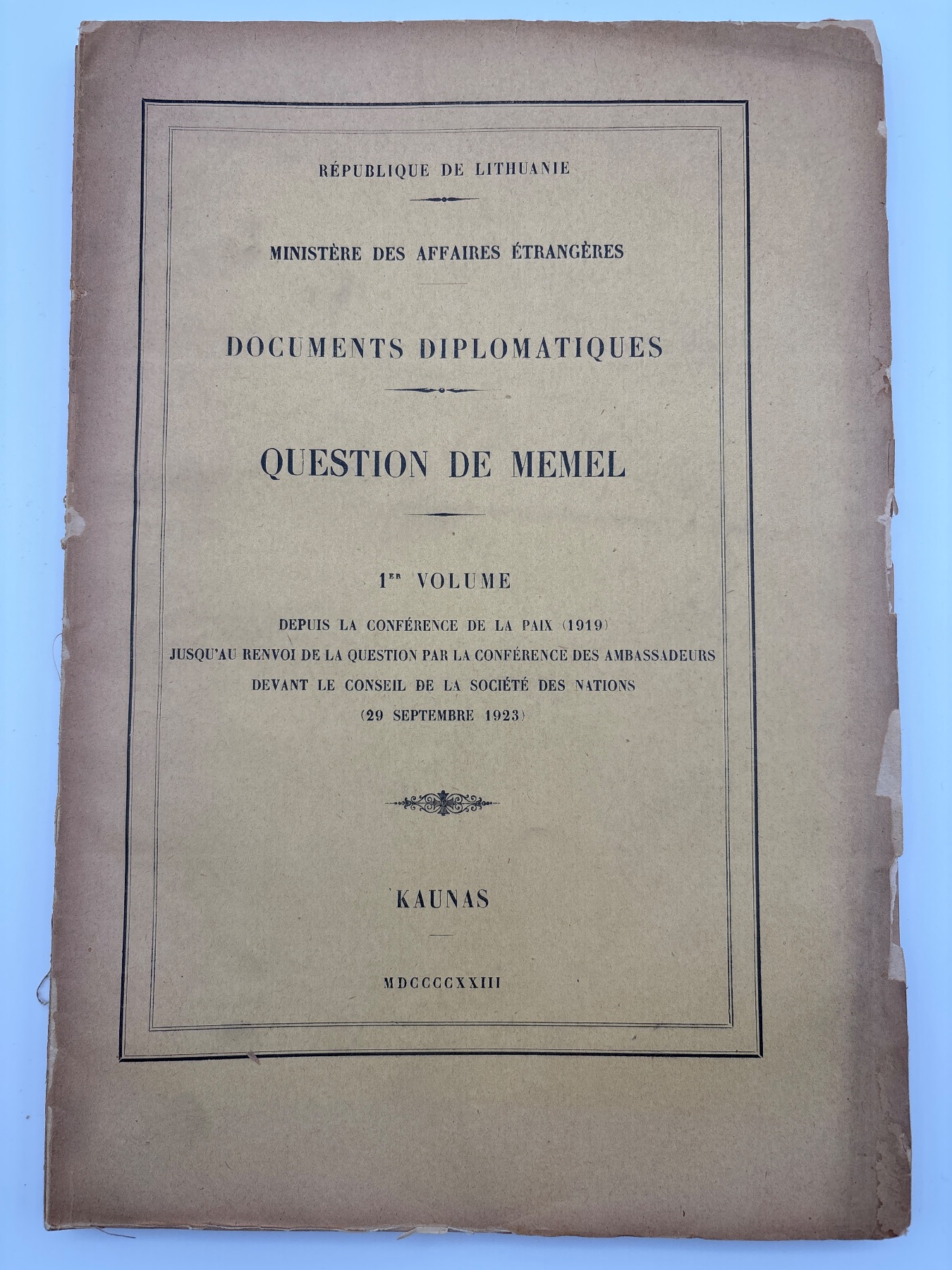
Documents Diplomatiques — Question de Memel, 1er Volume
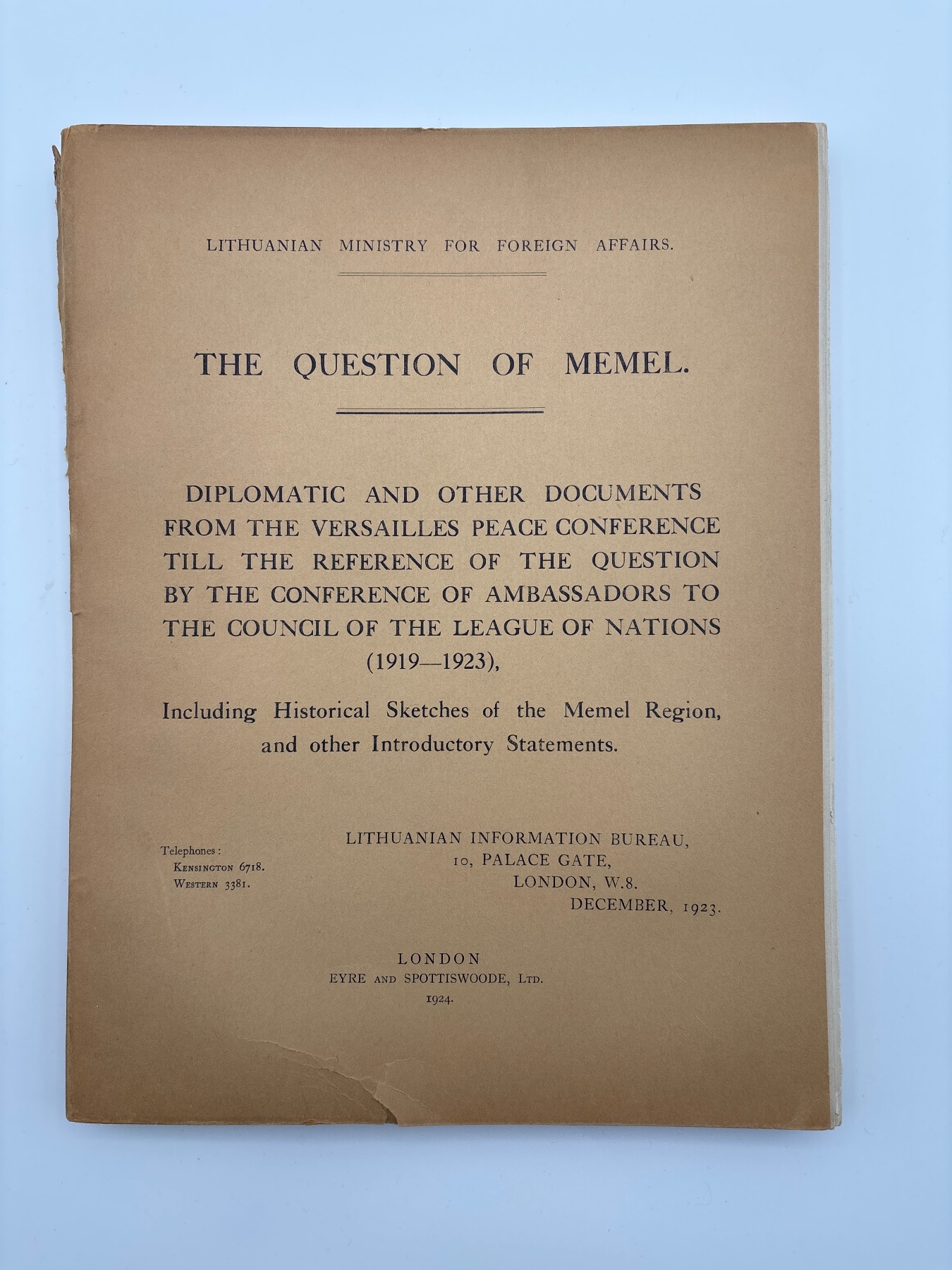
The Question of Memel: Diplomatic and Other Documents from the Versailles Peace Conference till the Reference of the Question by the Conference of Ambassadors to the Council of the League of Nations (1919-1923), Including Historical Sketches of the Memel Region, and other Introductory Statements