
Šv. Pijus X
Kun. Jonas Petrėnas (redagavo / editor)
1958
Historical and community context
Where this record belongs
Diaspora freedom
Introduction
This 1958 Brooklyn-published commemorative volume on Pope Saint Pius X, edited by Fr. Jonas Petrėnas and published by the Lithuanian Catholic youth organization Ateitis, represents a landmark of Lithuanian diaspora theological and cultural publishing — gathering contributions from some of the most significant Lithuanian Catholic intellectuals in exile. The volume uniquely interweaves papal hagiography with the Lithuanian national-religious experience, including a substantial section on Bishop M. Valančius and the Šv. Kazimiero Draugija, connecting Roman Catholic universalism with specifically Lithuanian cultural survival. Published with full episcopal imprimatur from the Bishop of Brooklyn, it demonstrates the institutional maturity and transatlantic ecclesiastical standing of Lithuanian diaspora Catholicism in the late 1950s.
Context and significance
Significance
This volume is a concentrated artifact of Lithuanian diaspora Catholic institutional infrastructure at its most mature and coordinated. Published by Ateitis — an organization that had been the intellectual backbone of Lithuanian Catholic culture since 1910 — and printed by the Franciscan Fathers' press in Brooklyn, it demonstrates how diaspora Lithuanians had successfully reconstituted in America not just individual communities but entire institutional ecosystems: publishing houses, censorship and imprimatur networks operating within American Catholic diocesan authority, and editorial collectives capable of producing multi-author scholarly anthologies. The Brooklyn bishop's imprimatur situates Lithuanian diaspora publishing squarely within mainstream American Catholic institutional life, a strategic legitimization that gave the community both protection and prestige.
The dedication to Prof. Pranas Dovydaitis — martyred by the Soviets and explicitly named as one who devoted his life to the Ateitininkai under the motto 'Visa atnaujinti Kristuje' — transforms what might appear to be a simple papal biography into an act of cultural and martyrological memory. The choice of Pius X as subject is itself deeply strategic: his motto 'To restore all things in Christ' was the founding principle of Ateitis, so a volume honoring him simultaneously honors the Lithuanian Catholic intellectual tradition and asserts its continuity despite Soviet occupation. The book becomes a memorial to a murdered Lithuanian intellectual framed as devotion to a canonized pope — a rhetorical move of considerable sophistication.
How this record carried memory
Religion as language vessel; Faith framed as heritage; Continuity statement explicit; Identity preservation
Record connections
People, places, and institutions linked in the catalog
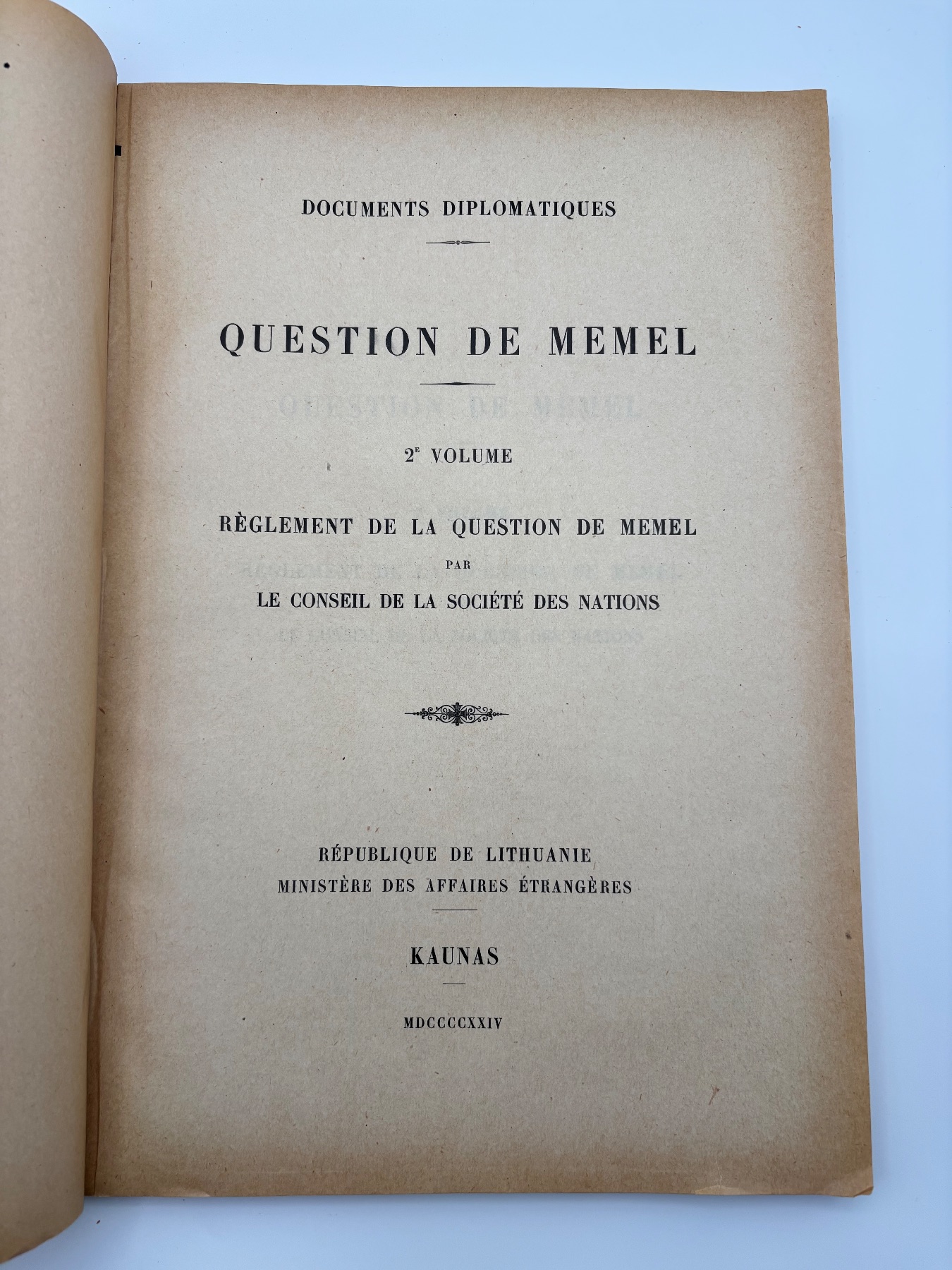
Question de Memel — 2e Volume: Règlement de la Question de Memel par le Conseil de la Société des Nations
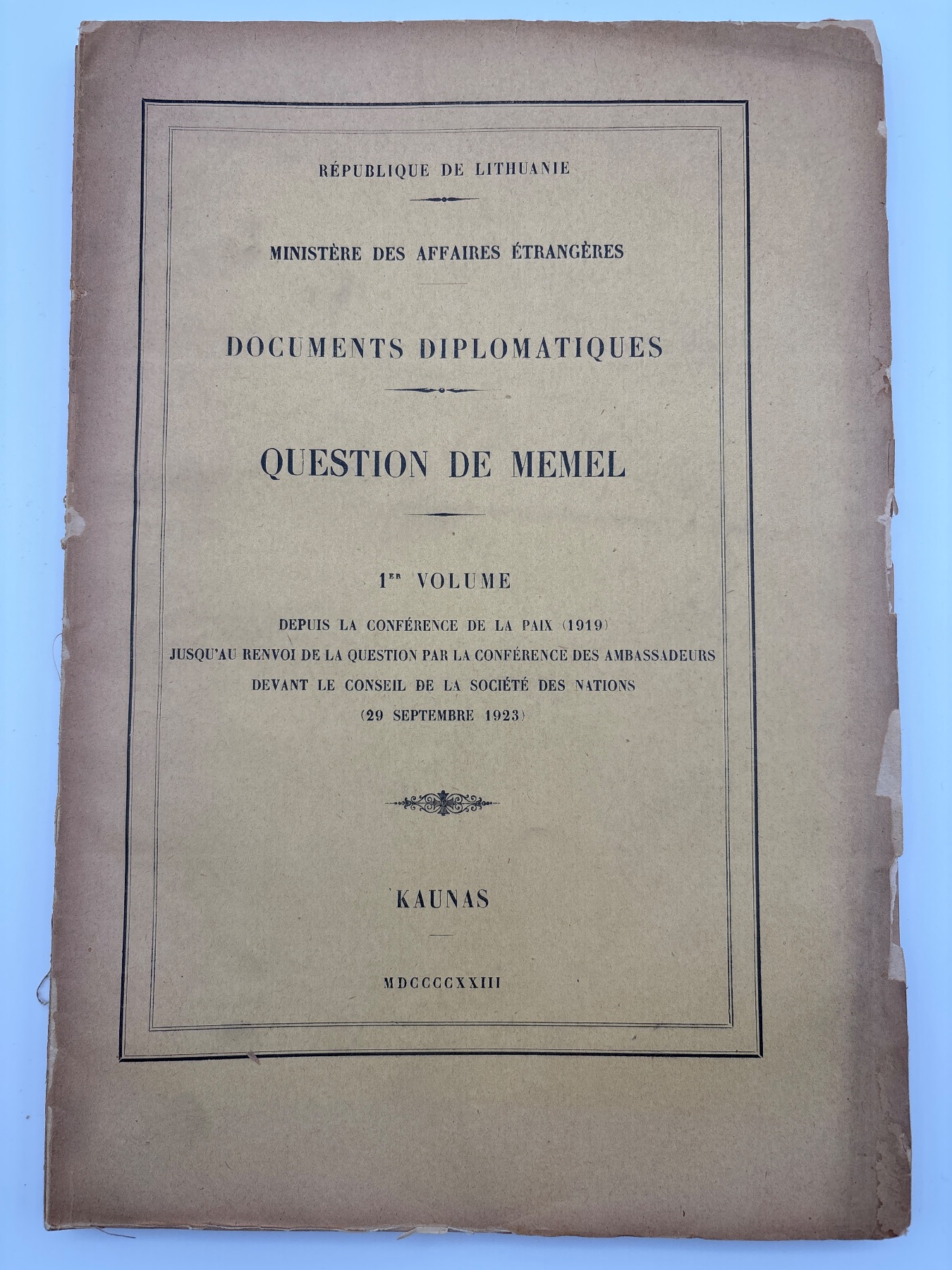
Documents Diplomatiques — Question de Memel, 1er Volume
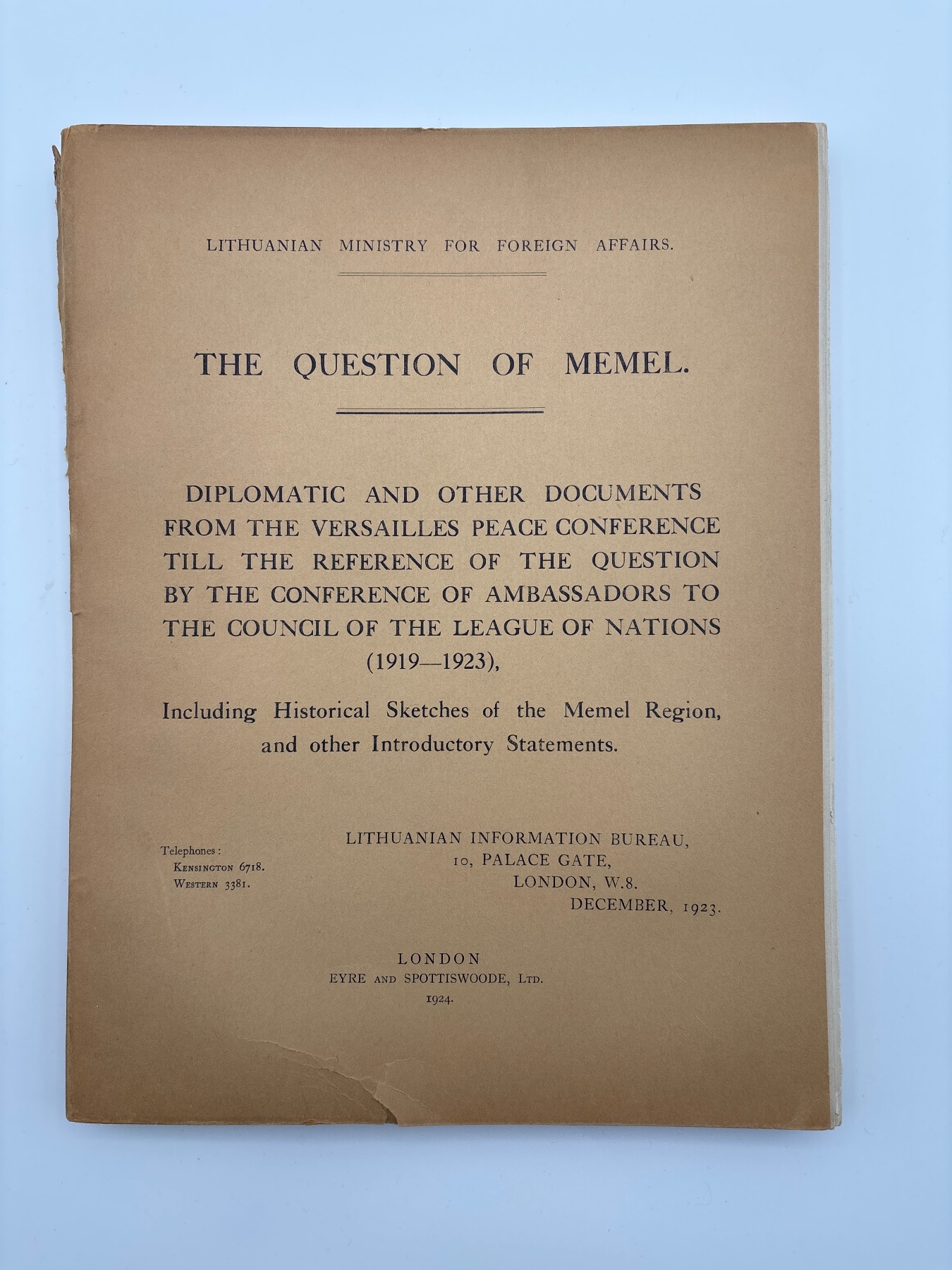
The Question of Memel: Diplomatic and Other Documents from the Versailles Peace Conference till the Reference of the Question by the Conference of Ambassadors to the Council of the League of Nations (1919-1923), Including Historical Sketches of the Memel Region, and other Introductory Statements