Dievo Apvaizdos Lietuvių Parapija / Divine Providence Lithuanian Parish Bulletin
Historical and community context
Where this record belongs
Diaspora freedom
Introduction
This January 1, 1978 parish bulletin from Divine Providence Lithuanian Parish in Southfield, Michigan is a remarkable bilingual snapshot of mature diaspora Catholic life, blending Lithuanian and English liturgical, devotional, and community content within a single weekly publication. It contains a politically charged letter from Pranas and Algirdas Brazinskas referencing Soviet occupation, anti-communist petitions, and appeals to US Congressman Robert Dornan, making it simultaneously a religious document and a Cold War political artifact. The bulletin also appears bound together with a Lithuanian literary fiction text (page 217 visible), suggesting this volume is a composite collection of diaspora community materials.
Context and significance
Significance
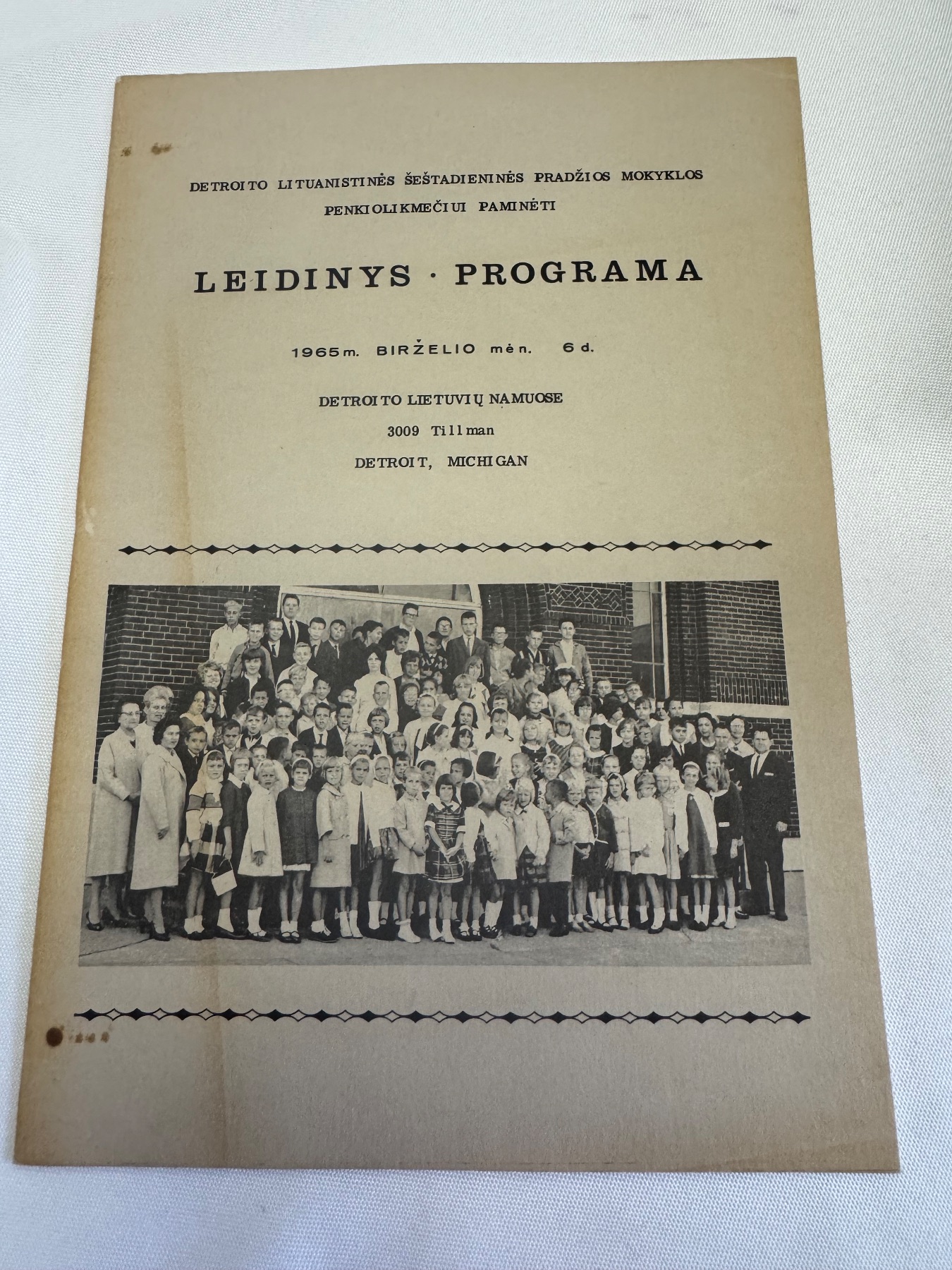
This parish bulletin exemplifies the sophisticated institutional infrastructure that Lithuanian diaspora communities built and maintained in suburban Michigan through the 1970s. The Divine Providence Parish in Southfield represents the second-generation diaspora institution — no longer anchored in the industrial city center (Detroit) but relocated to the suburbs, yet retaining Lithuanian-language mass and robust community programming. The simultaneous operation of Lithuanian and English masses, Lithuanian-language sacramental preparation (First Communion announced 'lietuviškai'), women's organizations, Knights of Lithuania chapters, and cultural center facilities reveals a community deliberately engineering its own cultural perpetuation even as geographic and generational dispersal threatened cohesion.
The political content is striking and historically significant: the Brazinskas family letter explicitly names Soviet occupation ('rusai okupantai'), references the ongoing Turkish detention of anti-Soviet activists, appeals to US Congressman Robert Dornan's resolution, and calls on parishioners to sign petitions. This demonstrates how the parish bulletin served not merely as liturgical administrative communication but as a node in the transnational anti-Soviet resistance network, with the church as the primary organizing institution. The framing of Lithuanian freedom as a Catholic moral imperative ('tarp laisvės ir vergijos') fuses religious and national identity in ways characteristic of Lithuanian Catholic nationalism.
The co-binding of parish bulletins with Lithuanian literary fiction (the prose excerpt on page 217, likely from a diaspora novel) suggests a community library or personal collection practice of preserving culturally significant Lithuanian-language materials together, treating parish bulletins and literature as equally important artifacts of cultural memory. This archival habit itself constitutes evidence of diaspora cultural consciousness.
How this record carried memory
Religion as language vessel; Faith framed as heritage; Identity preservation; Continuity statement explicit
Record connections
People, places, and institutions linked in the catalog