
Žymieji karo vadai
Historical and community context
Where this record belongs
Diaspora freedom
Introduction
A self-published Lithuanian-language survey of world history's most famous military commanders — from Alexander the Great to Mannerheim — written and issued by a diaspora author in Sudbury, Ontario in 1958. The book represents the intellectual ambition of the early Canadian Lithuanian diaspora: producing serious popular-historical literature in Lithuanian at a moment when the language itself was under existential threat behind the Iron Curtain. Printed by the Žiburiai Press in Toronto, it stands as evidence of an organized diaspora publishing infrastructure sustaining Lithuanian intellectual life in exile.
Context and significance
Significance
This volume illuminates the sophisticated publishing infrastructure that Lithuanian diaspora communities had established in Canada by the late 1950s. The Žiburiai Press in Toronto served as a central institutional node for Lithuanian-language print culture across North America, and the fact that a Sudbury-based author could self-publish a 215-page hardcover book of popular history — and have it professionally printed by this press — demonstrates the maturity and reach of diaspora institutional networks barely a decade after mass displacement.
The choice of subject matter is itself culturally revealing: by presenting world military history through the Lithuanian language, Vaičeliūnas implicitly argues that Lithuanian is a language capable of engaging the full breadth of human intellectual and historical experience — not merely a peasant tongue or a liturgical relic. This is an act of linguistic assertion and normalization at a moment when the Soviet occupation had effectively severed Lithuanian literary culture from its institutional roots. The book performs the idea that Lithuanian intellectual life continues, is serious, and is global in its references.
For diaspora youth and adult readers alike, a book like this served multiple functions simultaneously: it was entertainment, self-education, and an implicit demonstration that one's heritage language was adequate to the task of discussing Caesar, Napoleon, and Mannerheim. The inclusion of Mannerheim — who led Finland against Soviet invasion — carries unmistakable political resonance for a readership that had itself fled Soviet occupation, making this ostensibly neutral military history also a subtle act of solidarity and coded anti-Soviet commentary.
How this record carried memory
Identity preservation, Continuity statement explicit
Record connections
People, places, and institutions linked in the catalog
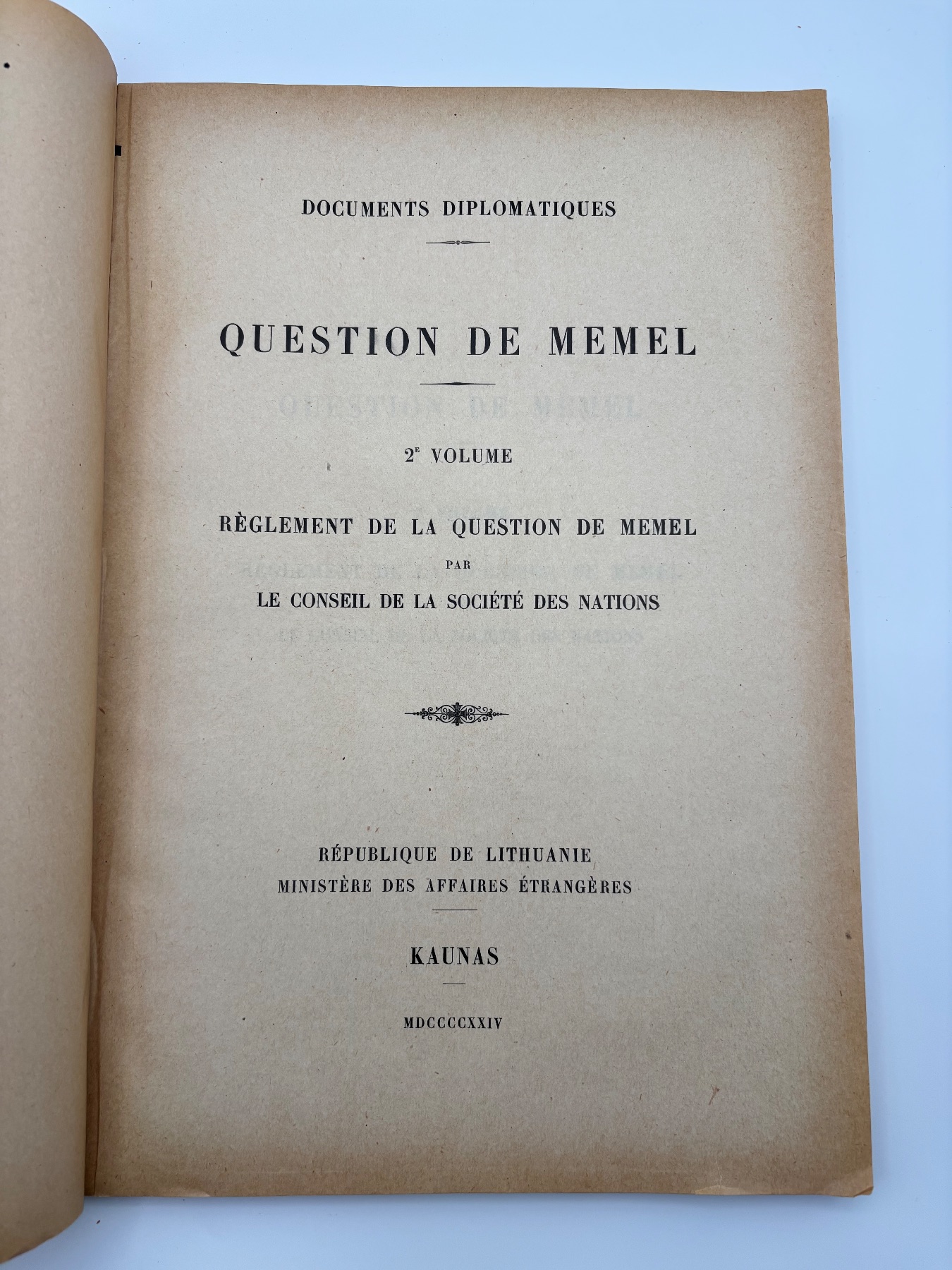
Question de Memel — 2e Volume: Règlement de la Question de Memel par le Conseil de la Société des Nations
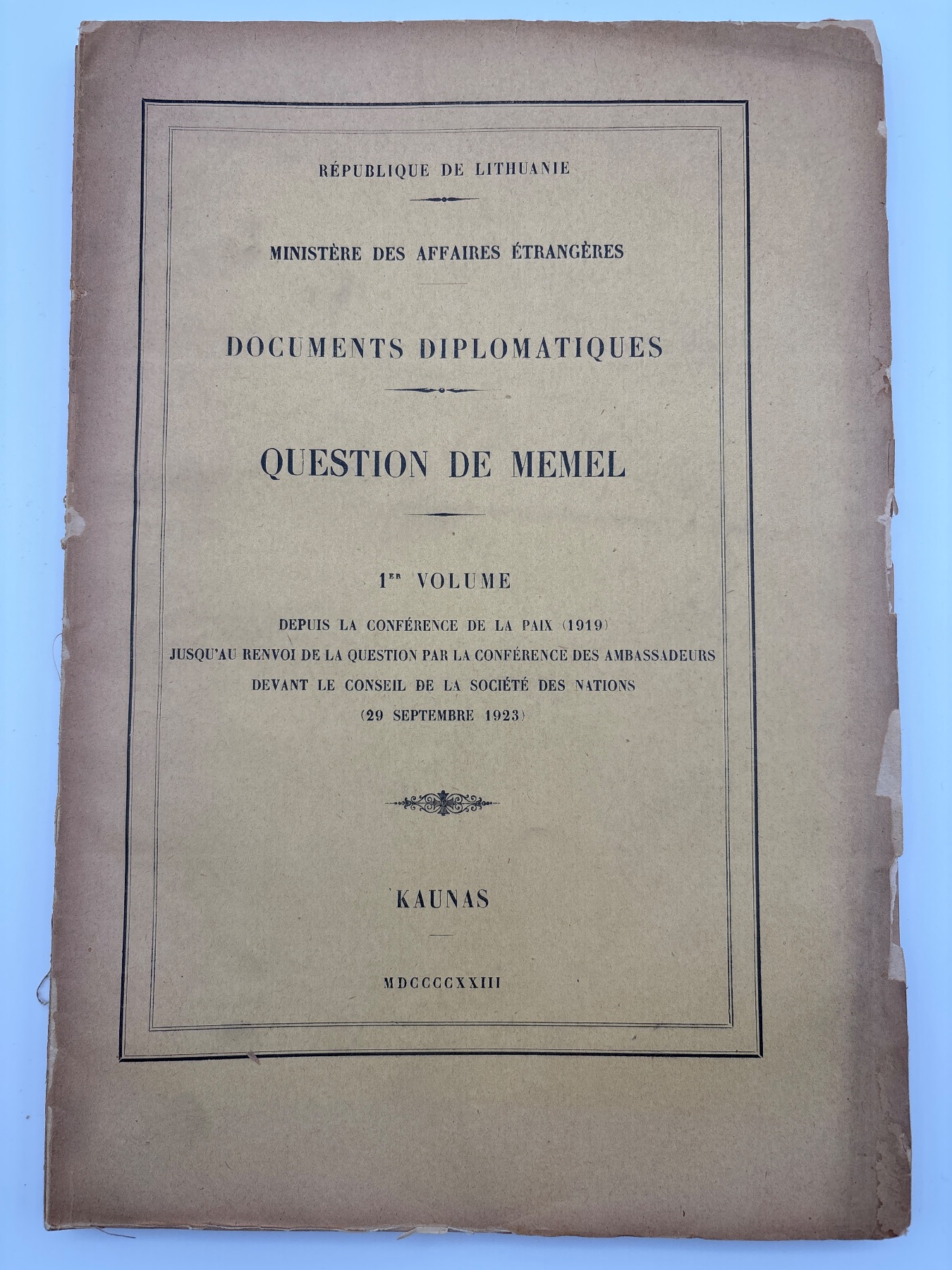
Documents Diplomatiques — Question de Memel, 1er Volume
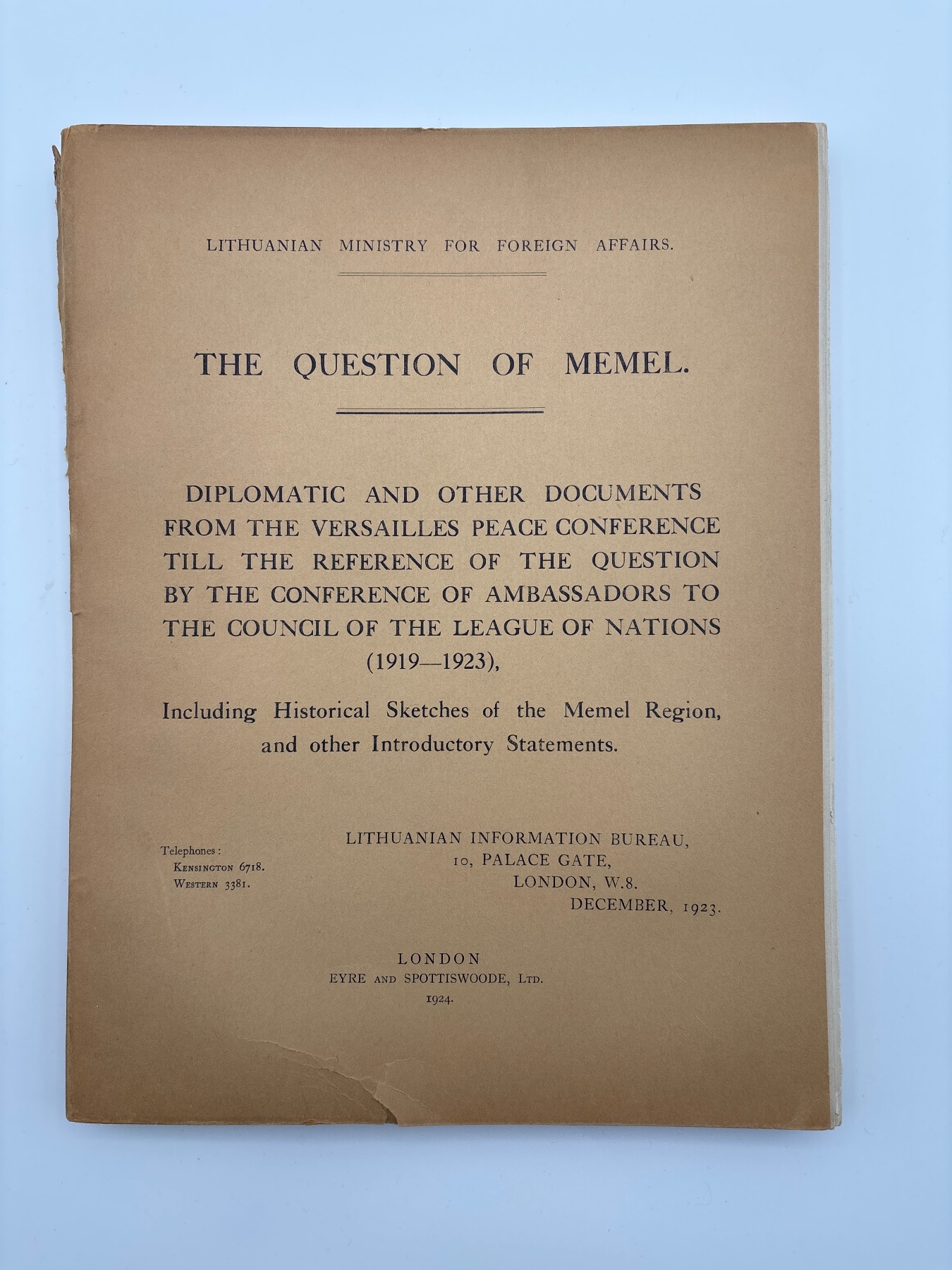
The Question of Memel: Diplomatic and Other Documents from the Versailles Peace Conference till the Reference of the Question by the Conference of Ambassadors to the Council of the League of Nations (1919-1923), Including Historical Sketches of the Memel Region, and other Introductory Statements