
Šv Jonas Bosko: Jo Asmuo, Darbai ir Auklyba
Historical and community context
Where this record belongs
Diaspora freedom
Introduction
This is a 1956 Lithuanian diaspora biography of Saint John Bosco, published by Lithuanian Salesians near Chicago — the second edition of a work originally published in Lithuania in 1930, re-issued in America to honor the memory of the Lithuanian Salesian translator Pranas Petraitis, martyred at Červenė. It represents a remarkable act of cultural and religious continuity: a diaspora religious community republishing a foundational Catholic text to keep both their faith and their Lithuanian literary heritage alive in exile. The foreword by Bishop M. Reinys and the memorial framing of the martyred translator add layers of historical and martyrological significance rarely found in a single hagiographic volume.
Context and significance
Significance
This publication is a revealing artifact of how the Lithuanian diaspora in America organized itself around Catholic institutional infrastructure in the 1950s. The Lithuanian Salesians, operating from their settlement near Cedar Lake, Indiana, functioned simultaneously as a religious congregation, a publishing house, a community anchor, and a custodian of Lithuanian literary culture — all roles typically distributed across multiple institutions in a homeland context but collapsed into a single religious community in diaspora. The decision to republish a 700+ page hagiography not simply for devotional reasons but explicitly as a memorial to a martyred priest-translator reveals how tightly interwoven religious, national, and literary identity had become in the diaspora consciousness by 1956.
The involvement of Bishop Mečislovas Reinys as preface writer adds a remarkable dimension: Reinys was one of the most prominent Lithuanian Catholic prelates, later imprisoned by the Soviets and dying in Vladimir Prison in 1953 — meaning his preface in this 1956 edition is a posthumous text, lending the book an almost reliquary quality. This layering of martyrologies (Reinys, Petraitis) within a biography of a canonized saint creates a distinctly Lithuanian diaspora theology of witness and survival that would resonate powerfully with readers who had themselves fled Soviet and Nazi terror.
How this record carried memory
Religion as language vessel; Faith framed as heritage; Continuity statement explicit; Identity preservation — the republication is explicitly framed as both religious devotion and cultural memorial, honoring a martyred Lithuanian Salesian priest while keeping high-quality Lithuanian prose in circulation among diaspora youth and adults
Record connections
People, places, and institutions linked in the catalog
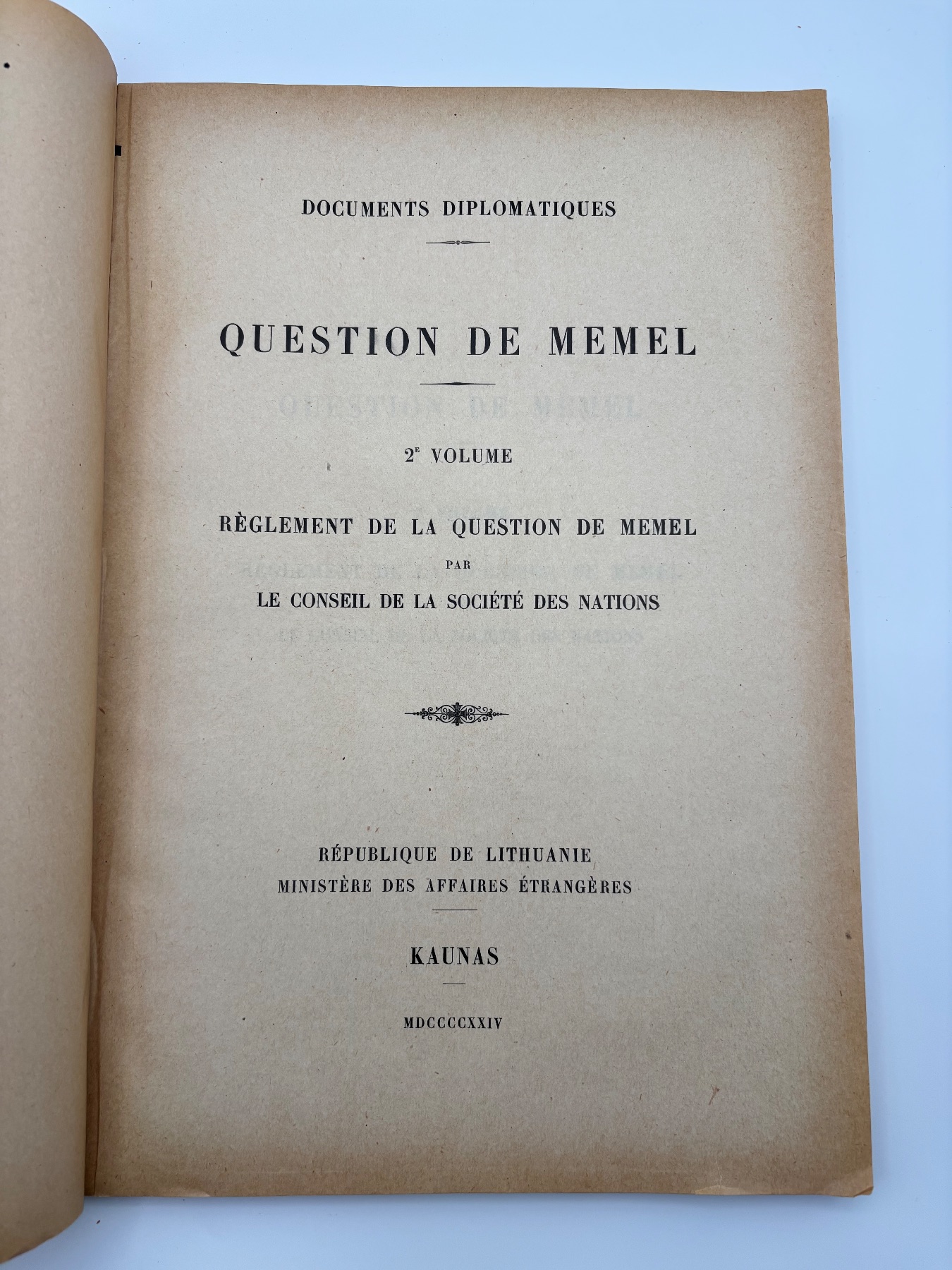
Question de Memel — 2e Volume: Règlement de la Question de Memel par le Conseil de la Société des Nations
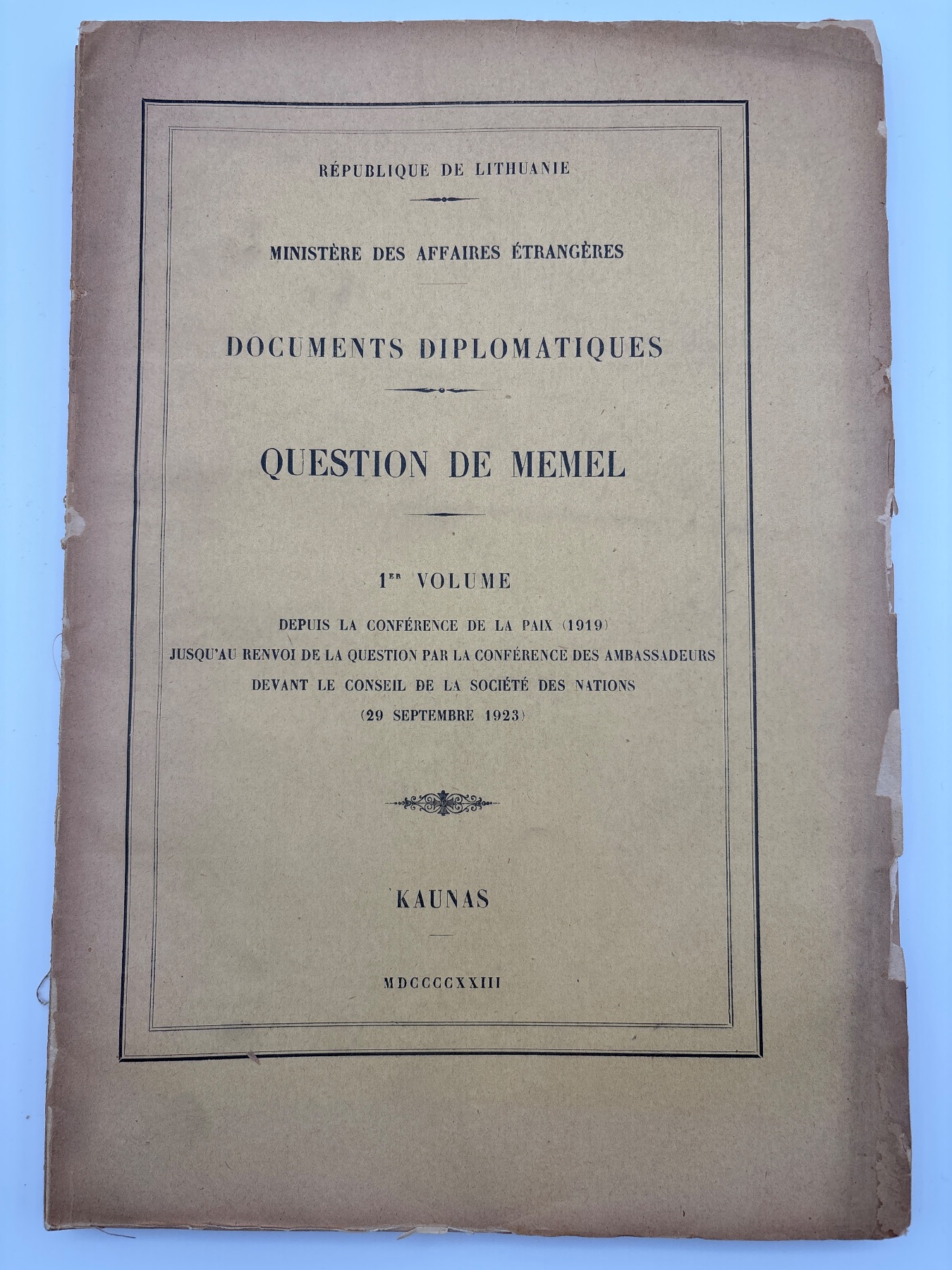
Documents Diplomatiques — Question de Memel, 1er Volume
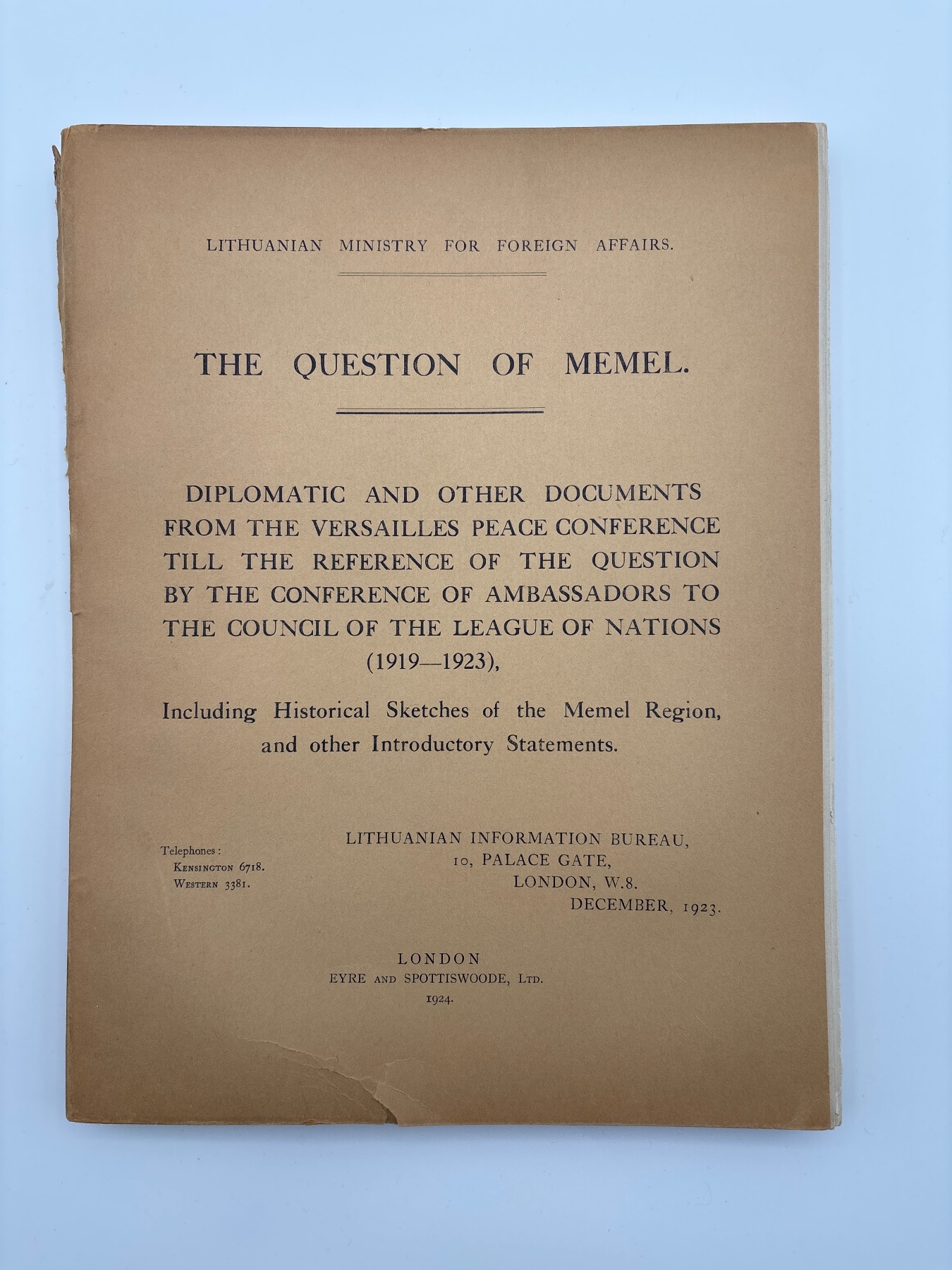
The Question of Memel: Diplomatic and Other Documents from the Versailles Peace Conference till the Reference of the Question by the Conference of Ambassadors to the Council of the League of Nations (1919-1923), Including Historical Sketches of the Memel Region, and other Introductory Statements