
Lietuvos Istorija
1950
Historical and community context
Where this record belongs
Allied authorization (DP)
Context and significance
Significance
This volume is among the most consequential single publications in Lithuanian diaspora intellectual history. Its production story — editing from a fire-damaged copy, offset reproduction from zinc plates because no clean original existed, the currency reform crisis that disrupted payment mid-production — reveals the extraordinary institutional determination of the post-war DP community to preserve and transmit national historical consciousness under conditions of radical displacement and resource scarcity. The Patria press itself represents a remarkable mobilization of professional talent (historians, artists like V.K. Jonynas, administrators) within the DP camp infrastructure, operating at a level of sophistication that belies the refugee circumstances of its producers.
The book's content structure — covering Lithuanian history from Mindaugas through the diaspora emigration, with a full English-language parallel table of contents — reveals a diaspora community that was simultaneously addressing multiple audiences: Lithuanian-literate adults maintaining national identity, children in lituanistinė schools needing a curriculum anchor, and potentially American or Western audiences being invited to understand Lithuanian claims to sovereignty and historical continuity. The inclusion of sections on Lithuanians in the USA (pages 637–658) and 'The problem of the Lithuanian Emigration' transforms what might seem a purely historical text into a living political document asserting that diaspora Lithuanians remained a legitimate national community with historical agency.
The preface to the third edition ('Veikalo trečiąją laidą skaitytojui atiduodant') is itself a document of extraordinary cultural-historical value, articulating explicitly the meaning of this book to the exile community: it frames the history of Lithuania as the 'alpha and omega' of diaspora life, the source of resolve in exile, the medium of connection to homeland, and the tool for resisting occupation. This metacommentary on why historical knowledge matters in conditions of exile encodes a complete philosophy of diaspora identity formation that is directly relevant to understanding how Lithuanian heritage institutions like Žiburio school in Detroit conceptualized their educational mission.
How this record carried memory
Continuity statement explicit, Identity preservation, Pedagogical framing
Record connections
People, places, and institutions linked in the catalog
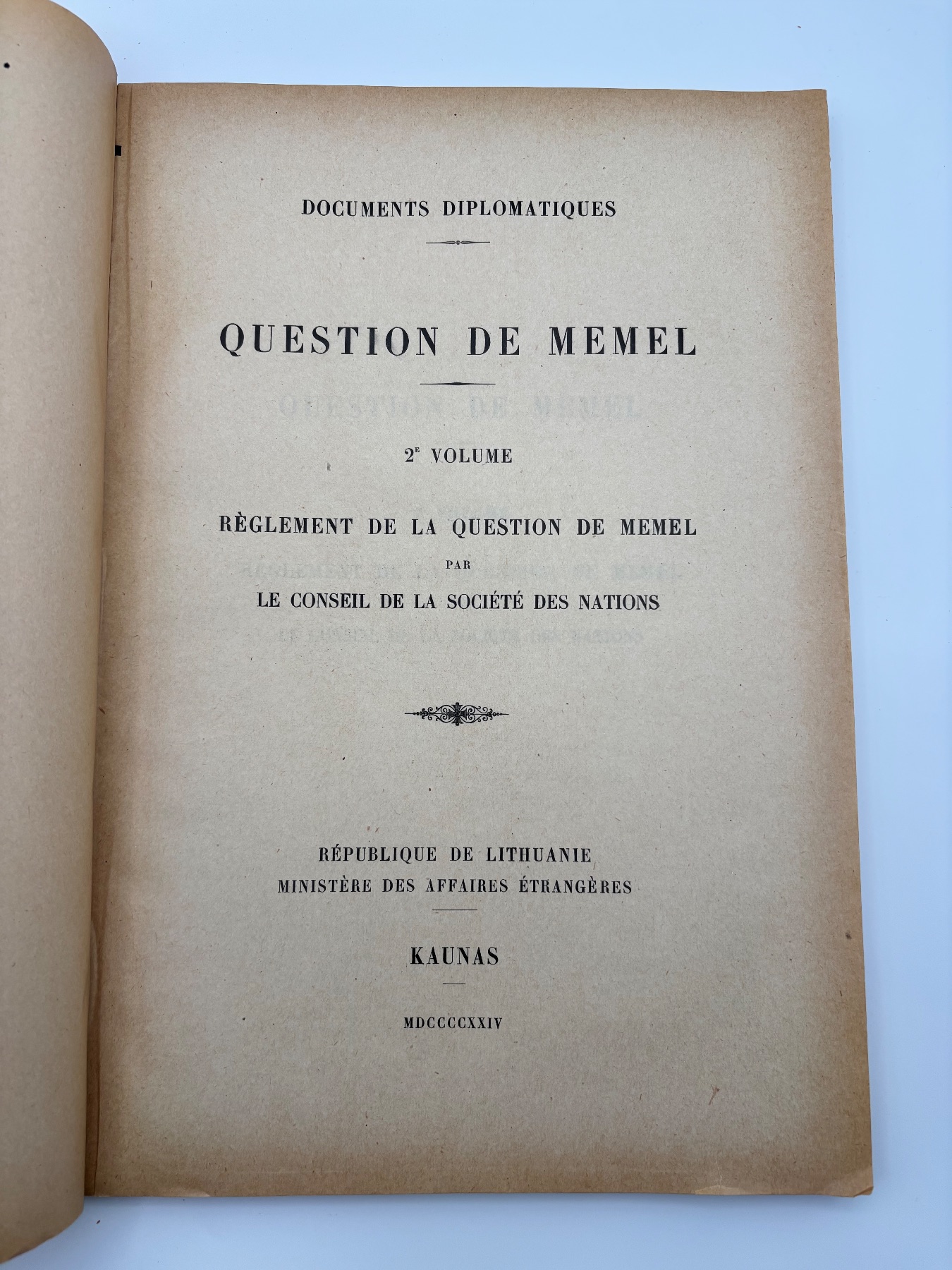
Question de Memel — 2e Volume: Règlement de la Question de Memel par le Conseil de la Société des Nations
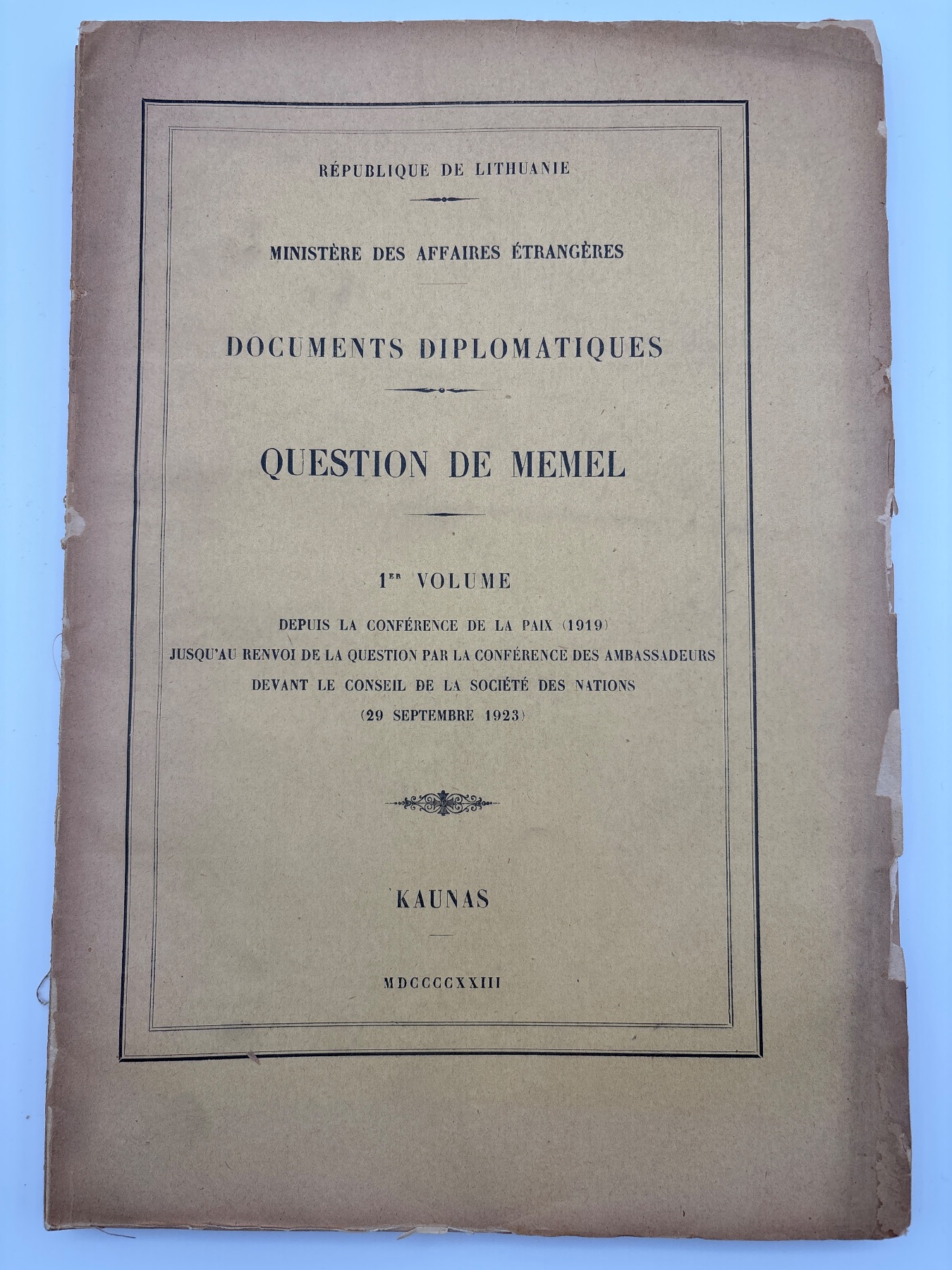
Documents Diplomatiques — Question de Memel, 1er Volume
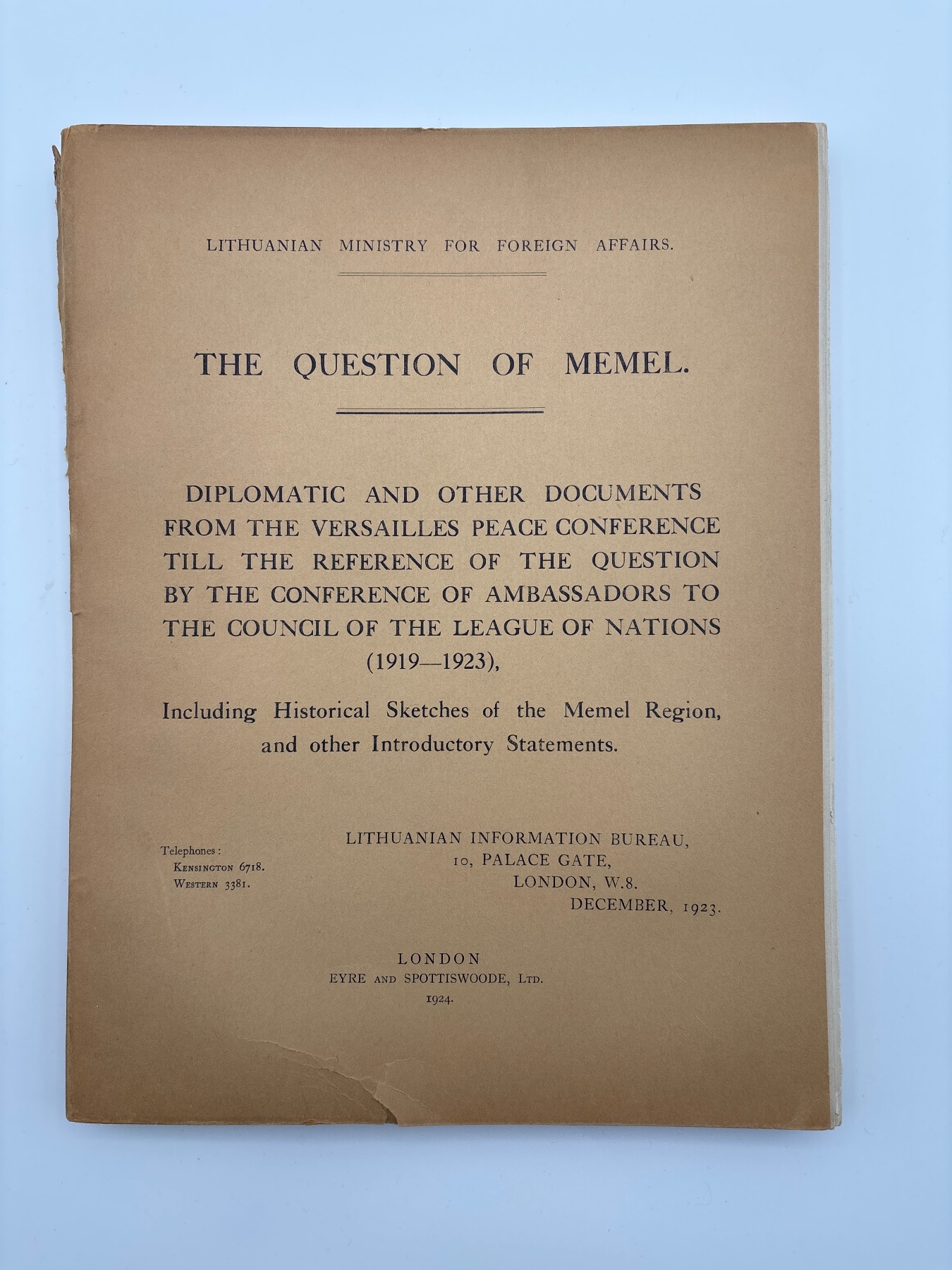
The Question of Memel: Diplomatic and Other Documents from the Versailles Peace Conference till the Reference of the Question by the Conference of Ambassadors to the Council of the League of Nations (1919-1923), Including Historical Sketches of the Memel Region, and other Introductory Statements