
Pirmasis Nepriklausomos Lietuvos Dešimtmetis 1918–1928
Historical and community context
Where this record belongs
Diaspora freedom
Introduction
This is a landmark diaspora reprint of the foundational 1928 interwar anniversary volume, gathering firsthand accounts by five major Lithuanian statesmen and diplomats covering the birth of independent Lithuania from 1915 to 1928. Published by Nida Press in London in 1955 as the seventh title in its prestigious book club series, this volume placed elite-level historical testimony directly into the hands of postwar Lithuanian diaspora readers across Britain, Germany, the United States, and beyond. Its authors — Petras Klimas, Martynas Yčas, K. F. Kemėšis, Jurgis Savickis, and Jonas Purickis — were participants in the very events they describe, making this primary-source historical narrative of the highest order.
Context and significance
Significance
This volume is a crystalline artifact of diaspora institutional infrastructure at its most ambitious: a London-based exile press, organized as a subscription book club (knygų klubas), mobilizing a global Lithuanian readership to finance, produce, and distribute a canonical historical text at a moment when the Soviet occupation had rendered such publication impossible within Lithuania itself. The Nidos Knygų Klubo model — numbered editions, named print crews, a formal series — mirrors the institutional seriousness of a state publishing house, deliberately asserting that Lithuanian cultural and intellectual life would continue in exile with full professional standards. The choice to reprint the 1928 jubilee volume in 1955 is itself a profound cultural statement: exactly as the Soviet occupation was consolidating its hold on Lithuanian memory and historiography, the diaspora was re-anchoring collective identity to the founding moment of independence, insisting on the continuity of the First Republic as the legitimate frame for Lithuanian national life.
The authorship collective — Klimas, Yčas, Kemėšis, Purickis, Savickis — represents the cream of interwar Lithuanian political and diplomatic leadership, most of them by 1955 living in exile or deceased. Their firsthand accounts of state-building, international diplomacy (including Lithuanian lobbying in Switzerland and Scandinavia during WWI), and the parliamentary era carry an authority no secondary historian could replicate. For diaspora readers in 1955, this was not merely history — it was testimony from men who had been there, preserving the record against Soviet falsification. The volume thus functions simultaneously as primary source, memorial act, and political counter-narrative.
For diaspora youth and heritage schools like Žiburio, the circulation of this book — evidenced by its presence in the school's collection — meant that students could encounter independence-era Lithuanian in its most authoritative prose register: the language of statesmen, diplomats, and parliamentarians writing at the height of interwar national culture. This is the Lithuanian of Vasario 16, of the Seimas, of international recognition — the foundational vocabulary of Lithuanian civic and national identity, preserved and transmitted precisely through institutions like Nida Press and Žiburio School.
How this record carried memory
Continuity statement explicit; Identity preservation; Pedagogical framing
Record connections
People, places, and institutions linked in the catalog
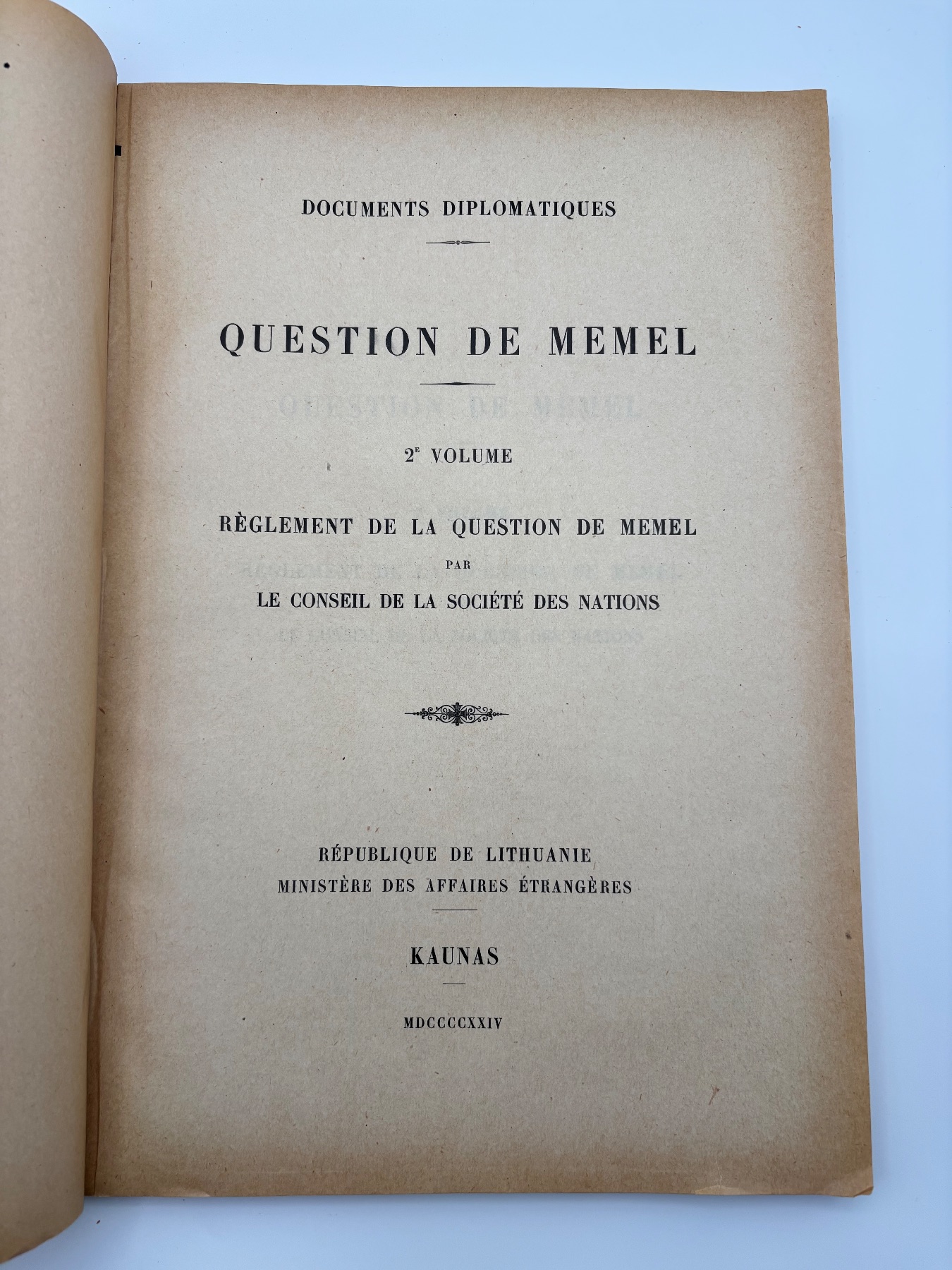
Question de Memel — 2e Volume: Règlement de la Question de Memel par le Conseil de la Société des Nations
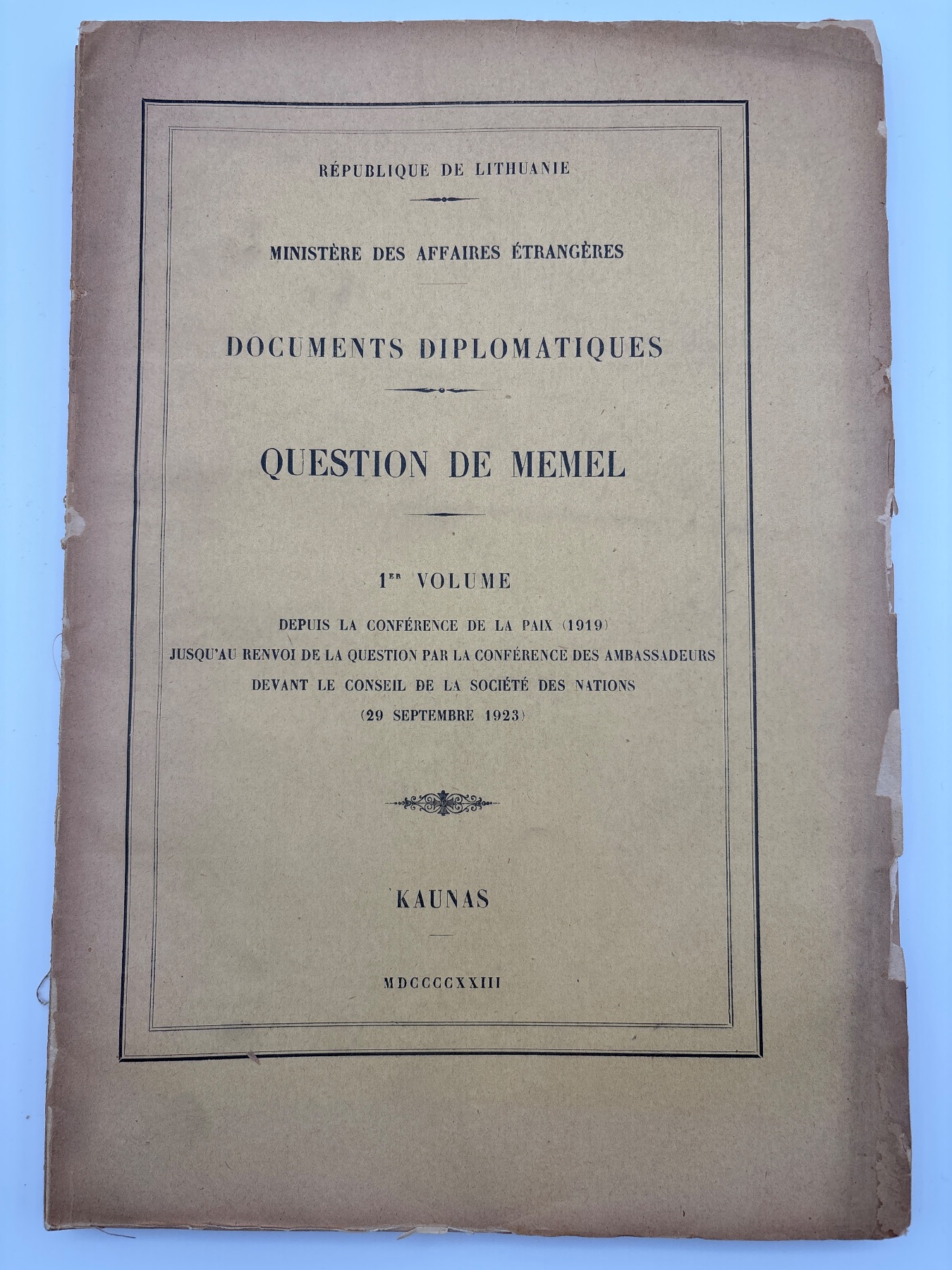
Documents Diplomatiques — Question de Memel, 1er Volume
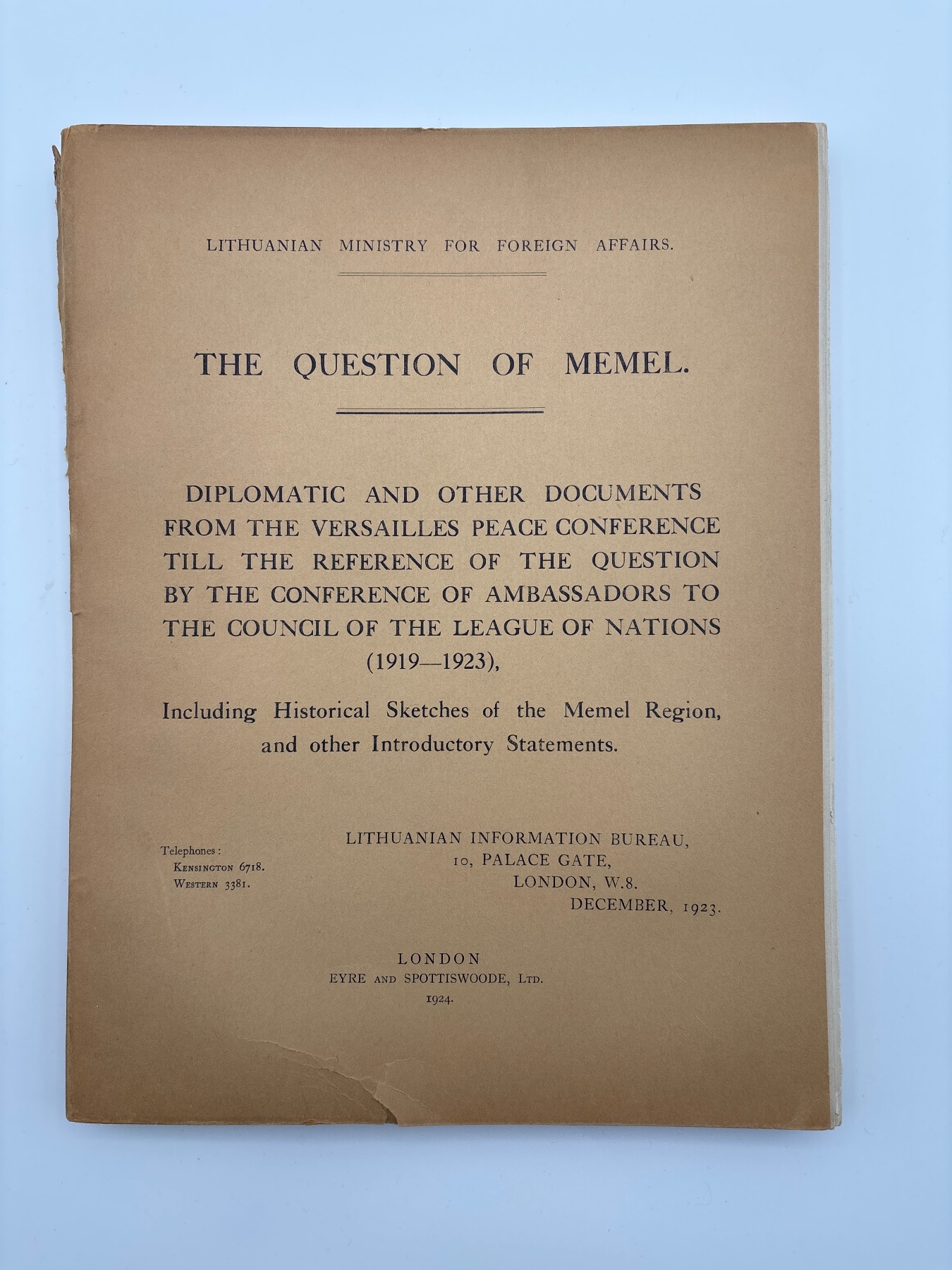
The Question of Memel: Diplomatic and Other Documents from the Versailles Peace Conference till the Reference of the Question by the Conference of Ambassadors to the Council of the League of Nations (1919-1923), Including Historical Sketches of the Memel Region, and other Introductory Statements