
Bendrojo Amerikos Lietuvių Šalpos Fondo Pirmieji Dešimts Metų 1944–1954
Historical and community context
Where this record belongs
Diaspora freedom
Introduction
This is the official ten-year anniversary report (1944–1954) of BALF — the Bendrasis Amerikos Lietuvių Šalpos Fondas (General American Lithuanian Relief Fund) — the single most important Lithuanian-American humanitarian organization of the postwar era. It documents in extraordinary detail how American Lithuanians mobilized across dozens of cities to rescue, feed, clothe, and resettle tens of thousands of Lithuanian displaced persons from German DP camps, making it an irreplaceable primary source for diaspora institutional history. The volume contains dense structured data: named officers, chapter addresses, financial figures, membership counts, and operational narratives spanning the entire first decade of the Cold War diaspora.
Context and significance
Significance
This publication reveals with unusual clarity the full institutional infrastructure that Lithuanian-Americans constructed within a single decade of catastrophic displacement. BALF operated not merely as a charity but as a quasi-governmental structure for a stateless nation: it negotiated with the U.S. State Department, engaged Eleanor Roosevelt and other American officials, lobbied at the United Nations against forced repatriation, maintained diplomatic-level contacts with Baltic representatives, coordinated relief shipments into Soviet-occupied Lithuania, and managed a continent-spanning network of DP camp visitors across Germany, Austria, Belgium, Denmark, France, Italy, Sweden, and Switzerland. The chapter directory alone — covering pages 88 through 118 — constitutes a sociological map of Lithuanian-America in 1954, naming officers, treasurers, secretaries, and board members of dozens of local chapters with their street addresses, demonstrating that the diaspora had within ten years recreated the organizational density of the pre-war homeland civic sphere.
The cultural survival mechanism at work here is distinctive: BALF deliberately transcended the fierce political and religious factionalism that normally fragmented Lithuanian-American life. The chairman's foreword explicitly names this as the organization's founding principle — 'be skirtumo politinių pažiūrų ar tikybinių įsitikinimų' (regardless of political views or religious convictions) — making BALF a rare moment of Lithuanian diaspora unity. This enforced nonpartisanship, visible throughout the publication's careful avoidance of ideological language, itself constitutes a cultural survival strategy: by subordinating factional identity to national solidarity, BALF maximized the resources available for the crisis of 1944–1954.
The volume also encodes a sophisticated Cold War political consciousness. Multiple pages document BALF's advocacy against forced repatriation, framing Lithuanian DP status within the international legal argument that the 1939 Soviet incorporation was illegal — a position the Western Allies nominally accepted — and therefore Lithuanians could not be considered Soviet citizens subject to return. This legal-political argument, narrated in detailed administrative prose, shows diaspora leaders operating simultaneously as relief workers, lobbyists, and international legal advocates, a combination of roles that shaped the entire postwar Lithuanian-American political culture.
How this record carried memory
Continuity statement explicit, Identity preservation, Ideology stripped/softened
Record connections
People, places, and institutions linked in the catalog
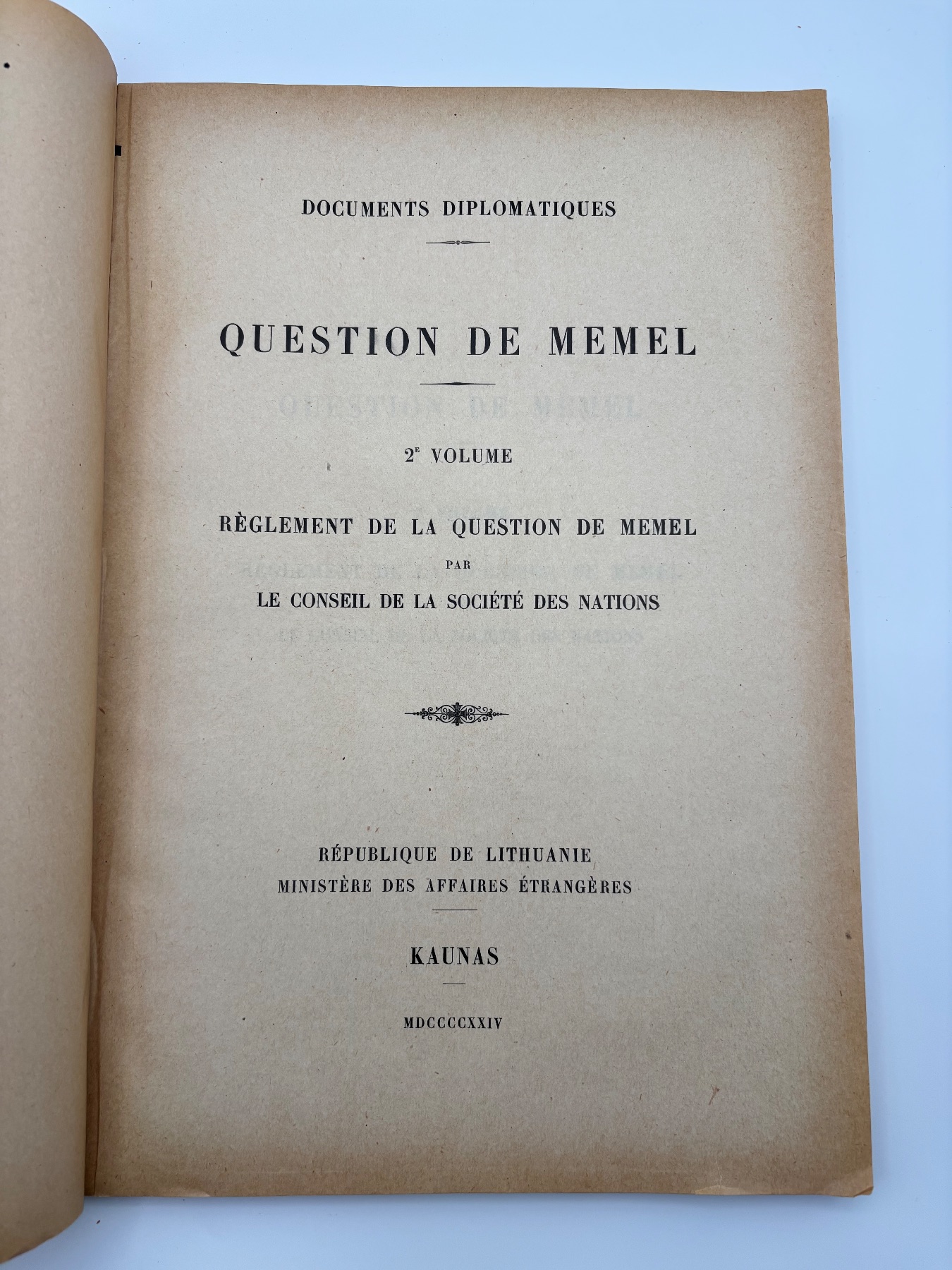
Question de Memel — 2e Volume: Règlement de la Question de Memel par le Conseil de la Société des Nations
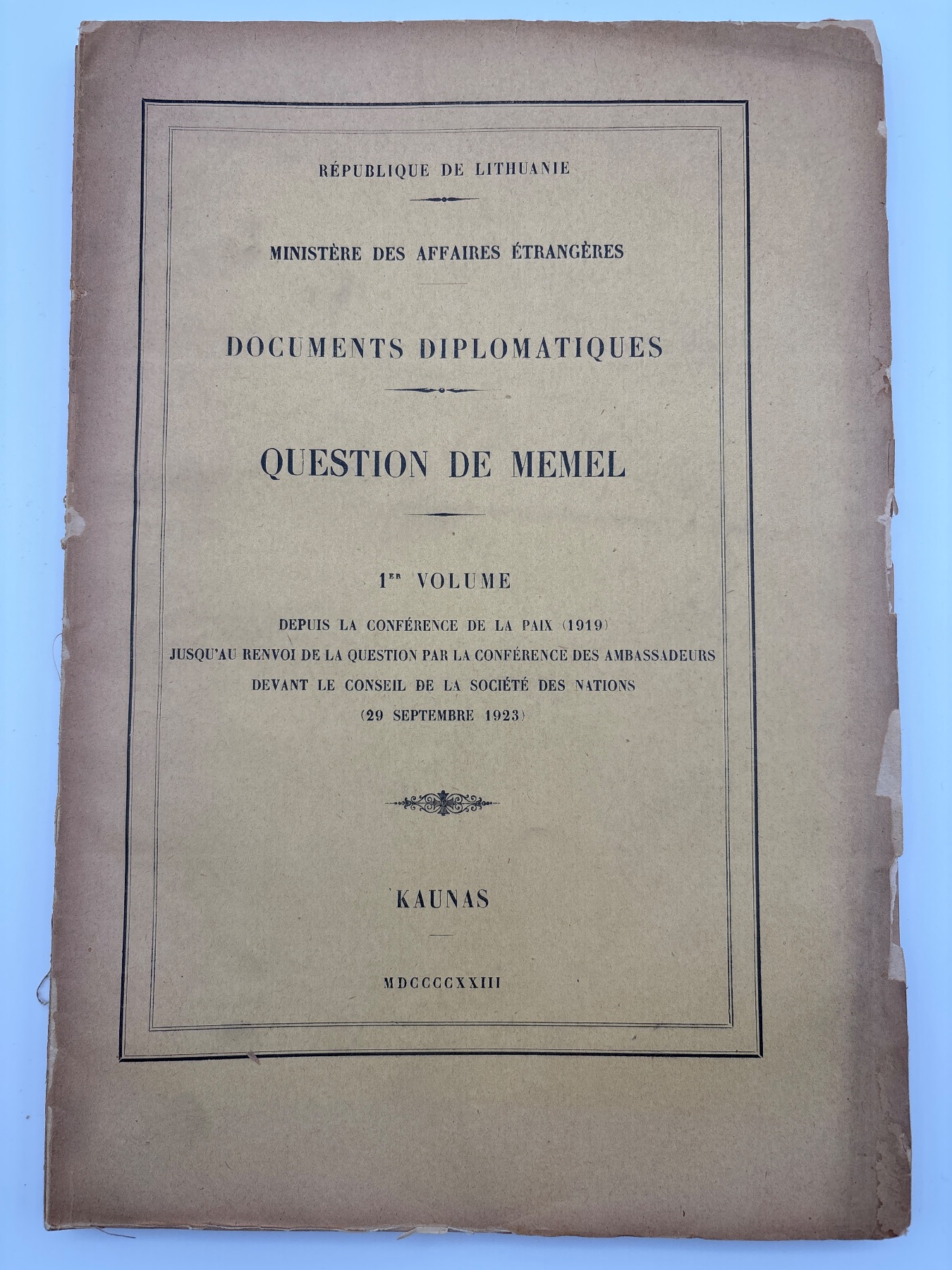
Documents Diplomatiques — Question de Memel, 1er Volume
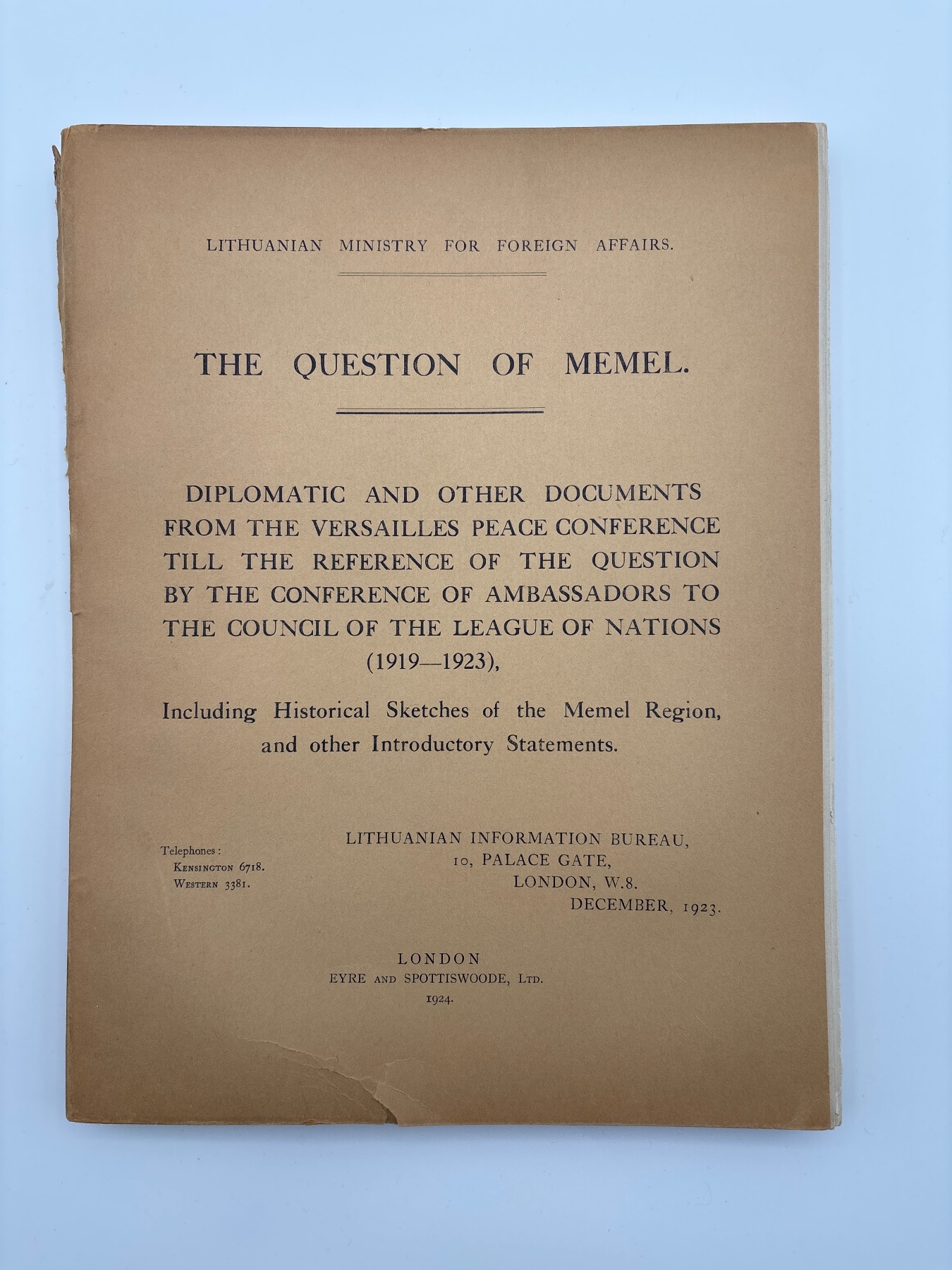
The Question of Memel: Diplomatic and Other Documents from the Versailles Peace Conference till the Reference of the Question by the Conference of Ambassadors to the Council of the League of Nations (1919-1923), Including Historical Sketches of the Memel Region, and other Introductory Statements