Šv. Antano Lietuvių Romos Katalikų Parapija — Auksinio Jubiliejaus Sukaktuvinis Leidinys 1920–1970
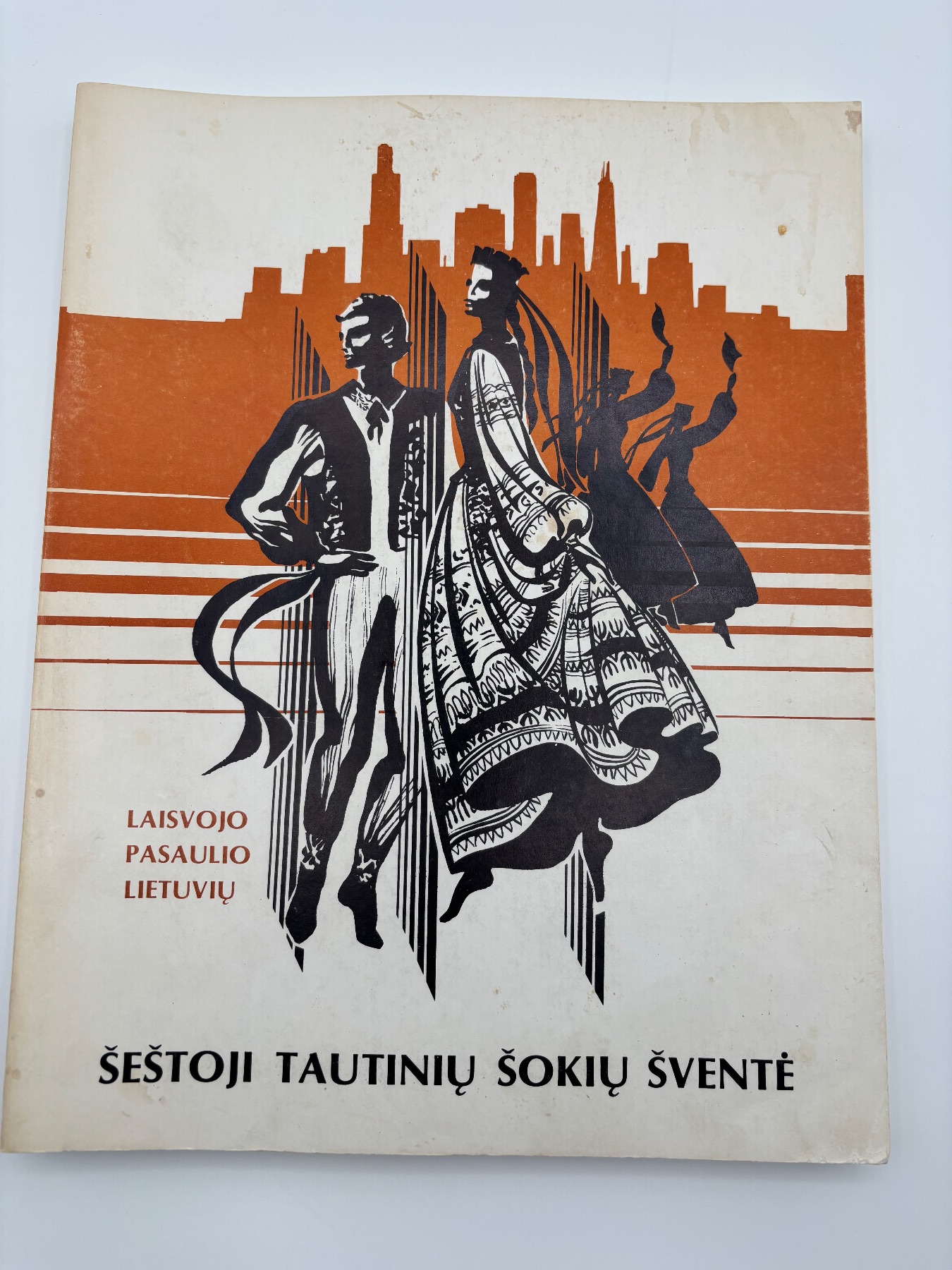
Stasys Garliauskas (redaktorius); Redagavo: Stasys Garliauskas; Spaudė: Draugo spaustuvė; Viršelis: Edvardo Vasiliausko
1970
Historical and community context
Where this record belongs
Diaspora freedom
Introduction
This 50th anniversary jubilee publication of Detroit's Šv. Antano Lithuanian Roman Catholic Parish is a rare primary source documenting the full institutional life of one of the oldest Lithuanian diaspora parishes in the American Midwest, from its 1920 founding through 1970. Printed in an edition of only 500 copies by the renowned Draugas press, it contains parish history, organizational rosters, financial records, patron lists with hundreds of Lithuanian surnames, and photographs — making it an irreplaceable genealogical and sociolinguistic resource. As a community self-portrait written entirely in standard diaspora Lithuanian, it captures the living language of a mid-century immigrant community at the height of its institutional maturity.
Context and significance
Significance
This jubilee publication reveals the remarkable institutional depth of Detroit's Lithuanian Catholic diaspora by 1970. The parish served not merely as a religious congregation but as the organizational spine of Lithuanian ethnic life in the city — hosting schools staffed by Franciscan sisters who taught Lithuanian language and religion, anchoring fraternal organizations (Vyčiai, ALRK, BALFO, scouts, cultural clubs), and functioning as a genealogical anchor for families who had arrived as early as 1900. The mecenatai and rėmėjai pages — listing hundreds of donors by Lithuanian family name alongside dollar amounts — constitute a unique snapshot of who belonged, who gave, and how communal obligation was structured financially and socially in a mid-century diaspora parish.
The publication also documents a critical linguistic transition point: by 1940, English-dominant children had displaced Lithuanian speakers in the parish school, and Lithuanian-language instruction effectively ceased in the parochial setting, only to be revived by DP-wave newcomers after 1952. This tension between the pre-war Lithuanian-American community and the post-1944 refugee diaspora — each with different relationships to the Lithuanian language and homeland — is captured implicitly throughout the text. The presence of anglicized surnames in donor lists (Stanley Bartkus, Anthony Smolek, Robert Boris) alongside fully Lithuanian forms documents this assimilation gradient in real time.
How this record carried memory
Religion as language vessel, Identity preservation, Continuity statement explicit, Pedagogical framing
Record connections
People, places, and institutions linked in the catalog