
Lietuvos Jėzuitai: Praeitis ir Dabartis
Historical and community context
Where this record belongs
Diaspora freedom
Introduction
This 1957 diaspora pamphlet presents a compact institutional history of Lithuanian Jesuits from their 1569 arrival in Vilnius through their Soviet-era exile and reconstitution in Chicago in 1948, documenting a religious order's survival across three centuries and three distinct political catastrophes. Published with full ecclesiastical approval by the Lithuanian Jesuit Province's own press in Putnam, Connecticut, it represents a rare instance of diaspora religious infrastructure producing its own self-documentation in Lithuanian. As both a recruitment tool and a community chronicle, it captures the precise moment when Lithuanian Jesuit exile identity was being institutionally consolidated on American soil.
Context and significance
Significance
This pamphlet is a remarkable artifact of diaspora institutional self-constitution: published just nine years after the Lithuanian Jesuit Province re-established itself in Chicago in 1948, it demonstrates the speed with which exiled religious orders could reconstitute bureaucratic, editorial, and publishing infrastructure in the diaspora. The existence of a dedicated press (Immaculata Press), a functioning editorial board, canonical approval structures involving both internal Jesuit hierarchy and an American bishop, and a range of contributing Jesuit scholars — all within a decade of forced exile — reveals that the Lithuanian Catholic intellectual class carried institutional know-how that survived physical displacement intact. The pamphlet's function as both community history and recruitment document illustrates the dual survival logic of diaspora religious publishing: it preserved collective memory while actively recruiting new members to ensure institutional continuity across generations.
The publication's linguistic register — formal, literary, historically grounded — reflects the cultural capital of Jesuit-educated Lithuanian clergy and their insistence on maintaining high standards even in adversity. The text moves fluently between historical narrative (the 1569 arrival, the 1923 Kaunas gymnasium, the Šiauliai and Pagryžuvys establishments), institutional memory (the 1930 Province founding, the wartime deportations alongside the nation), and present-tense exhortation directed at potential recruits. This multi-register capacity within a single short document is linguistically significant: it demonstrates the range of formal Lithuanian prose styles produced by the Jesuit formation tradition, from scholarly citation to pastoral persuasion.
Strategically, the pamphlet maps the global footprint of Lithuanian Jesuit diaspora activity — USA, Canada, Uruguay, Brazil, India, Australia — providing an extraordinarily rare snapshot of how a single religious province organized itself across five continents while maintaining Lithuanian linguistic and cultural identity as the connective tissue. The reference to Lithuanian communities in South America and Australia who were requesting Jesuit priests illustrates the demand-side of diaspora religious infrastructure: there were Lithuanian-speaking communities scattered globally who needed Lithuanian-speaking clergy, and this pamphlet was part of the supply-side response.
How this record carried memory
Religion as language vessel, Faith framed as heritage, Identity preservation, Continuity statement explicit
Record connections
People, places, and institutions linked in the catalog
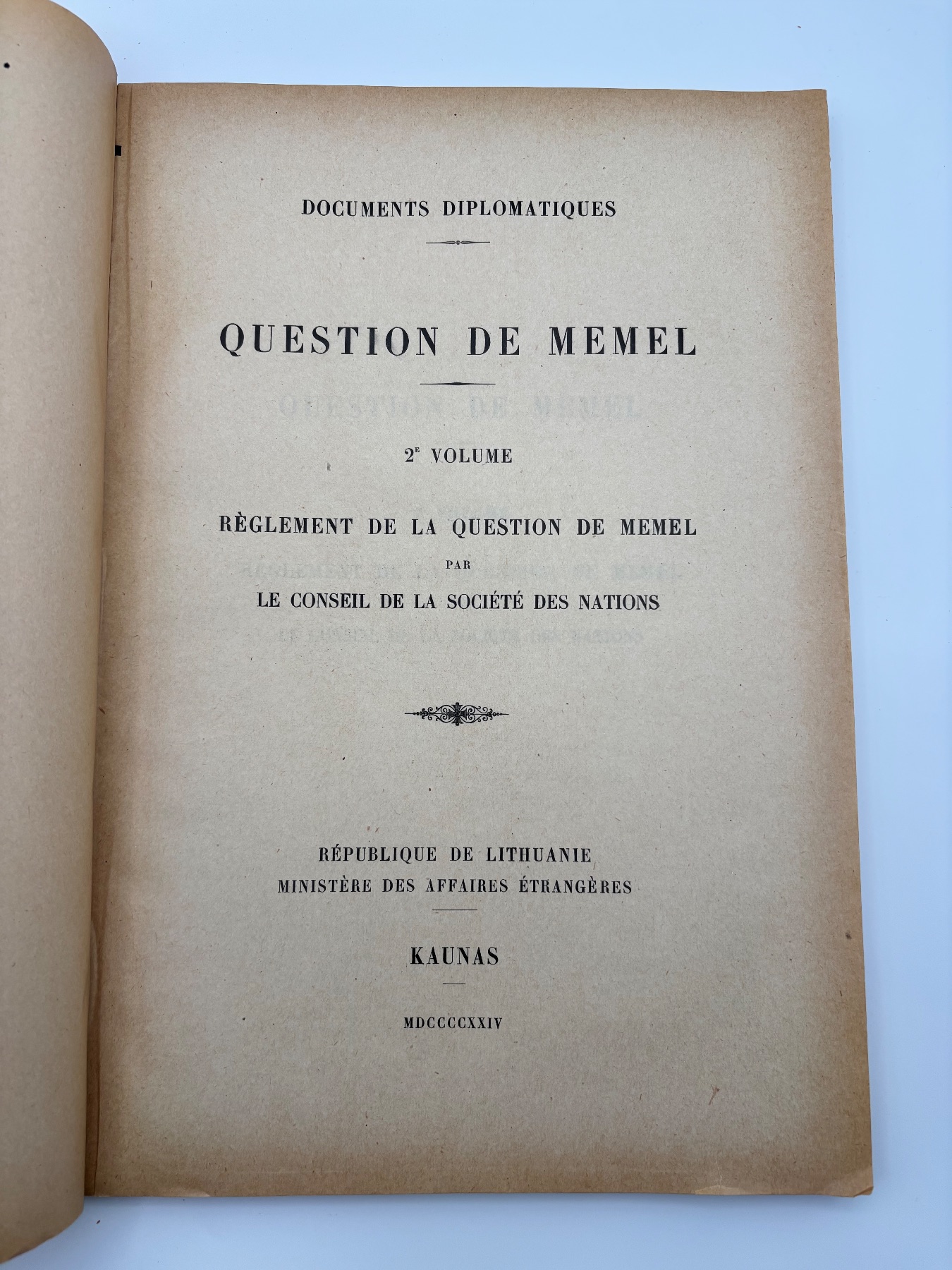
Question de Memel — 2e Volume: Règlement de la Question de Memel par le Conseil de la Société des Nations
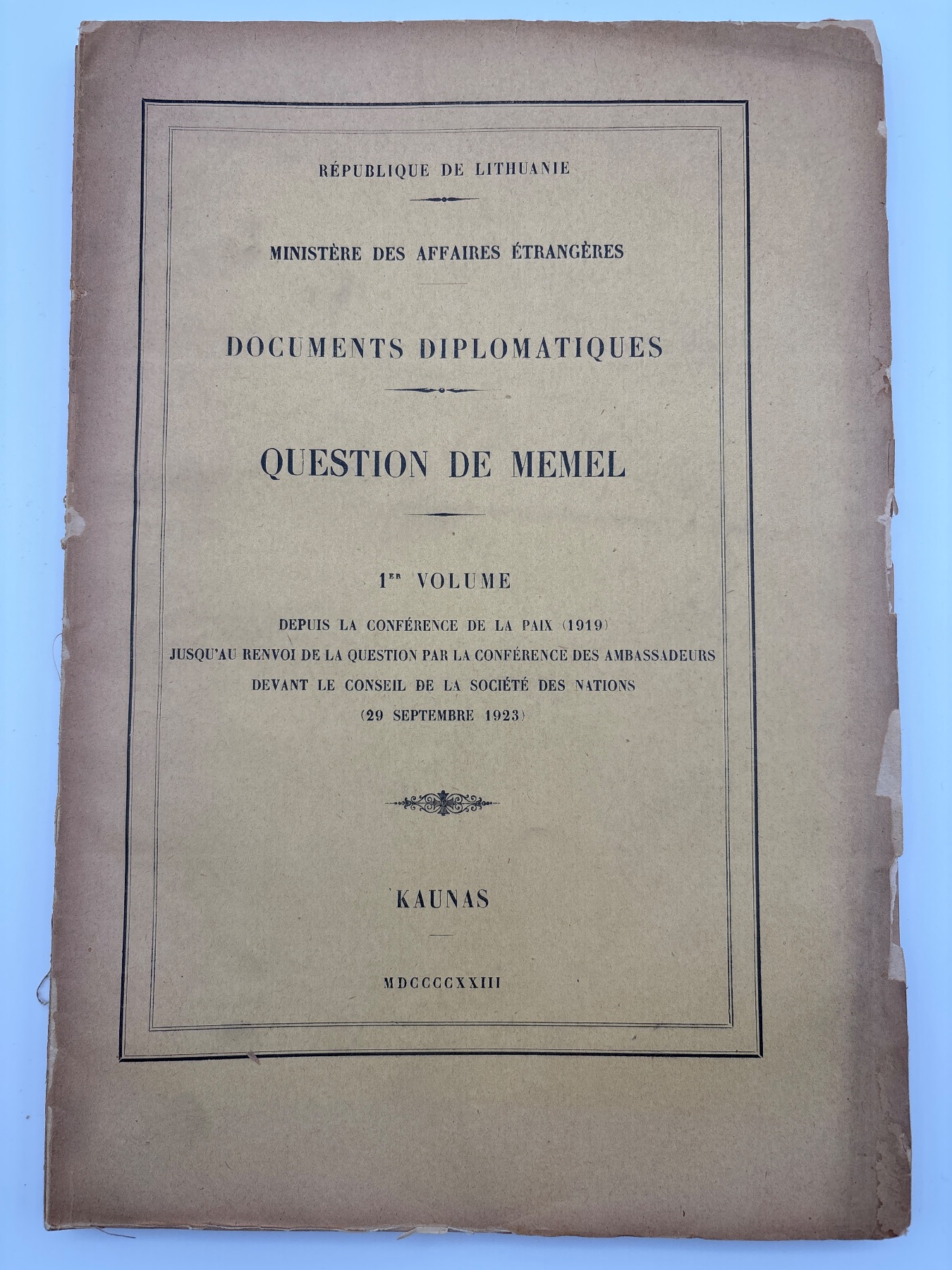
Documents Diplomatiques — Question de Memel, 1er Volume
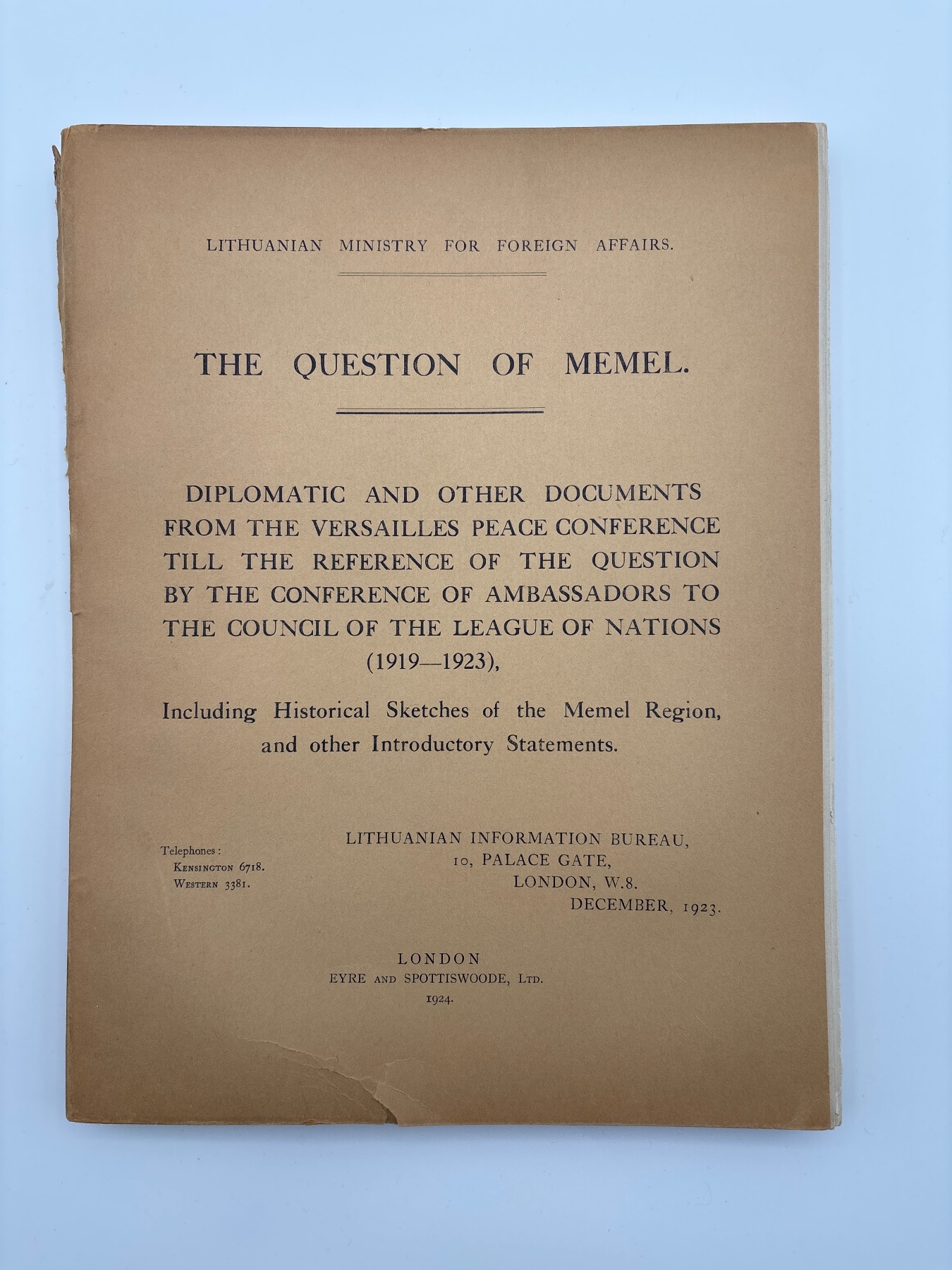
The Question of Memel: Diplomatic and Other Documents from the Versailles Peace Conference till the Reference of the Question by the Conference of Ambassadors to the Council of the League of Nations (1919-1923), Including Historical Sketches of the Memel Region, and other Introductory Statements