
Lietuvių Tautos Kelias į Naująjį Gyvenimą
1953
Historical and community context
Where this record belongs
unknown
Introduction
This is Volume II of Mykolas Biržiška's monumental historical-cultural study of the Lithuanian national awakening, published in Los Angeles in 1953 by one of interwar Lithuania's most distinguished scholars and former Vilnius University rector. Written in exile, it documents the deeds, campaigns, and actors of the awakening Lithuanian nation — a definitive scholarly synthesis produced under diaspora conditions by a man who lived through the events he describes. As both primary testimony and rigorous scholarship, it occupies a unique position at the intersection of historical documentation and diaspora intellectual production.
Context and significance
Significance
This volume exemplifies the diaspora intellectual's counter-archival mission: in the absence of access to Lithuanian institutions now under Soviet control, Biržiška reconstitutes the narrative of Lithuanian national becoming from memory, prior scholarship, and documents he carried into exile. The very existence of a rigorously footnoted, multi-volume scholarly history produced in Los Angeles in 1953 testifies to the extraordinary institutional density of the early Lithuanian-American diaspora — that such a work could be typeset, printed, distributed, and read demonstrates a community with functional publishing infrastructure, literate audiences, and shared commitment to scholarly standards even in displacement.
The content itself is a primary record of the cultural survival mechanisms Biržiška himself participated in: the press ban resistance, the role of Catholic clergy as language vessels, the proliferation of underground periodicals, the formation of youth organizations, and the emergence of a secular intelligentsia alongside religious leadership. His discussion of figures like Jakštas, Šliūpas, Valančius, Basanavičius, and the entire ecosystem of pre-independence Lithuanian cultural production is not merely historical narration — it is an act of transmission, ensuring that diaspora youth and future generations can trace the lineage of their cultural inheritance.
How this record carried memory
Continuity statement explicit; Identity preservation; the work explicitly frames the Lithuanian national awakening as a completed historical arc whose documentation must be preserved against Soviet suppression and falsification; Biržiška writes as a witness-scholar ensuring that the record survives in diaspora
Record connections
People, places, and institutions linked in the catalog
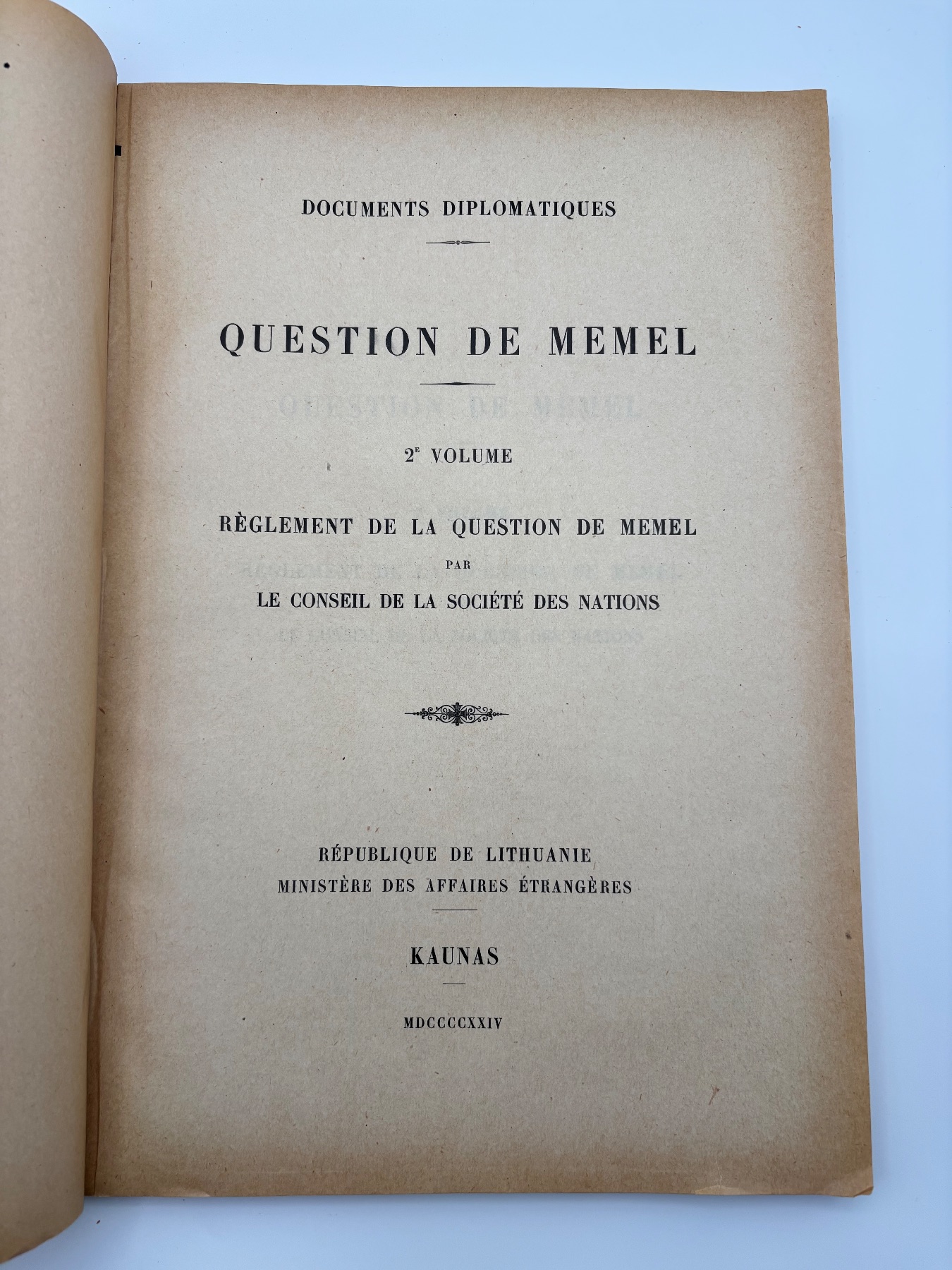
Question de Memel — 2e Volume: Règlement de la Question de Memel par le Conseil de la Société des Nations
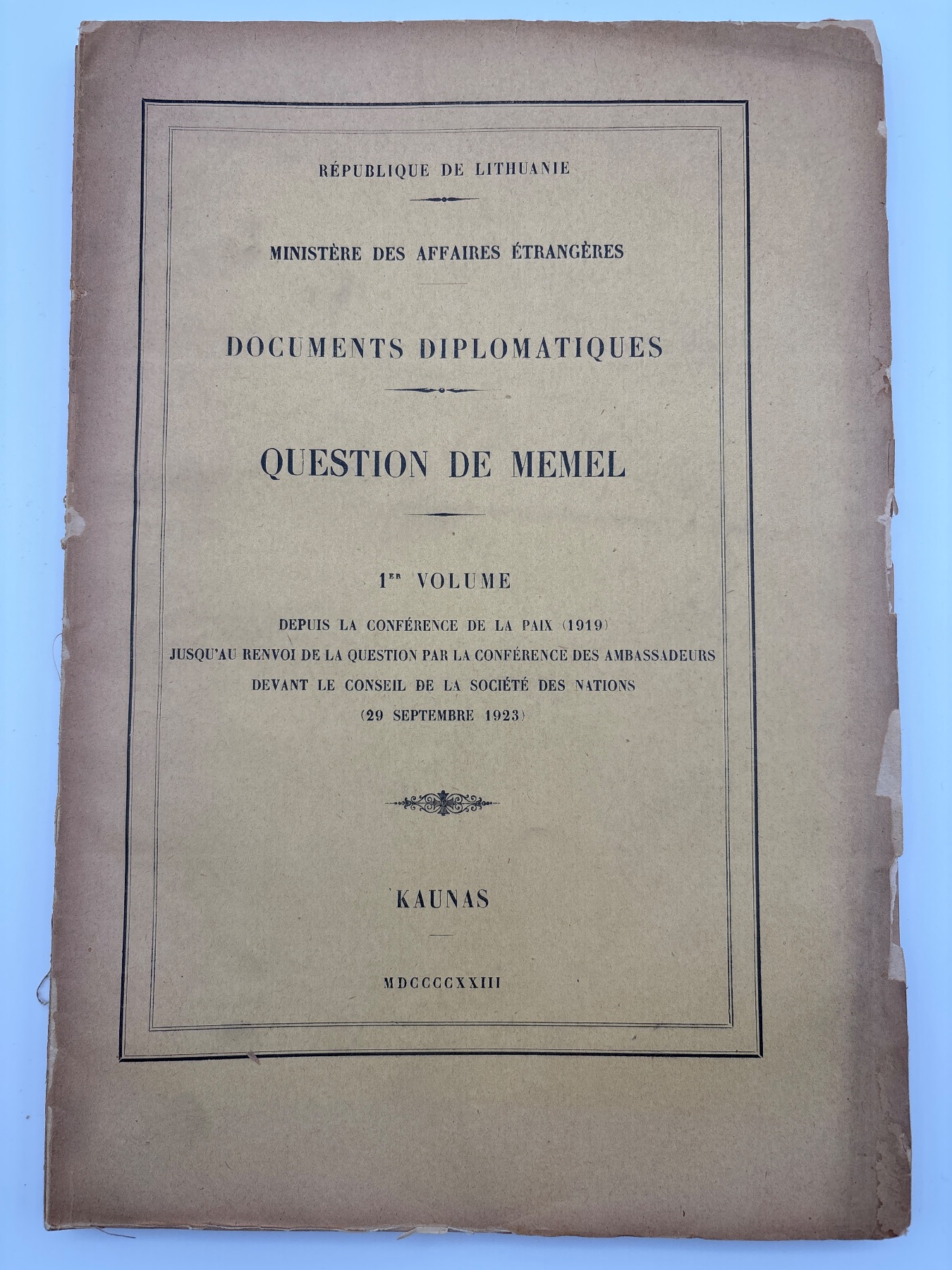
Documents Diplomatiques — Question de Memel, 1er Volume
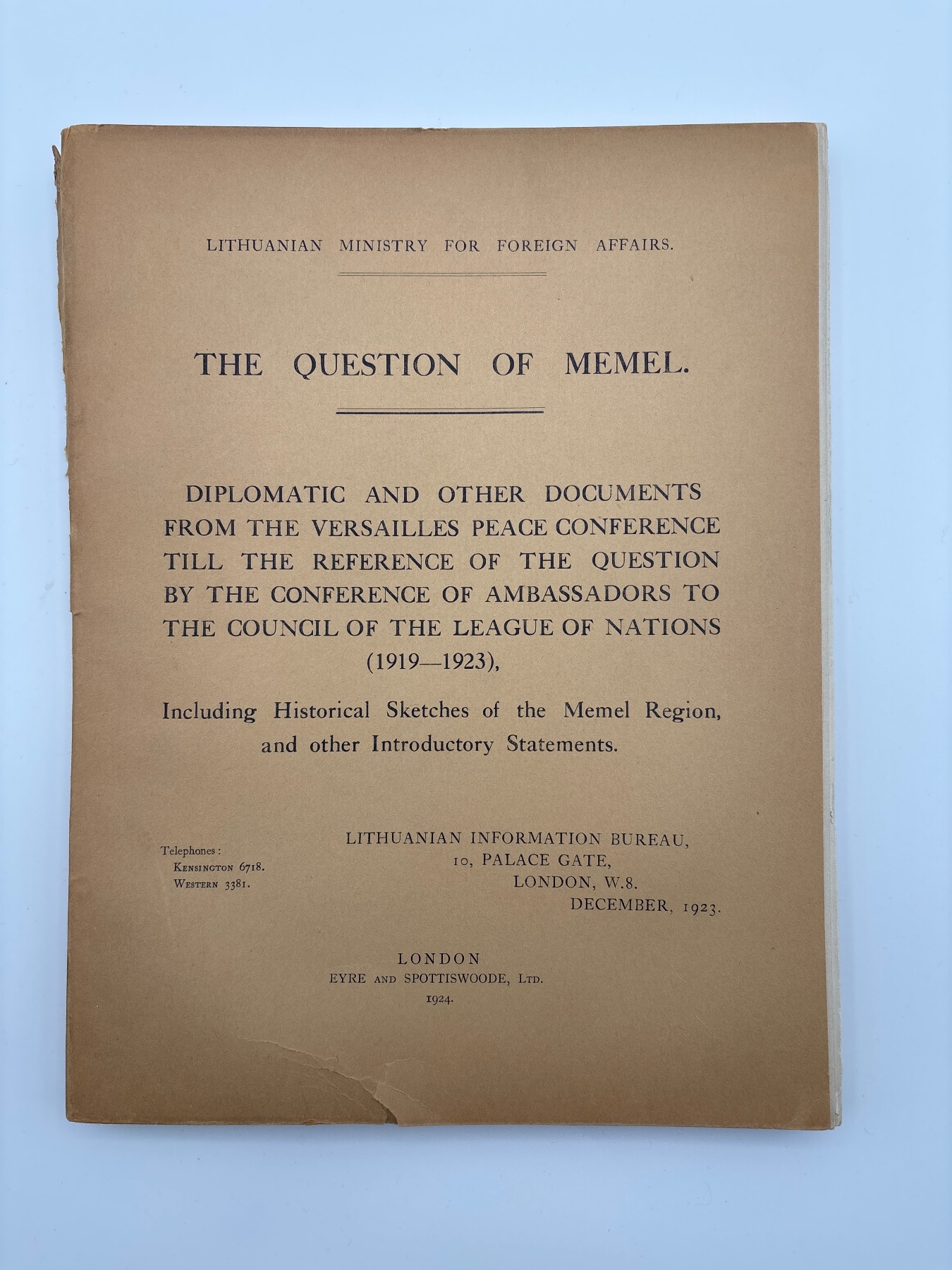
The Question of Memel: Diplomatic and Other Documents from the Versailles Peace Conference till the Reference of the Question by the Conference of Ambassadors to the Council of the League of Nations (1919-1923), Including Historical Sketches of the Memel Region, and other Introductory Statements