
Lithuania
Historical and community context
Where this record belongs
Diaspora freedom
Introduction
This 1965 ACEN booklet on Lithuania is a rare Cold War advocacy document produced by diaspora experts under the banner of the Assembly of Captive European Nations, offering an insider perspective on Soviet occupation that mainstream Western scholarship could not provide. Written by Vytautas Vaitiekunas and prepared by the Committee for a Free Lithuania, it represents the organized diaspora's attempt to shape international opinion during a critical period of the Cold War. As volume 5 of a nine-part series covering all captive nations, it situates Lithuanian sovereignty claims within a pan-Eastern-European freedom framework with significant geopolitical resonance.
Context and significance
Significance
This booklet is a direct artifact of the Cold War diaspora institutional infrastructure at its most organized and internationally ambitious. The Assembly of Captive European Nations was not a grassroots community group but a sophisticated political body with observer status at the United Nations, funded in part by the U.S. government through allied channels, and designed to maintain the legal and moral case for the independence of Soviet-occupied nations. The fact that Lithuanian experts within ACEN produced volume 5 of a nine-part series reveals an extraordinary level of coordination, editorial discipline, and strategic communications capacity among mid-century Lithuanian-American diaspora leadership.
The text's cultural survival mechanism is notably different from devotional or folkloric materials — it operates through juridical and historical argument, asserting Lithuanian statehood as a matter of international law rather than ethnic sentiment alone. Chapters on Soviet colonial rule, resistance movements (including guerrilla warfare 1944-1952), and the Nazi-Soviet conspiracy frame Lithuanian identity as inseparable from the struggle for political freedom. This positions the diaspora not as a refugee community but as a government-in-exile with a legitimate claim on world attention — a profoundly important distinction for intergenerational identity formation.
For diaspora literary and institutional culture, this booklet represents the English-language advocacy register that Lithuanian-Americans developed to speak outward to the world rather than inward to the community. Alongside prayer books, school textbooks, and community bulletins, publications like this one reveal a diaspora that had mastered multiple communicative registers simultaneously — maintaining Lithuanian language and culture internally while deploying polished English-language political argument externally. This dual-register capacity is itself a remarkable cultural achievement worthy of scholarly attention.
How this record carried memory
Identity preservation, Continuity statement explicit, Ideology stripped/softened
Record connections
People, places, and institutions linked in the catalog
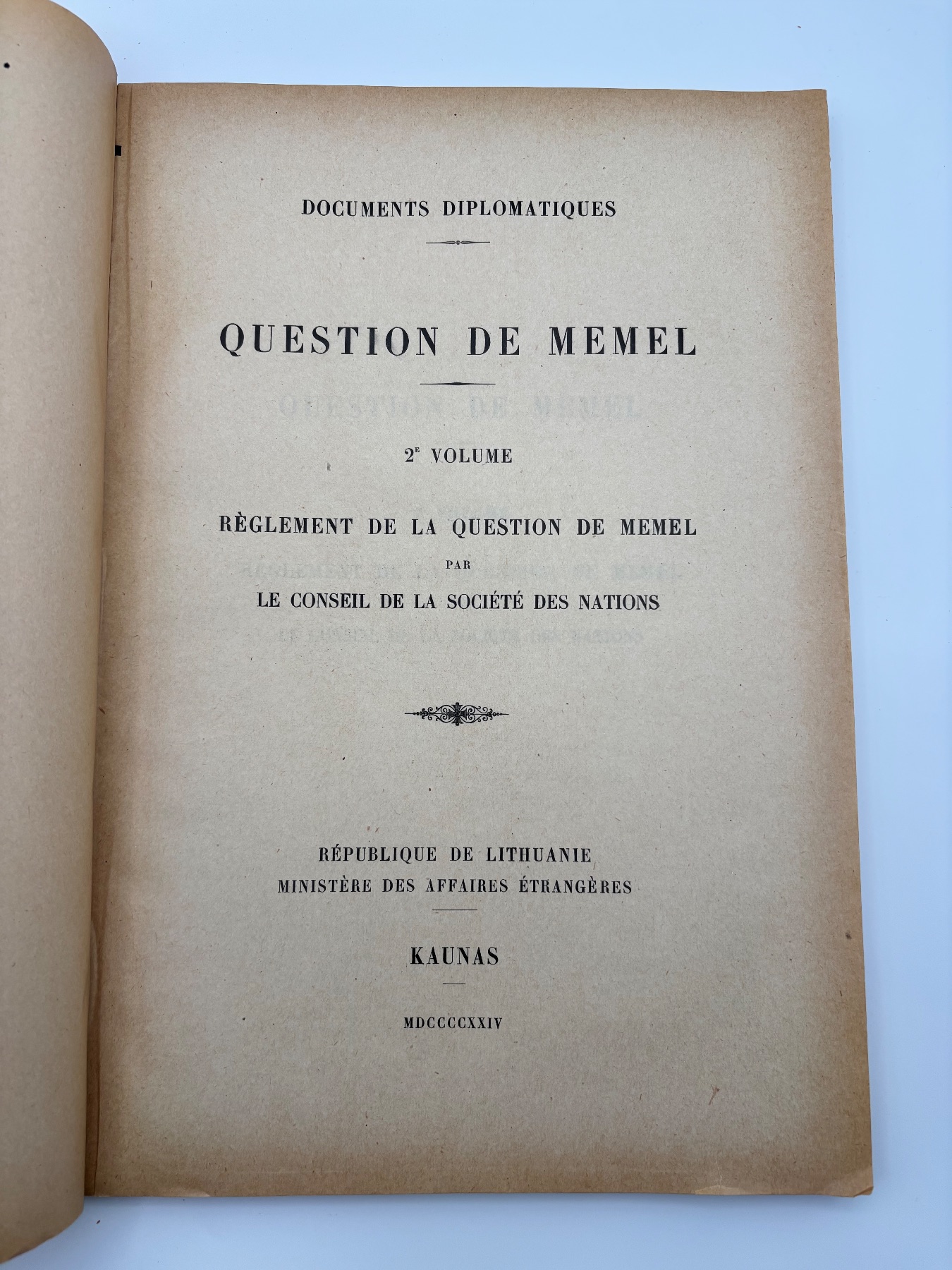
Question de Memel — 2e Volume: Règlement de la Question de Memel par le Conseil de la Société des Nations
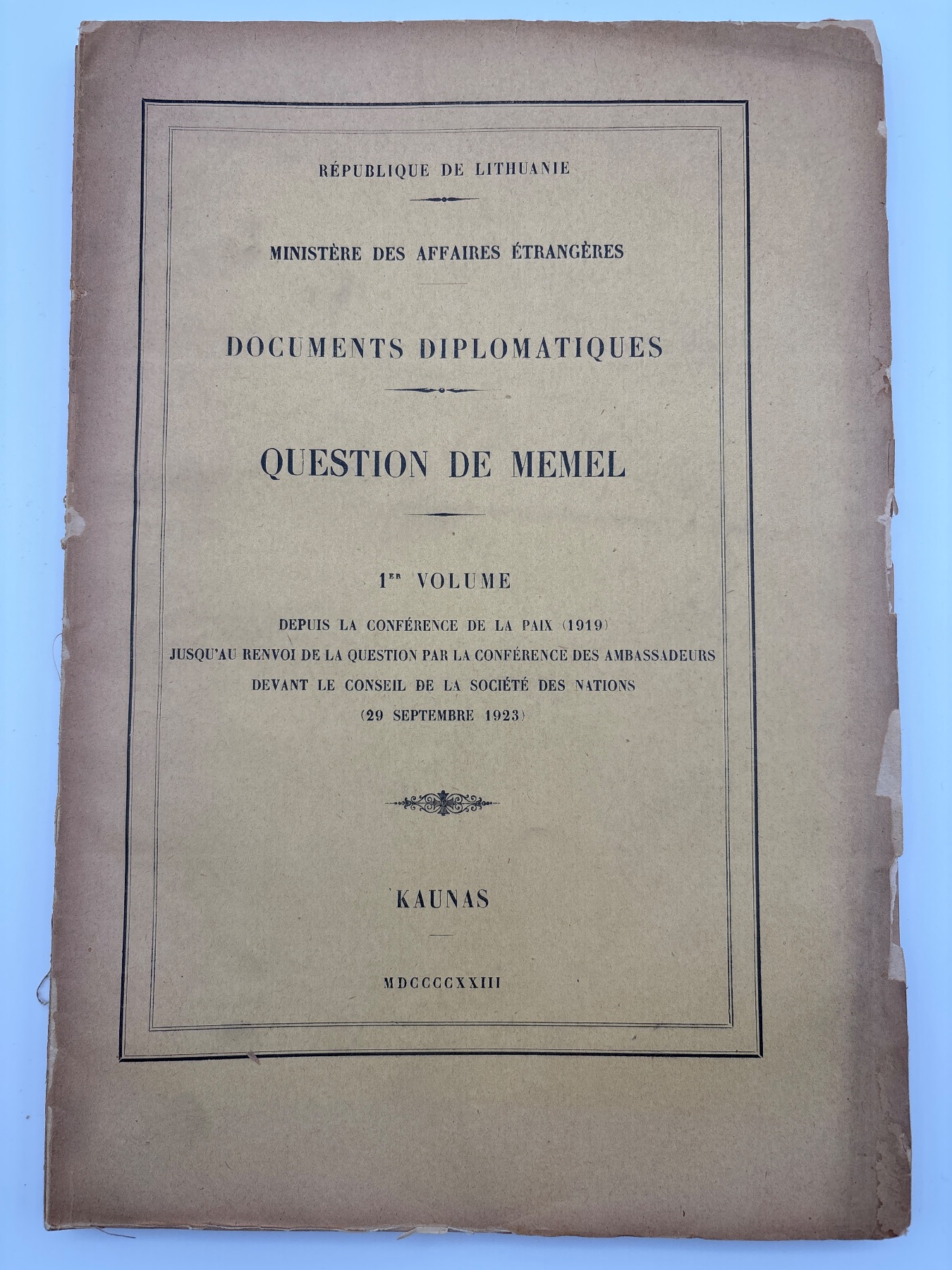
Documents Diplomatiques — Question de Memel, 1er Volume
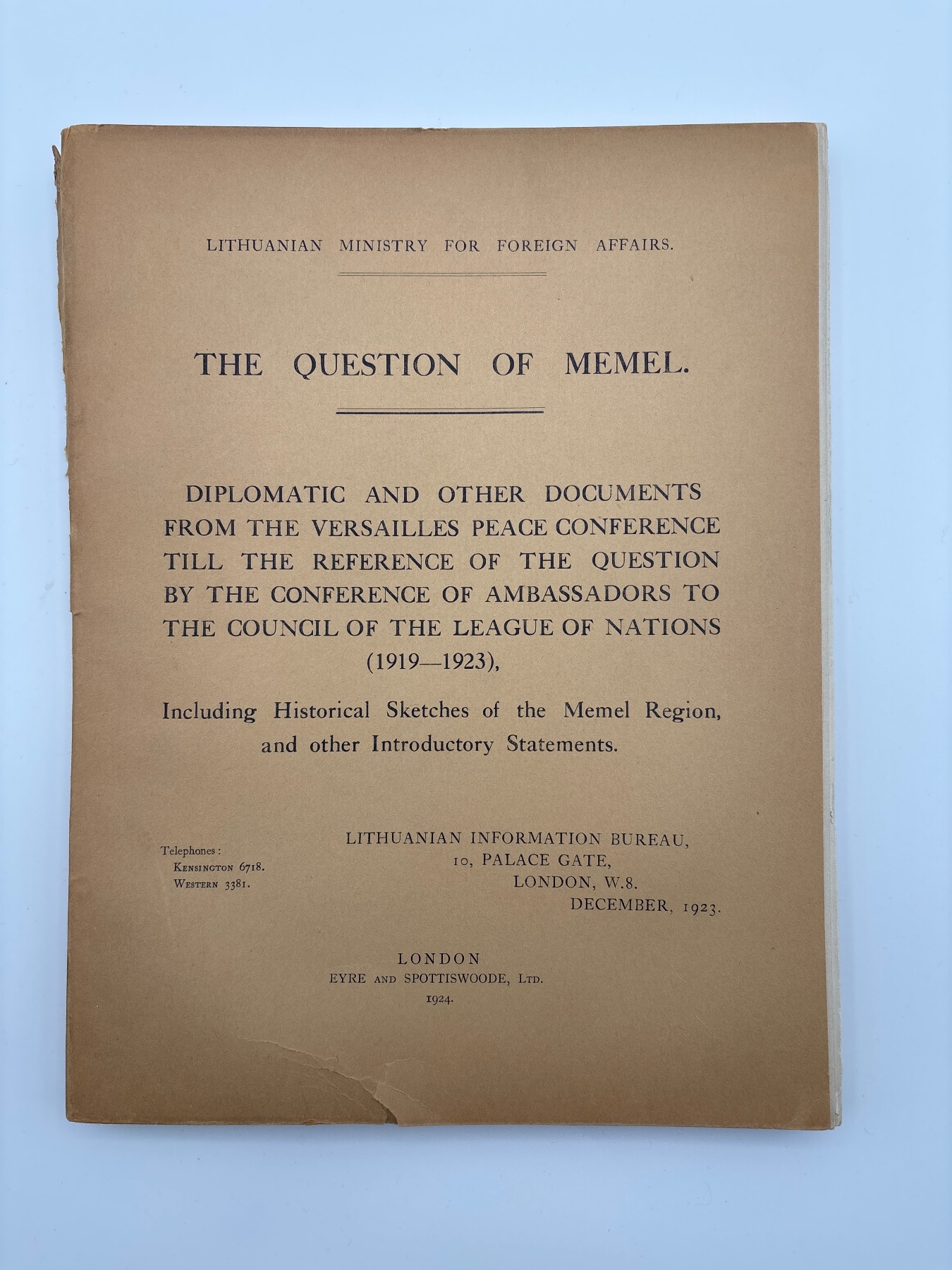
The Question of Memel: Diplomatic and Other Documents from the Versailles Peace Conference till the Reference of the Question by the Conference of Ambassadors to the Council of the League of Nations (1919-1923), Including Historical Sketches of the Memel Region, and other Introductory Statements