
The War Against God in Lithuania
1966
Historical and community context
Where this record belongs
Diaspora freedom
Introduction
Published in 1966 during the height of the Cold War, this English-language exposé documents Soviet religious persecution of Catholic Lithuanians with chapter-by-chapter factual evidence of atheist campaigns, clerical suppression, and community resistance. Written under a pseudonym by a Lithuanian émigré scholar and prefaced by the Auxiliary Bishop of the Archdiocese of New York, it represents the diaspora's deliberate effort to mobilize American Catholic and civic opinion against Soviet occupation. Its dual audience—American readers and the global Lithuanian community—makes it a rare artifact of diaspora advocacy literature at the intersection of Cold War geopolitics and religious survival.
Context and significance
Significance
This volume exemplifies a sophisticated and deliberate diaspora publication strategy: the choice of English rather than Lithuanian signals that the primary audience was the American Catholic establishment and general public, not the Lithuanian community itself. The institutional chain of endorsement — from a pseudonymous Lithuanian scholar-exile to Manyland Books to a bishop of the Archdiocese of New York — reveals how diaspora intellectuals leveraged existing American Catholic infrastructure to amplify their advocacy. The Library of Congress catalog number (66-15367) further demonstrates that this was not a community-internal document but a work consciously positioned within American civic discourse.
The cover art, depicting a suffering Christ figure entangled in Soviet barbed wire against a blood-red background, is a remarkable artifact of diaspora visual culture — translating the Lithuanian Catholic theological self-understanding (the nation as martyr-church) into an immediately legible American Cold War idiom. That this image circulated in American bookstores priced at $1.25 in 1966 speaks to the diaspora's sophistication in using commercial publishing as an instrument of cultural and political survival.
How this record carried memory
Religion as language vessel, Faith framed as heritage, Identity preservation, Continuity statement explicit
Record connections
People, places, and institutions linked in the catalog
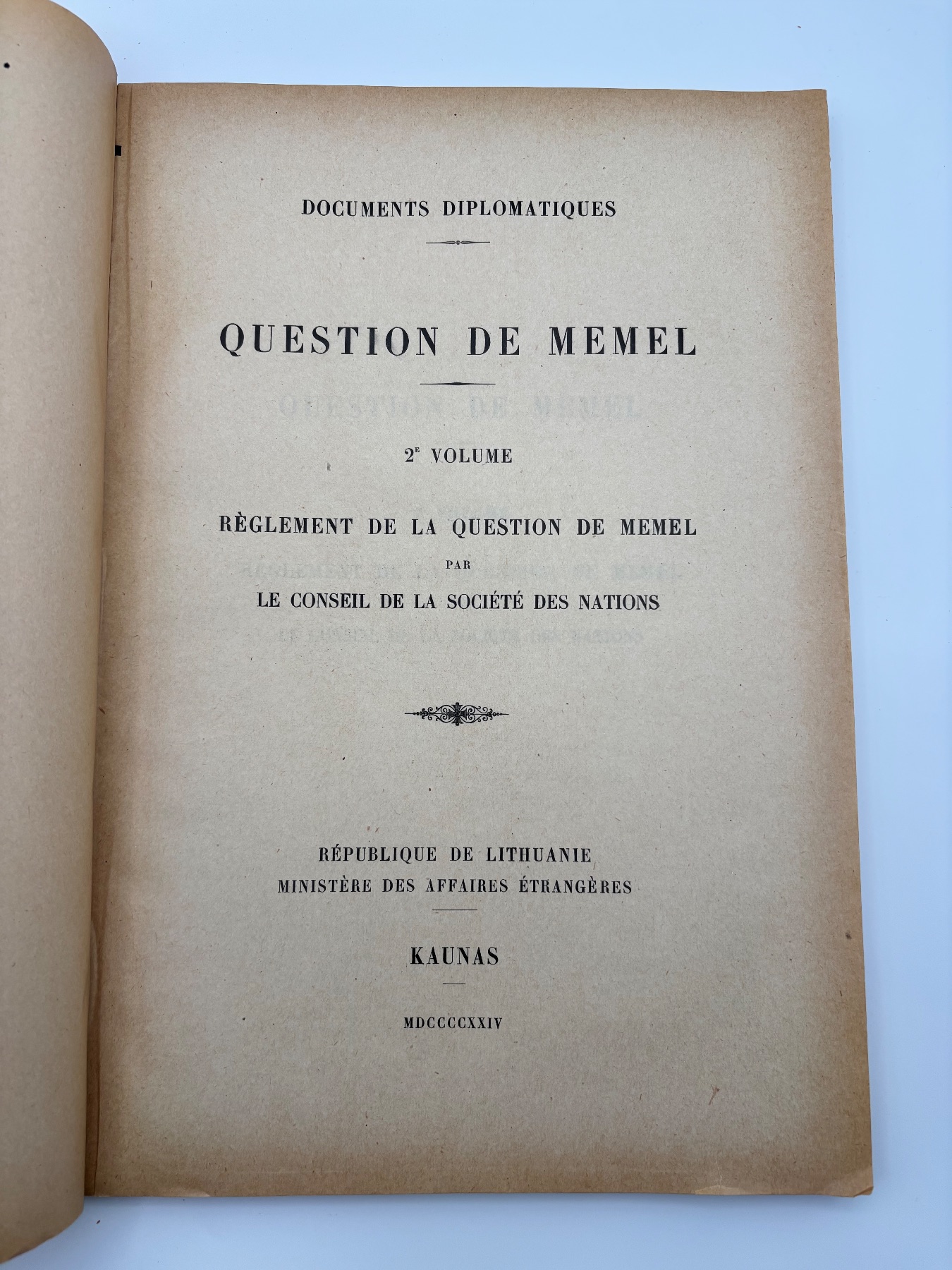
Question de Memel — 2e Volume: Règlement de la Question de Memel par le Conseil de la Société des Nations
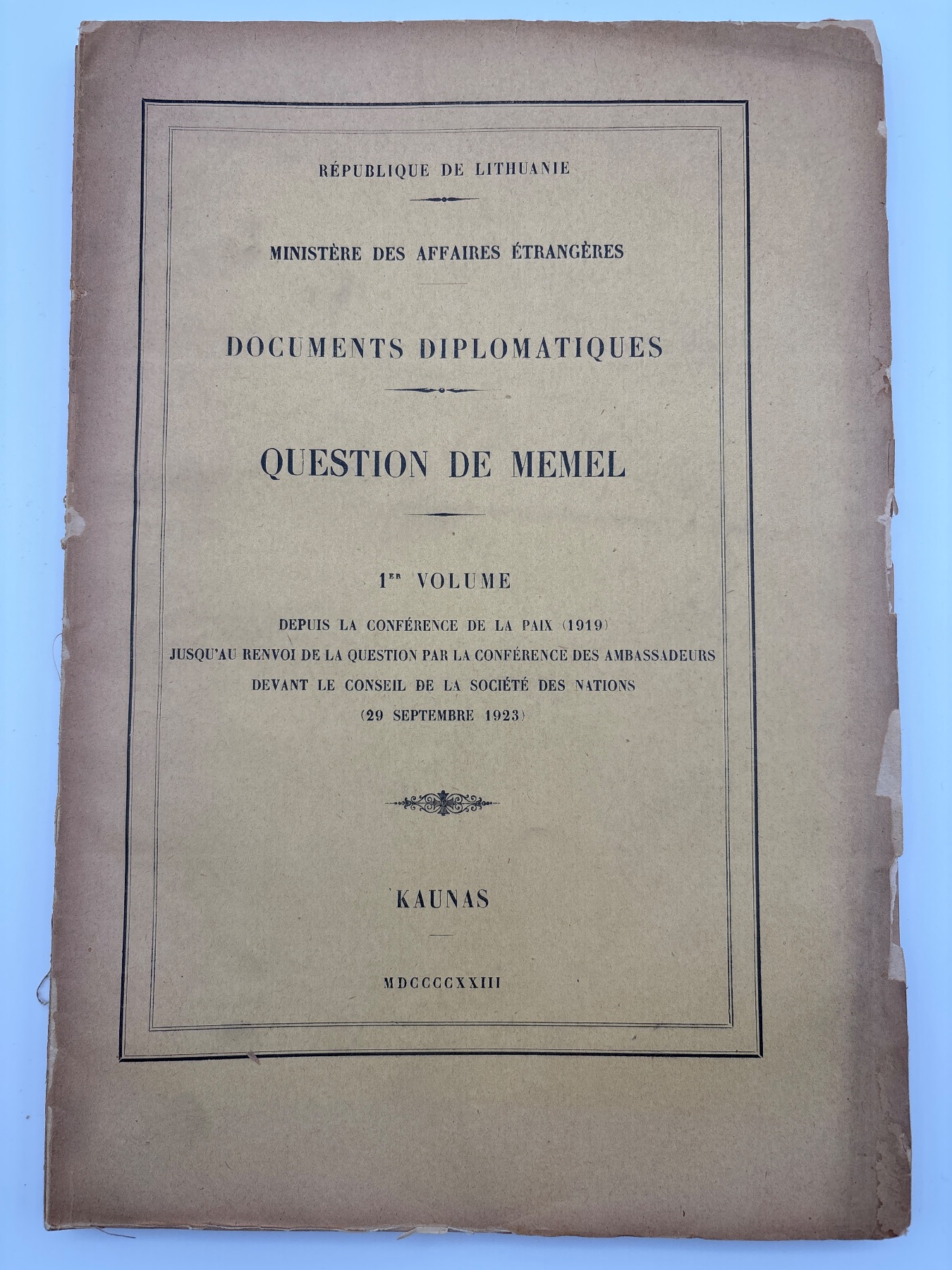
Documents Diplomatiques — Question de Memel, 1er Volume
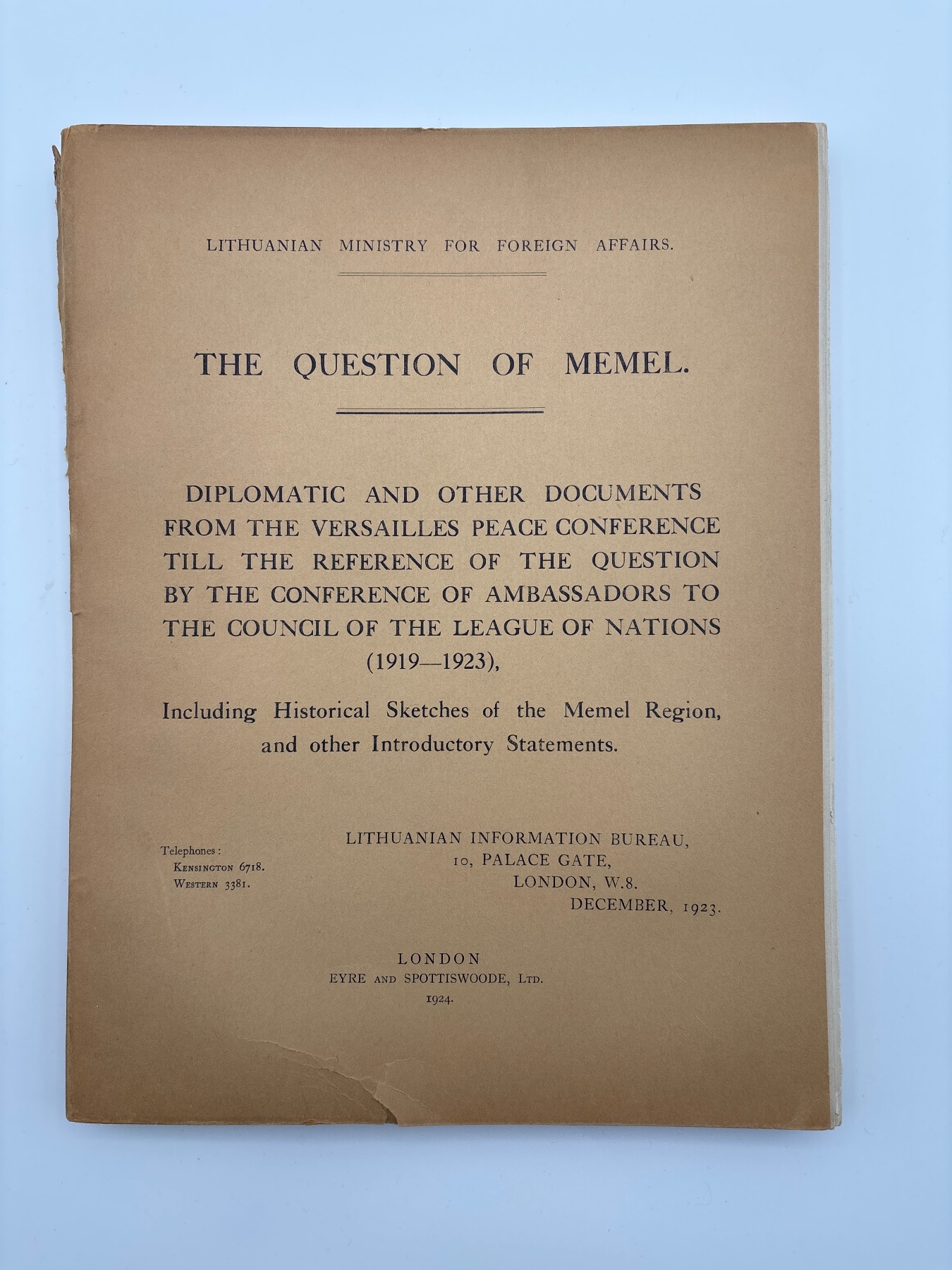
The Question of Memel: Diplomatic and Other Documents from the Versailles Peace Conference till the Reference of the Question by the Conference of Ambassadors to the Council of the League of Nations (1919-1923), Including Historical Sketches of the Memel Region, and other Introductory Statements