
The Lithuanian National Revolt of 1941
Historical and community context
Where this record belongs
Diaspora freedom
Introduction
This is the first English-language scholarly monograph devoted exclusively to the Lithuanian June 1941 uprising against Soviet occupation — the LAF-led revolt that briefly established a Lithuanian Provisional Government before Nazi suppression. Written by a Rutgers-trained historian drawing on NKVD documents, participant interviews, and diaspora archival sources, it represents a landmark in Lithuanian resistance historiography produced entirely within the American diaspora infrastructure. Its English-language format made it a critical advocacy tool for Lithuanian independence claims during the Cold War, circulating among American academics, diplomats, and policymakers at a moment when the Baltic cause was invisible in mainstream Western historiography.
Context and significance
Significance
This publication exemplifies the most sophisticated tier of Lithuanian diaspora institutional infrastructure: a diaspora-funded, academically credentialed, English-language monograph produced for dual audiences — the Lithuanian community and the American academic/policy world. The funding mechanism alone is revealing: a community of Lithuanian physicians in New York collectively sponsored a historical study written by a graduate student at a major American research university. This pattern — professional diaspora elites subsidizing cultural-historical production — sustained an entire ecosystem of scholarship that would otherwise have been impossible under Soviet censorship inside Lithuania. The Lithuanian Encyclopedia Press itself served as the institutional anchor of this ecosystem, functioning simultaneously as publisher, distributor, and cultural repository.
The book's source methodology reveals the remarkable archival infrastructure the diaspora maintained in exile: NKVD documents rescued and deposited with the Lithuanian American Council, consular communiqués preserved by the Lithuanian Consulate General in New York (operating as a government-in-exile function), and personal archives held by revolt participants like Colonel Kazys Škirpa. That a graduate student in 1968 could draw on 183 consular communiqués, captured Soviet security documents, and personal interviews with the actual leaders of the 1941 uprising demonstrates how the diaspora functioned not merely as a cultural refuge but as a parallel archival state — preserving the documentary record of Lithuanian sovereignty that the Soviet regime was actively suppressing.
For diaspora literary and intellectual culture, this work represents a transition moment: the first generation of American-educated Lithuanian-Americans producing English-language scholarship about Lithuanian history for American academic audiences. Budreckis writes as both an insider (Lithuanian name, community-funded, drawing on diaspora sources) and an outsider (Rutgers-trained, English prose, American academic apparatus). This dual positioning — community member and credentialed academic — was the diaspora's most powerful advocacy strategy during the Cold War, and this book is a near-perfect specimen of it.
How this record carried memory
Identity preservation, Continuity statement explicit
Record connections
People, places, and institutions linked in the catalog
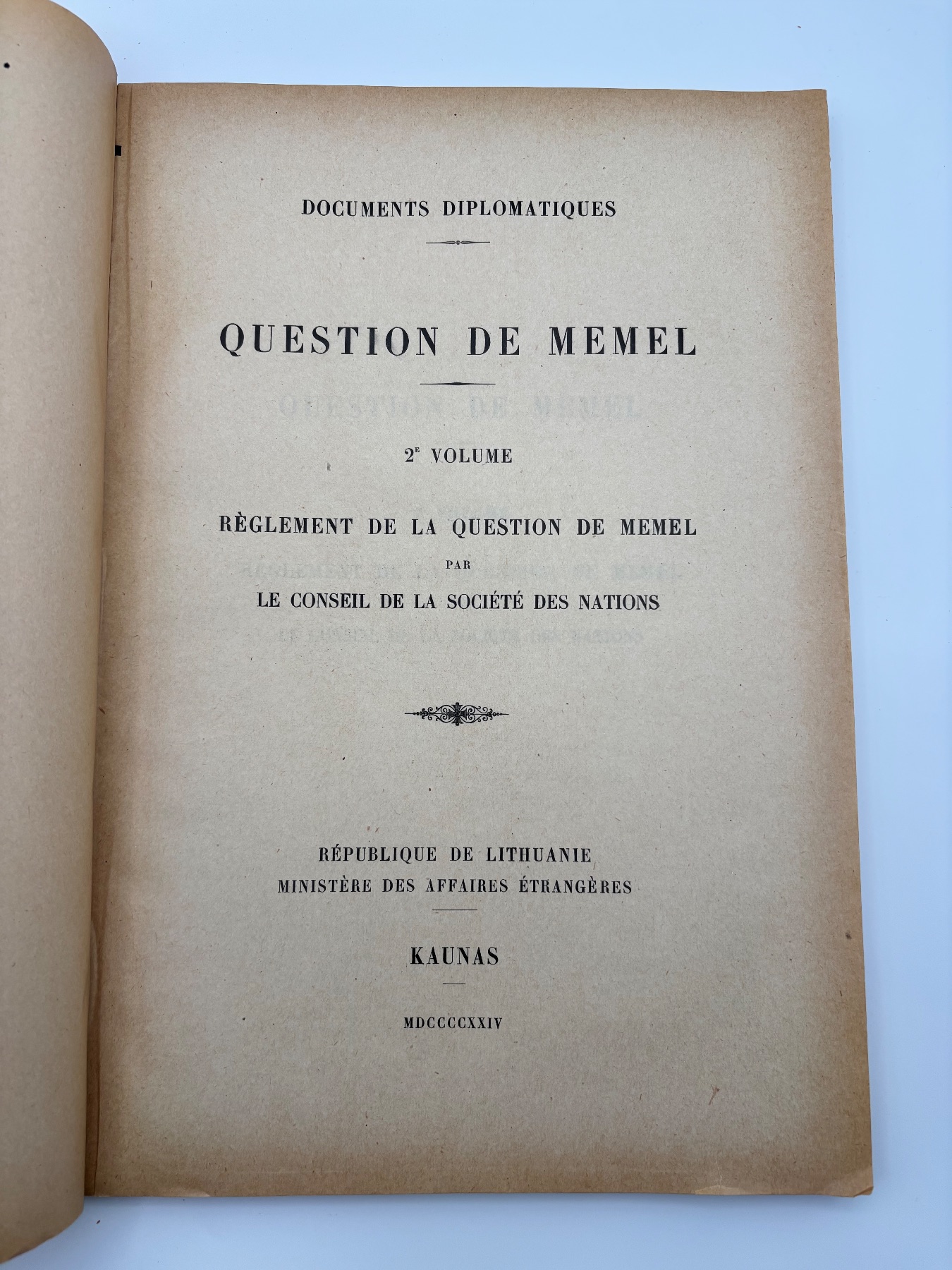
Question de Memel — 2e Volume: Règlement de la Question de Memel par le Conseil de la Société des Nations
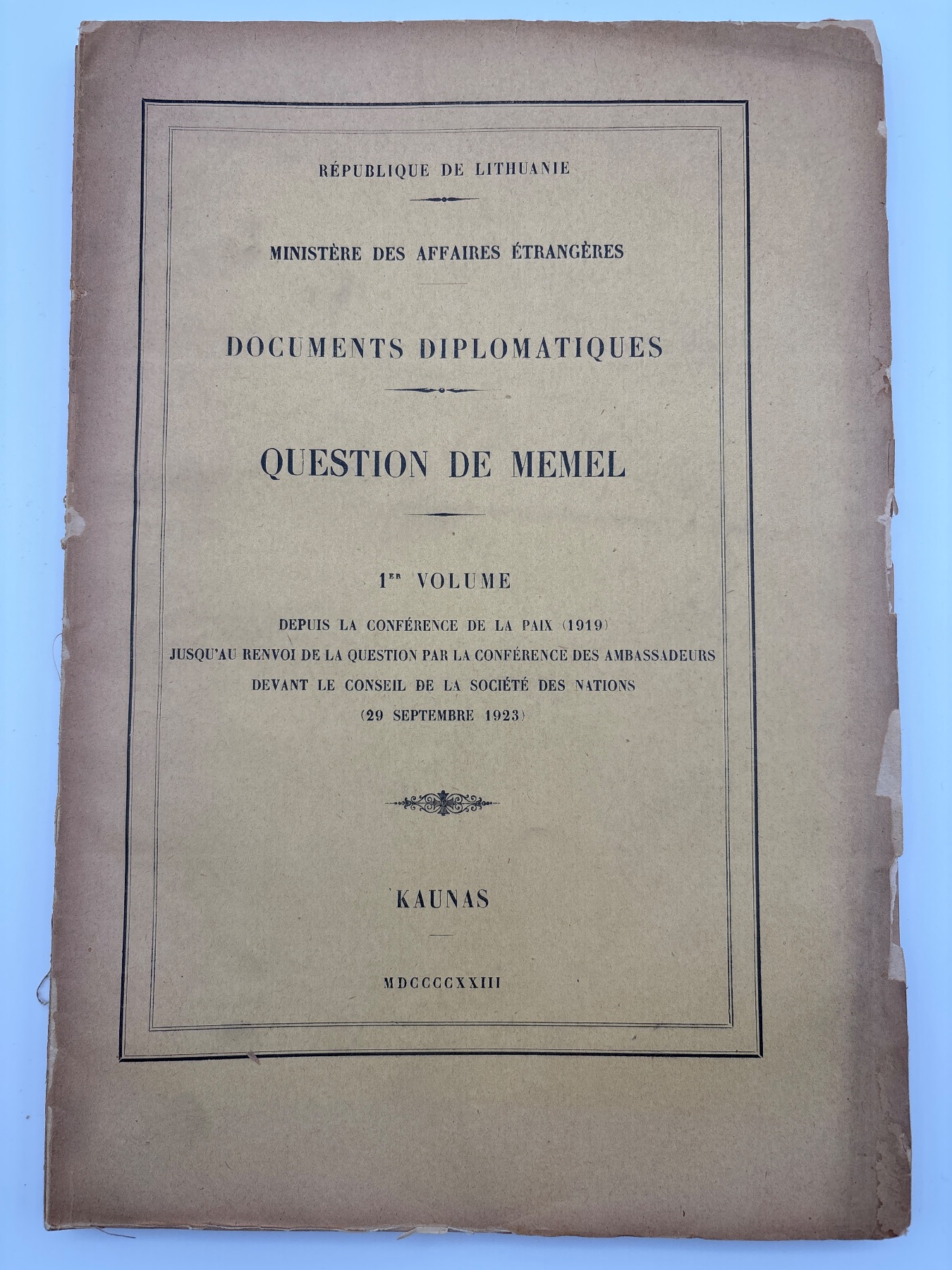
Documents Diplomatiques — Question de Memel, 1er Volume
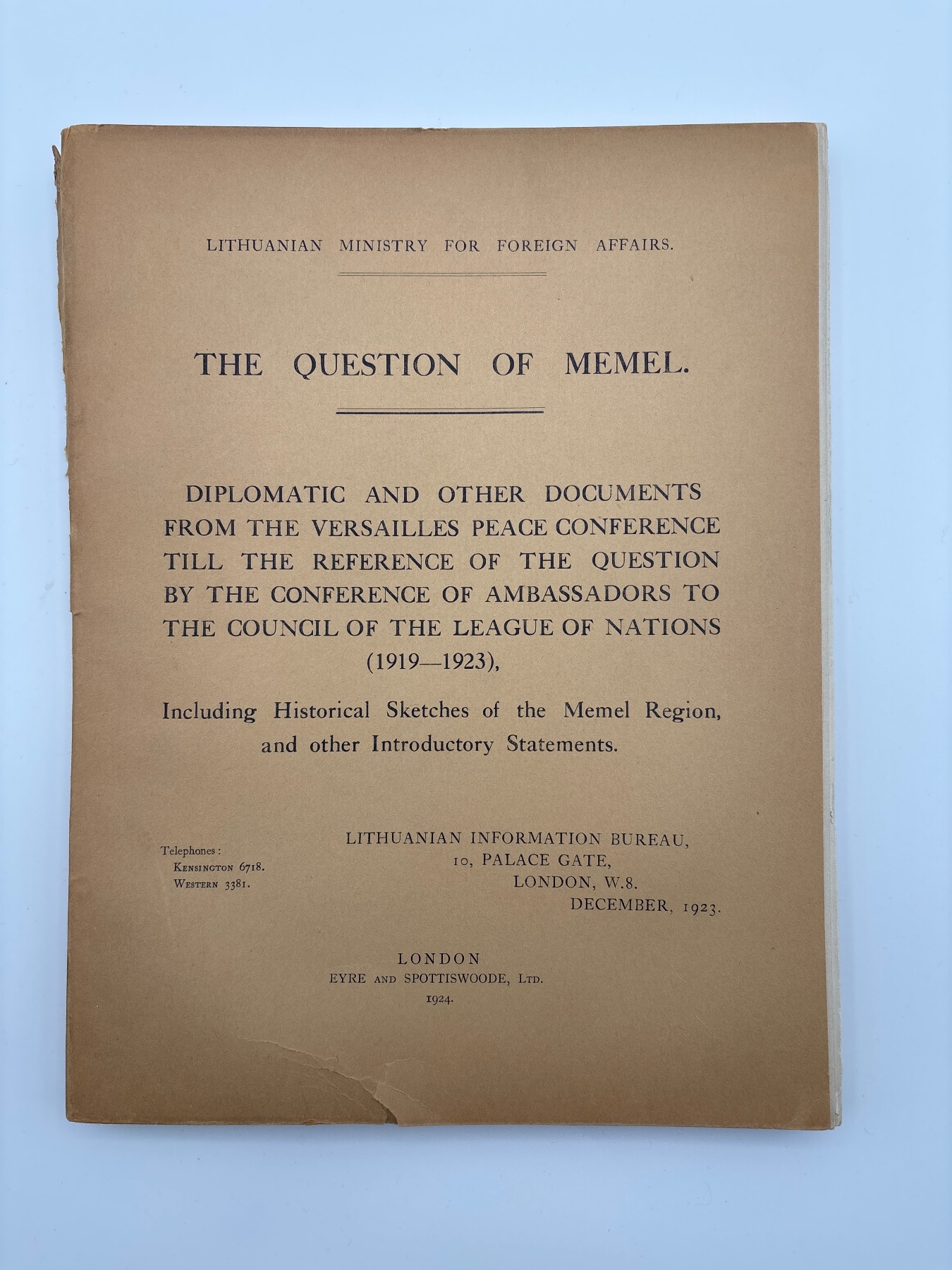
The Question of Memel: Diplomatic and Other Documents from the Versailles Peace Conference till the Reference of the Question by the Conference of Ambassadors to the Council of the League of Nations (1919-1923), Including Historical Sketches of the Memel Region, and other Introductory Statements